


Rode Nt1a roundup
Rode Nt1a: A Complete Buyer's Guide
Before you buy the Rode NT1-A, here's what else you'll need, what the specs actually mean, and the buying mistakes worth dodging.
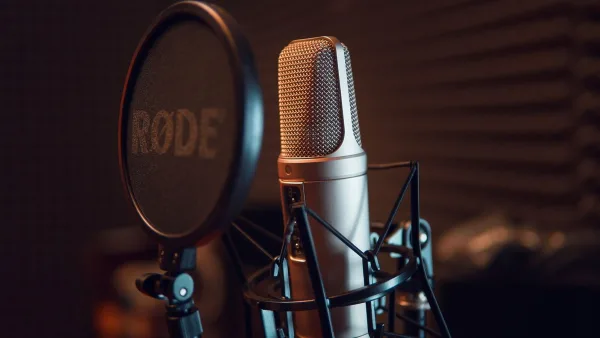
Right, so you've narrowed it down to the Rode NT1-A and you want to know if it's actually the right call before you hand over your money. Good instinct — a condenser mic is only half the equation, and there are a few things worth checking first. Let's get properly into it.
What You Need Before It Even Works
This is the bit that catches people out, so it goes first: a large-diaphragm condenser mic like this one is not plug-and-play with just any device. You'll need:
- An audio interface or mixer with 48V phantom power (most USB interfaces from £60 upward have this)
- A balanced XLR cable
- A mic stand or boom arm sturdy enough to hold it steady
- Headphones for monitoring without feedback
If your current setup is a USB headset mic or a laptop's built-in input, budget for the interface too — it's not optional, and it's genuinely half of what makes this microphone sound the way it does.
The Specs That Actually Matter
Datasheets are full of numbers that don't change your buying decision. Here are the ones that do:
| Spec | What to check |
|---|---|
| Self-noise (5 dB(A)) | Excellent for quiet vocals and voice-over; less relevant on loud sources |
| Polar pattern | Fixed cardioid — no option to switch, so it won't suit multi-pattern needs |
| Max SPL (137 dB) | Fine for most acoustic sources; no built-in pad for extreme close-miking |
| Power requirement | 48V phantom, non-negotiable |
| Included accessories | Shock mount and pop filter are usually bundled — worth confirming with your seller |
Notice there's no high-pass filter switch either. That's a deliberate simplicity trade-off that keeps the price down, but it means rumble and handling noise are entirely down to your stand, cabling and room.
How It Compares to Similar-Priced Rivals
At this end of the market, you'll typically be weighing this microphone against other affordable large-diaphragm condensers such as the Audio-Technica AT2020 or the AKG P220. Broadly speaking:
- It leans on being exceptionally quiet electronically and having a brighter, more forward top end.
- Rivals in this bracket often trade a little of that quietness for a switchable pad, a high-pass filter, or in some cases a choice of polar patterns.
- None of this makes one objectively "better" — it's about which trade-off suits your room and your voice.
If low self-noise and a present, detailed vocal sound are your priority, the Rode NT1-A is a genuinely strong pick. If you record a wider variety of loud sources and want on-board flexibility, it's worth trying a rival with a pad switch first if you can.
The Real Cost of Getting Started
The sticker price on the microphone itself is only part of the budget. Once you've added a decent phantom-power interface, a cable if one isn't bundled, and a stand or boom arm that won't wobble under the shock mount's weight, you're looking at a meaningfully bigger total than the mic alone. It's worth pricing the whole bundle out before you commit, rather than being caught short after the microphone arrives and you realise your old laptop input simply won't drive it. Factor in a little for basic room treatment too — even a couple of absorptive panels behind and beside the mic position will do more for your recordings than any amount of extra spend on the microphone itself.
Where It Falls Down
Be honest with yourself about these before buying:
- No pad or high-pass filter — you'll rely entirely on distance and technique for loud or boomy sources.
- Cardioid only — no option for omni or figure-8 if you ever want room or stereo recording.
- Sibilance-prone on some voices — its bright voicing can exaggerate esses on certain singers.
- Needs a treated-ish space — its sensitivity reveals room noise as readily as vocal detail.
Common Buying Mistakes to Avoid
A few things trip up first-time buyers specifically at the purchase stage:
- Buying the microphone but not budgeting for an interface with phantom power.
- Confusing it with the newer Rode NT1 when comparing prices or reading reviews — they are different products with different voicing.
- Assuming the bundled shock mount and pop filter are universal across every retailer's package — always check the listing.
- Ignoring room acoustics entirely and expecting the microphone alone to fix a boxy-sounding space.
- Buying second-hand without checking the capsule hasn't been knocked or exposed to moisture, both of which can quietly ruin a condenser's performance.
For a deeper explanation of what the mic actually is and how it behaves once you own it, our complete overview of the Rode NT1-A is worth a read alongside this guide, and if you're brand new to recording altogether, start with the beginner's guide instead.
Is It Worth Buying?
For home-studio vocals, voice-over and acoustic instruments on a sensible budget, yes — the Rode NT1-A remains a genuinely capable, well-regarded choice years after launch, provided you pair it with a proper interface and a reasonably controlled room. Once you own it, it's worth reading through the common mistakes people make with it so you get the best out of it from day one, and if you want a value-for-money breakdown across budget tiers, see how it stacks up for the money.




Comments