


MIDI Controller roundup
The Best Midi Controllers for the Money
No invented shoot-outs here, just an honest look at what each price tier of MIDI controller genuinely gets you, and where you'd be overspending.
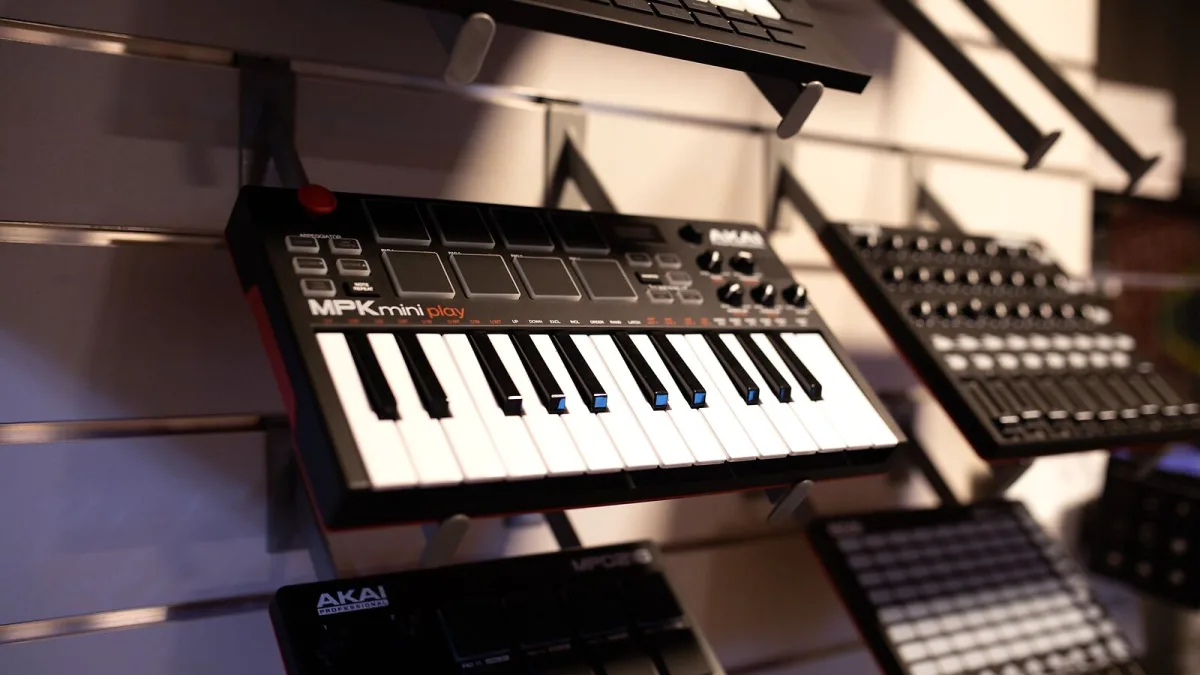
Right, let's talk value. Not "cheapest," not "most expensive equals best," but which tier of MIDI controller actually gets you the most for what you're spending. No made-up shoot-outs, no pretending one box beats another by some invented score — just an honest look at what each price bracket genuinely buys you.
The Compact, Grab-and-Go Tier
At the entry end you'll find small keyboard controllers, typically 25 keys, aimed squarely at portability and simple production work. Something like Akai's MPK Mini range sits comfortably here as an entry-level MIDI controller: compact enough to travel with, with enough pads and knobs to sketch out an idea on a train or in a spare half hour. You're not getting a huge range or weighted keys at this size, and that's fine — that's not the job it's doing. For basslines, quick sketches and anyone short on desk space, this tier earns its keep easily.
The Sweet Spot: Mid-Range, DAW-Focused
This is where most producers actually end up living, and it's genuinely good value for what you get. Controllers like Novation's Launchkey range bring proper DAW integration, a decent pad bank, and on the better models, polyphonic aftertouch for genuinely expressive playing. You're paying for the software handshake as much as the hardware here — deep transport control, automatic parameter mapping, the works. If you use Ableton Live especially, this tier is where a lot of the real day-to-day time-saving happens.
The Sequencer-and-Hardware Crowd
If your setup leans more towards outboard synths and pattern-based hardware than a laptop screen, something like Arturia's KeyStep Pro speaks a different language: compact keyboard, but built around sequencing and controlling external gear rather than software plug-ins. It's a genuinely different use case from the DAW-focused tier above, so don't judge it against a Launchkey-style controller on DAW features — that's simply not what it's for.
The Full-Size, Weighted Tier
Once you want proper 88-key range with a weighted or hammer-action feel, you're in a different world of size, weight and price, and rightly so — that's a serious piece of engineering trying to mimic an acoustic piano. Options like the Studiologic SL88 Mk2 or M-Audio's Hammer 88 Pro sit in this bracket. Worth it if you're a pianist who genuinely needs that range and feel; overkill if you mostly write electronic parts and just want the odd chord voicing.
| Tier | Best For | Trade-Off |
|---|---|---|
| Compact (25 keys) | Portability, quick sketches, tight budgets | Limited range, no weighted feel |
| Mid-range DAW controllers | Everyday production, Ableton-style workflows | Pads and keys aren't full pro-spec |
| Sequencer/hardware controllers | Outboard synths, pattern-based setups | Less useful for pure DAW work |
| 88-key weighted | Pianists, orchestral parts, two-handed playing | Cost, weight, desk space |
If Pads Matter More Than Keys
Not everyone's after a keybed at all. If finger drumming and sample triggering are your main thing, a pad-focused MIDI controller with generous velocity-sensitive pads and solid bank switching is a better spend than any amount of extra keys you'll never really use. Some hybrid units split the difference with a smaller keybed alongside a proper pad section, which is worth considering if you genuinely need both.
Don't Forget What's in the Box
The hardware price is only half the value equation. Plenty of controllers bundle software instruments, sample packs or a cut-down DAW licence, and that bundle can genuinely shift which option represents the better deal once you actually add up what you'd have paid for those extras separately. On the flip side, check whether the included editor software is still actively supported before you buy — a great-value controller with abandoned software behind it is a worse long-term buy than the numbers on the box suggest.
Where Not to Overspend
Don't pay a premium for a wall of unused knobs and buttons. A smaller controller with clean labelling and software you'll actually map properly beats a bigger MIDI controller with twice the controls sitting there ignored. Likewise, don't chase polyphonic aftertouch or MPE support if your software instruments don't take advantage of it — that's money spent on a feature you'll never actually hear.
Still Working Out What You Need?
If you're not sure a MIDI controller is even the right tool yet, our ultimate guide covers the basics properly. Once you know roughly what you want, our complete buyer's guide walks through the finer decisions, our beginner's guide is there if this is your first, and our list of common mistakes to avoid is worth a read either way.
The Bottom Line
There's genuine value at every price point here, provided you're buying for the tier that actually matches your workflow rather than chasing spec-sheet bragging rights. Match the controller to the job, and you'll get every penny's worth.



Comments