


Roland Keyboard article
Everything You Need to Know About Roland Keyboards
From the 1974 EP-30 to today's ZEN-Core synths, here's how Roland's keyboard ranges fit together — and how to tell one family from another.
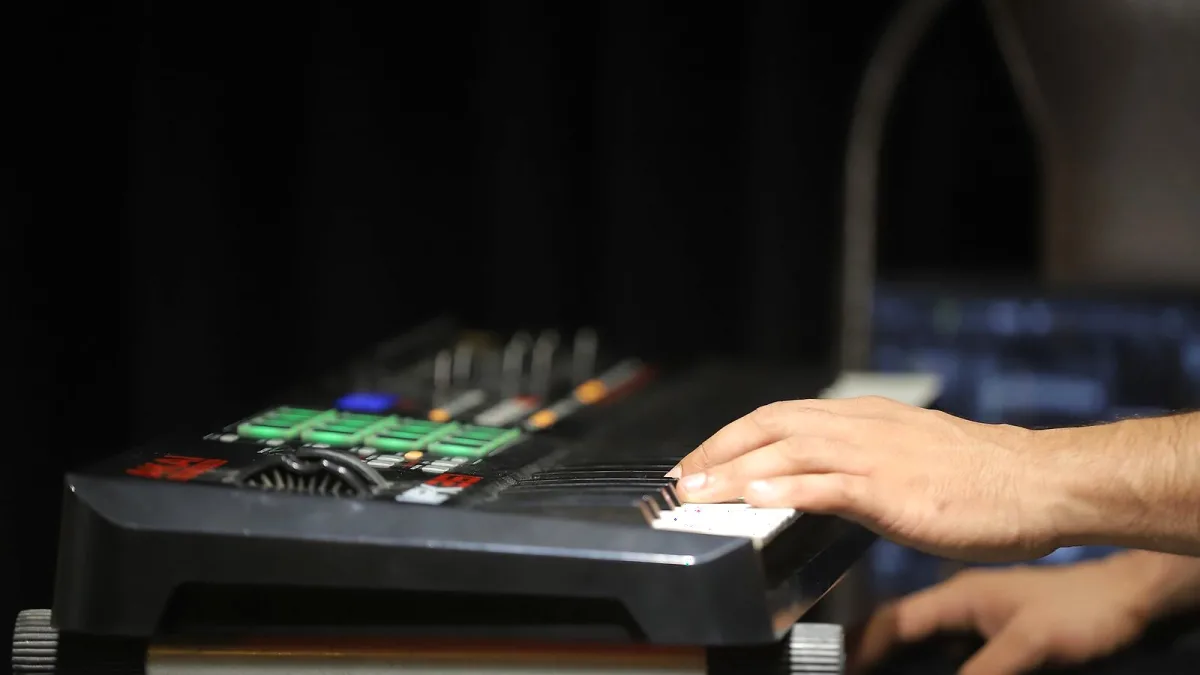
If you've started shopping for a Roland keyboard and keep bumping into the name Roland everywhere, you're in good company. Roland has been building keyboards, synthesizers and digital pianos since the early 1970s, and the family tree is now wide enough to be genuinely confusing. This guide walks through where Roland came from, what the current ranges actually do, and how the technology inside them works — so the model names on a shop floor start to make sense.
A Brief History of Roland Keyboards
Roland was founded in Osaka in 1972 by Ikutaro Kakehashi, and its very first products were rhythm machines rather than keyboards. That changed quickly: the SH-1000 synthesizer arrived in 1973, and by 1974 the EP-30 had introduced touch-sensitive playing to an electronic piano, meaning how hard you pressed a key genuinely changed the volume, much as it does on an acoustic piano.
The following decade produced some of the instruments Roland is still best known for — the Jupiter-8, the Juno-106 and the compact SH-101 — alongside the MC-8 MicroComposer, an early sequencer that let musicians programme notes rather than play them live. In 1983, Kakehashi worked with Dave Smith of Sequential to help develop MIDI, the Musical Instrument Digital Interface that still lets a Roland keyboard talk to almost any other electronic instrument or piece of software today. Roland's stage-piano line began in 1986 with the RD-1000, the ancestor of the RD keyboards gigging musicians use now.
What a Roland Keyboard Actually Is Today
"Roland keyboard" now covers several genuinely different kinds of instrument, and knowing which family you're looking at saves a lot of confusion.
| Family | What it's for | Examples |
|---|---|---|
| FP, HP, LX, GP | Home and portable digital pianos | FP-30X, LX-6, GP-9 |
| RD series | Stage pianos for live performance | RD-2000 EX, RD-88 EX, RD-08 |
| FANTOM | Workstation for production and sequencing | FANTOM-6, FANTOM-7 |
| Jupiter-X, Juno-X, GAIA 2 | Performance synthesizers | Jupiter-X, Juno-X, GAIA 2 |
| GO:KEYS | Portable, beginner-friendly music-making | GO:KEYS 3, GO:KEYS 5 |
| A-series | MIDI controllers with no built-in sounds | A-88 |
If you're weighing up which of these actually suits you, our complete buyer's guide to Roland keyboards goes through the decision in detail.
The Technology Behind the Sound
Every Roland keyboard makes sound one of three broad ways, and it's worth knowing the difference.
- Sample-based sound plays back recordings of real instruments, layered by velocity so a soft press and a hard press sound convincingly different.
- Physical modelling, used in Roland's V-Piano technology, calculates the sound in real time rather than replaying a recording, which can give more continuous, responsive control over tone.
- Analogue modelling — Roland calls its version ACB, or Analog Circuit Behavior — recreates how an old analogue synth circuit actually behaves, rather than just sampling one note of it.
Newer instruments increasingly run on ZEN-Core, Roland's shared sound architecture that lets a Jupiter-X, a Juno-X and other current instruments draw on a common pool of tones and synthesis tools, even though the available sounds and controls still vary from model to model.
Key Action: Why It Matters
The feel of the keys under your fingers is arguably more important than any spec sheet. One aimed at synth players typically uses a lighter synth action, quick to play and easy on repeated notes. One built for pianists uses a weighted hammer action that mimics the resistance of real piano hammers, while many mid-range instruments sit in between with a semi-weighted feel. Neither is "better" in the abstract — it depends entirely on whether you're playing Chopin or programming a bassline.
Famous Names Who've Played Roland
Roland's RD stage pianos have long been popular with touring keyboardists, and the company credits players including Elton John, Rick Wakeman and Ed Sheeran among those who have used the range. Jean-Michel Jarre has a decades-long association with Roland synthesizers, and more recent artist rigs from Sister Bliss of Faithless and the composer Kebu show the instruments still earning their keep on stage. Worth noting: these are manufacturer-published artist associations, useful as a guide to reputation rather than as independent proof of any one instrument's sound.
Finding the Right One for You
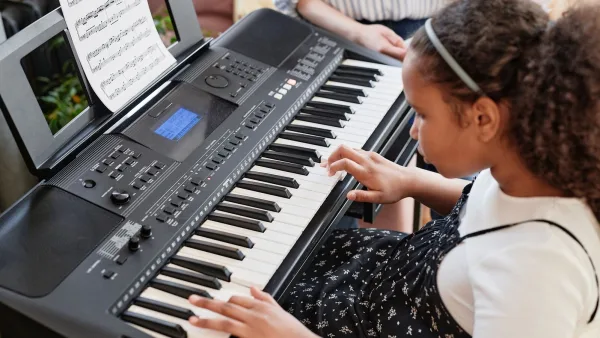
Because the range is so broad, the honest answer to "which Roland keyboard should I buy?" always starts with what you actually want to do with it. A parent buying a first keyboard for a child has very different needs from a gigging pianist replacing a tired stage piano. If you want a shortlist rather than a full buyer's guide, our round-up of the best Roland keyboards for the money breaks the range down by use case and budget, and if you're just starting out, our beginner's guide to Roland keyboards is a gentler place to start.
The Bottom Line
One today can mean anything from a portable practice piano to a full production workstation, but the thread running through all of them is the same: over fifty years of building instruments that respond the way a player expects, from that first touch-sensitive EP-30 in 1974 to the ZEN-Core synths of today. Once you know which family fits your playing, picking your next Roland keyboard from the individual models on offer gets a lot easier.



Comments