


Behringer roundup
The Best Behringers for the Money
There's no single best Behringer — only the one that matches your situation. Here's where genuine value sits across synths and mixers.
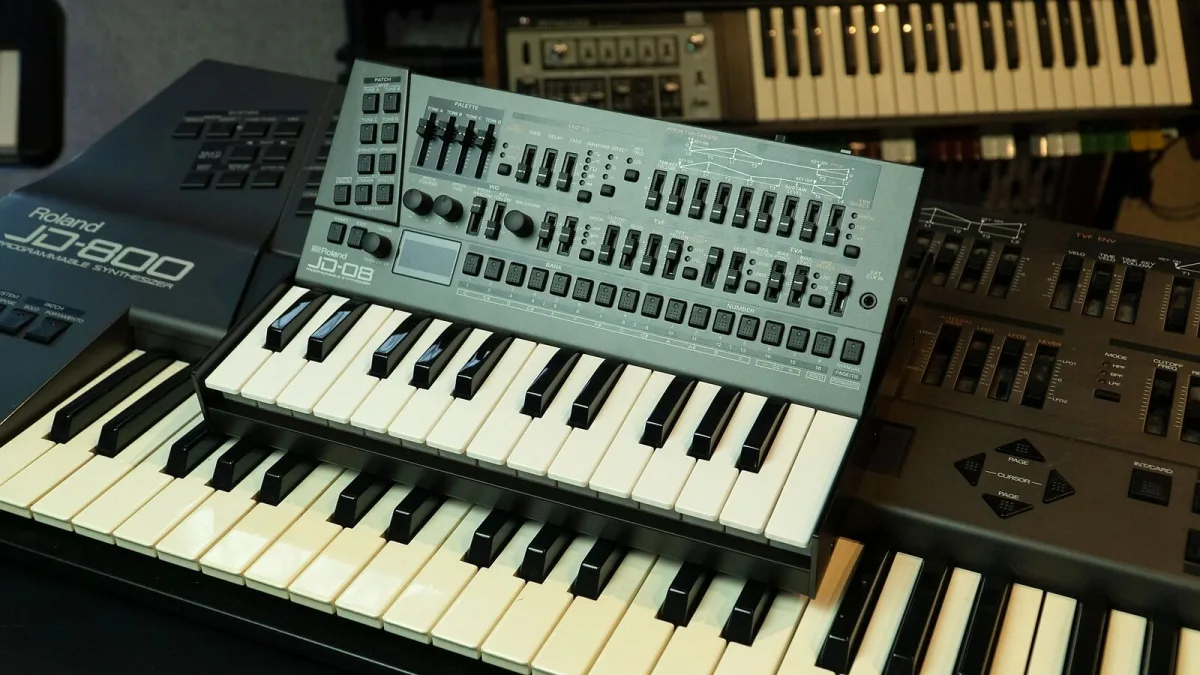
"Best value Behringer" only means something once you know what you're valuing. A bassline player and a church sound engineer will end up with completely different shopping lists, even though both might reasonably call themselves Behringer customers. So rather than crowning one overall "best," here's where the genuine value sits across the different jobs this brand covers.
Best for your very first synth: the monophonic range
Model D, MS-1, Pro-1 and K-2 all sit in similar territory: one note at a time, a straightforward signal path, and enough character to actually make interesting sounds rather than just demonstrate a concept. For a first synth, the value case is simple — you're getting a real analog signal path, not a toy, at a price that doesn't punish you for still learning.
Best for chords without going fully polyphonic: Poly D
The Poly D sits in an interesting middle ground. Its four oscillators and paraphonic design let you play chords and layered textures without the cost or complexity of a fully independent polyphonic instrument. If your music leans towards pads and stacked tones but you're not ready to commit to a bigger polysynth, this is where the value tips in your favour.
Best for pads and layered arrangements: DeepMind and UB-Xa
Once you genuinely need full polyphony — several independent voices playing at once — the DeepMind and UB-Xa families are the sensible step up. They cost more than the monophonic range, and rightly so; you're paying for real polyphonic voice architecture, not just a bigger badge. Skip these if you mostly play basslines and leads, because you'd be paying for voices you won't use.
Best for hands-on patching: Neutron and Crave
Semi-modular instruments reward a different kind of value judgement. You're not just buying a synth, you're buying a normalled signal path you can pull apart with patch cables whenever curiosity strikes. For anyone who's outgrown a basic monophonic synth and wants to actually understand signal flow, Neutron and Crave offer that education at a genuinely low entry cost compared with building a full Eurorack case from scratch.
Best for live sound and small venues: the X32 platform
On the mixer side, the X32 range remains the standout value pick for anyone running sound for a band, a church or a small venue. Midas-designed preamps, extensive routing, remote app control and AES50 expansion put it well ahead of a basic analog mixer at a similar price — the value case here is less about being cheap and more about genuinely punching above its price bracket against rival digital consoles.
Behringer value by use case, at a glance
| Your situation | Best-value pick | Why |
|---|---|---|
| First synth, learning the basics | Model D / MS-1 | Real analog path, low financial risk |
| Chords without full polyphony | Poly D | Paraphonic chords at a mid-range price |
| Pads and layered parts | DeepMind / UB-Xa | True polyphonic voice architecture |
| Learning patching and signal flow | Neutron / Crave | Semi-modular education without full Eurorack cost |
| Live sound, church, small venue | X32 platform | Professional preamps and routing at accessible cost |
Where value gets shakier: brand-new announcements
Recently announced instruments like the JN-80, JT-2 and D Mini generate a lot of excitement, and some genuinely look like strong value on paper. But announcement, preorder and general availability are three different stages, and specifications can shift before a unit actually ships. If you want guaranteed value today rather than a promising rumour, lean towards models with an established track record and independent reviews already published.
Don't let "cheap" override "right for you"
The single biggest way to waste money on Behringer gear isn't overspending — it's buying the wrong category entirely because the price made it tempting. A brilliant-value polyphonic synth is poor value if you actually needed a mixer, and a superb mixer is poor value if what you needed was a first synth to learn on. For the decision framework behind that choice, our buyer's guide walks through exactly what to check, and our complete guide is the place to start if you want the full background first.
The bottom line
There's no single best-value Behringer product — only the one that matches what you're actually trying to play or run. Match the category to your real need first, then let price be the tiebreaker within that category, and you'll come out with something you'll actually enjoy using rather than something that just looked like a bargain in the listing.





Comments