


Chamber Pop article
The History of Chamber Pop
Chamber pop has a longer history than most listeners realise — tracing through baroque pop, 1990s indie, and the maximalist 2000s to the music being made today. Here is the full story.
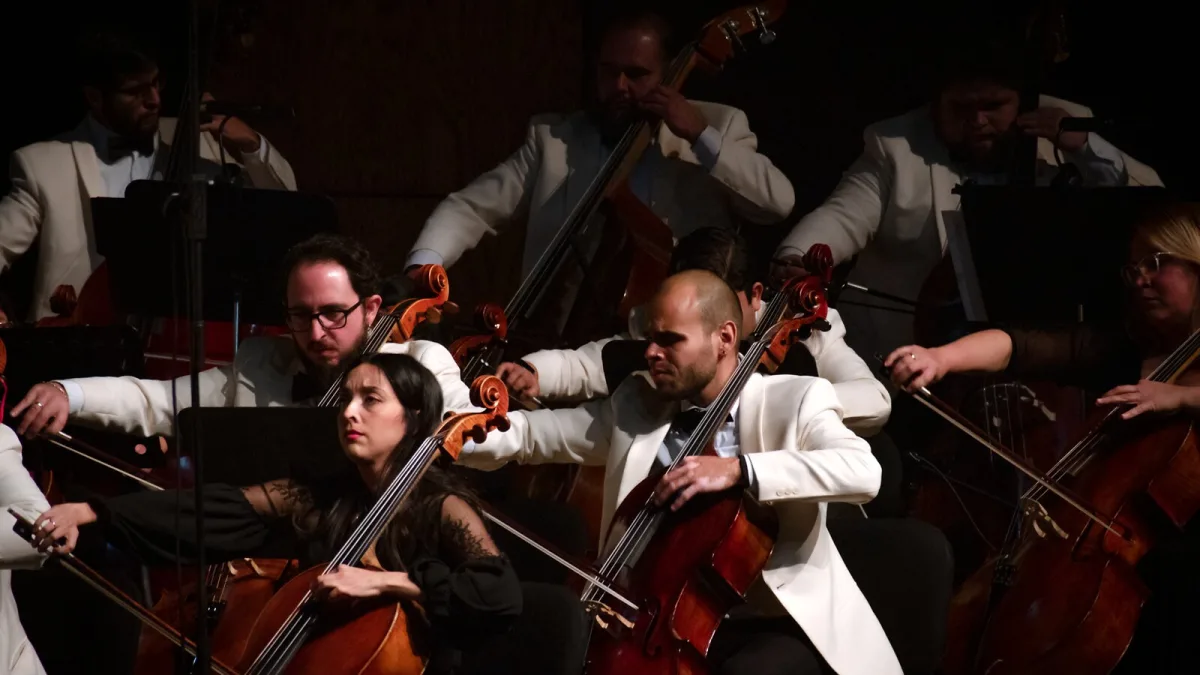
The story of chamber pop is the story of indie music refusing to make do. It begins with a generation of songwriters in the early 1990s who found rock's standard guitar-bass-drums palette too limited for what they wanted to say — and who reached, sometimes literally into the classical canon, for the instruments that could do the work instead. What emerged was a distinct and lasting genre that still shapes the most ambitious independent music being made today.
The Baroque Pop Inheritance
The genre did not appear without precedent. In the 1960s, artists like The Left Banke ("Walk Away Renée"), The Association, the Beach Boys of Pet Sounds, and the baroque-obsessed Scott Walker were already placing strings, harpsichords and woodwinds at the centre of pop productions. The Beatles' "Eleanor Rigby" and "Yesterday" belong to the same impulse: songs where orchestral instruments are the main event, not decoration.
This strand of production — sometimes called baroque pop — was commercial and mainstream in its day. It largely receded through the 1970s as rock grew louder and stadium-scaled. But the recordings stayed in the culture, and the songwriters who grew up listening to them absorbed the lesson that pop could encompass a full instrumental palette.
1990s: The Origins of Chamber Pop Proper
The term "chamber pop" itself began appearing in music criticism in the early 1990s, initially as a description of artists working in a space between indie rock and classical music. The Magnetic Fields' The Charm of the Highway Strip (1994) was an early example, as was Tindersticks' remarkable debut (1993), which surrounded Stuart Staples' voice with strings, vibraphone and trumpet in a way that owed more to Burt Bacharach than to anything in indie at the time.
Belle and Sebastian were perhaps the most influential early act in the genre. Their Tigermilk (1996) and If You're Feeling Sinister (1996) defined a template — literary lyrics, hushed vocals, string and woodwind arrangements, a sense of melancholy that felt genuinely literary rather than affected — that shaped a generation of bands. They recorded in near-secrecy in Glasgow and became, almost by accident, one of the defining sounds of late-1990s indie.
2000s: Sufjan Stevens and the Maximalist Turn
If Belle and Sebastian established the template, Sufjan Stevens expanded it to operatic scale. His Greetings from Michigan (2003) and Illinois (2005) used full orchestras — strings, brass, woodwinds, banjo, multiple vocalists — in arrangements of extraordinary complexity and ambition. Illinois in particular brought the sound to a global audience and remains the genre's most discussed single work.
The mid-2000s also brought Arcade Fire's Funeral (2004), which incorporated violin, cello, hurdy-gurdy, piano and accordion alongside electric instruments in a sound that blurred the boundary between orchestral indie and rock. Funeral won the Polaris Prize and was widely named album of the decade by multiple critics, bringing the genre's aesthetic to a mainstream rock audience.
Joanna Newsom, Camera Obscura, and Antony and the Johnsons (now Anohni) also emerged in this period, each finding a distinctive position within the genre.
2010s and Beyond
The genre diversified through the 2010s. The micro-label scene embraced it — many artists released limited vinyl editions of string-heavy folk-pop that owed an obvious debt to the preceding decade's leading figures. Artists like Sufjan Stevens continued to develop and expand (his Carrie & Lowell in 2015, a stripped-back acoustic work, was critically received as his finest), while newer names like Father John Misty, Angel Olsen and Big Thief brought the aesthetic into the 2010s indie landscape.
The genre also increasingly intersected with ambient and art pop. Stars of the Lid, Johann Johannsson, and Ólafur Arnalds connected orchestral chamber aesthetics with drone and electronic textures, creating a parallel strain of orchestral indie that is sometimes grouped under the same broad orchestral indie umbrella.
The Genre Today
The genre remains active and productive. Its core values — melodic songwriting, orchestral instrumentation, lyrical ambition — are now mainstream enough that the term is used less often; the sound has percolated so far through independent music that it no longer requires a dedicated label. But the artists doing the most interesting work in the space are still there, still reaching for the string section when guitar will not quite do.
For a guide to the most essential artists working in the genre, see the genre's essential artists. For a curated selection of the most important albums, the album guide covers the essential discography.


Comments