


Chamber Pop article
Chamber Pop for Newcomers: Where to Start
Getting into chamber pop is more straightforward than its reputation suggests. Here is a clear, opinionated path in — three starting albums and where to go next.
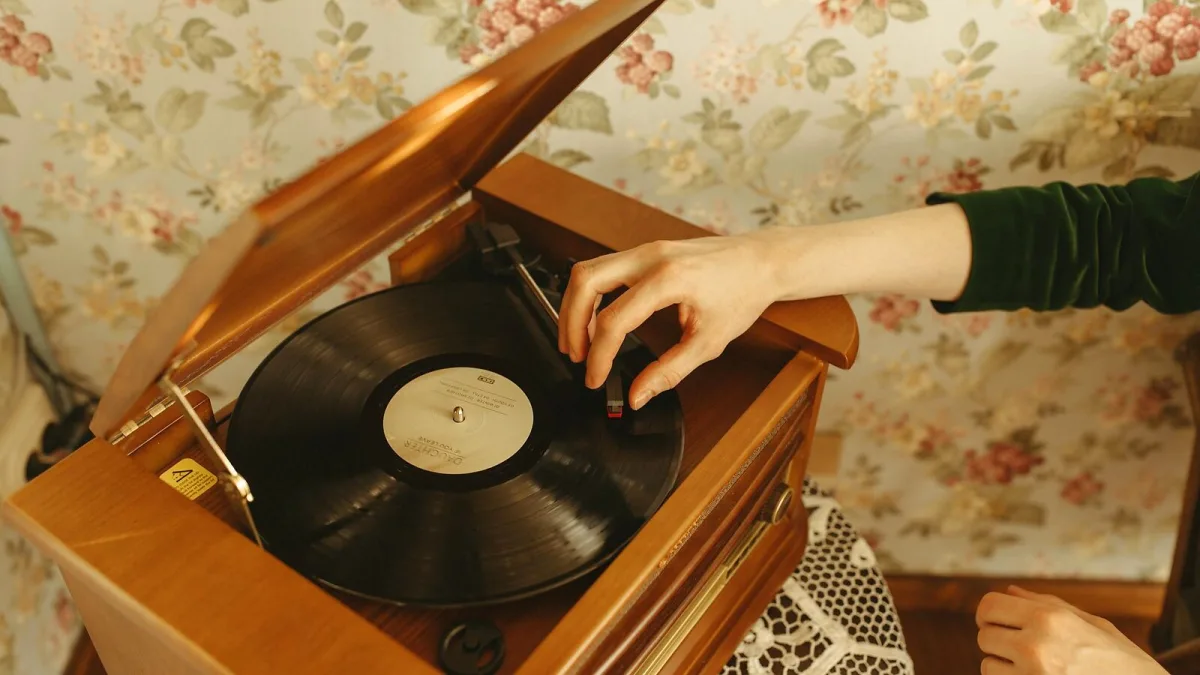
So you have heard something — perhaps a track from Belle and Sebastian, or the opening minutes of Arcade Fire's Funeral, or Sufjan Stevens' "Chicago" on a film soundtrack — and you want to know where the rabbit hole leads. Chamber pop rewards patient exploration: the catalogue is large, the quality consistent at the top end, and the path through it clearer than it might appear. Here is how to begin.
Start with Three Albums
Three records establish the essential range of the genre and provide a foundation for everything else:
- Belle and Sebastian — If You're Feeling Sinister (1996): The most immediately accessible entry point. Quiet, literary, arranged with cello and piano, and emotionally direct without being sentimental. If this does not connect, nothing in the genre will; if it does, you will need it for weeks.
- Arcade Fire — Funeral (2004): The most dramatic and expansive of the essential trio. This is the record for listeners who find Belle and Sebastian too small-scale. The arrangements are large; the dynamics are extreme; the emotional impact is significant.
- Camera Obscura — My Maudlin Career (2009): The warmest and most melodically conventional of the three. A straightforward record of great songs, beautifully arranged. An ideal starting point if you want something immediately pleasurable rather than challenging.
Then Try Sufjan Stevens
Stevens deserves his own recommendation because his work divides along lines that do not map neatly onto taste: Illinois (2005) is maximalist and epic; Carrie & Lowell (2015) is minimal and devastating. Both are essential. Start with Illinois if you responded to Funeral; start with Carrie & Lowell if you responded to If You're Feeling Sinister.
Branch Out by Mood
Once those four or five albums are familiar, the next choices depend on what you have responded to:
- For more literary songwriting: The Magnetic Fields' 69 Love Songs (1999), Nick Drake's Bryter Layter (1970)
- For more ambitious orchestral arrangements: Joanna Newsom's Ys (2006), Andrew Bird's Noble Beast (2009)
- For more intimate acoustic work: Sufjan Stevens' Seven Swans (2004), Bill Callahan's Sometimes I Wish We Were an Eagle (2009)
- For historical context: The Left Banke's There's Gonna Be a Storm (compilation), Scott Walker's Scott 4 (1969)
Where to Listen
Spotify and Apple Music have strong catalogues for this genre. Bandcamp is useful for finding newer and smaller artists working in the space. For physical media, most of the core discography is available on vinyl — the format suits the genre well given its emphasis on dynamics and acoustic warmth.
What to Read
For context, Pitchfork's long-form album reviews of Illinois, Funeral and If You're Feeling Sinister remain useful historical documents. The album-length criticism of websites like The Needle Drop provides detailed listening guides. For the genre's history in condensed form, the history article traces the genre from its 1990s origins to today.
Concerts and Live Music
Many artists in the genre perform live with expanded ensembles — the recorded orchestral arrangements translated to the stage. Belle and Sebastian remain active touring artists; Sufjan Stevens tours occasionally; Arcade Fire have become a major live act. Smaller touring artists like Andrew Bird perform as a solo multi-instrumentalist using looping technology to approximate the recorded arrangements. Checking festival lineups in the UK — End of the Road, Green Man, Latitude — reliably surfaces relevant names each summer.
The Broader Picture
Chamber pop connects outward in every direction: toward folk music (Nick Drake, Bon Iver), toward classical contemporary (Ólafur Arnalds, Max Richter), toward art pop (Scott Walker, David Bowie's Berlin albums), and toward contemporary singer-songwriting. It is not a closed community but a cluster of aesthetic values that recur across many kinds of music. The more you listen, the more you will find it surfacing in unexpected places.
For a complete picture of the artists and albums essential to the genre, the artists guide and the albums guide are the next stops.




Comments