


Chamber Pop article
A Beginner's Guide to Chamber Pop
Chamber pop puts orchestral instruments at the heart of indie songwriting. Here is what defines the genre, who its essential artists are, and why it has endured for thirty years.
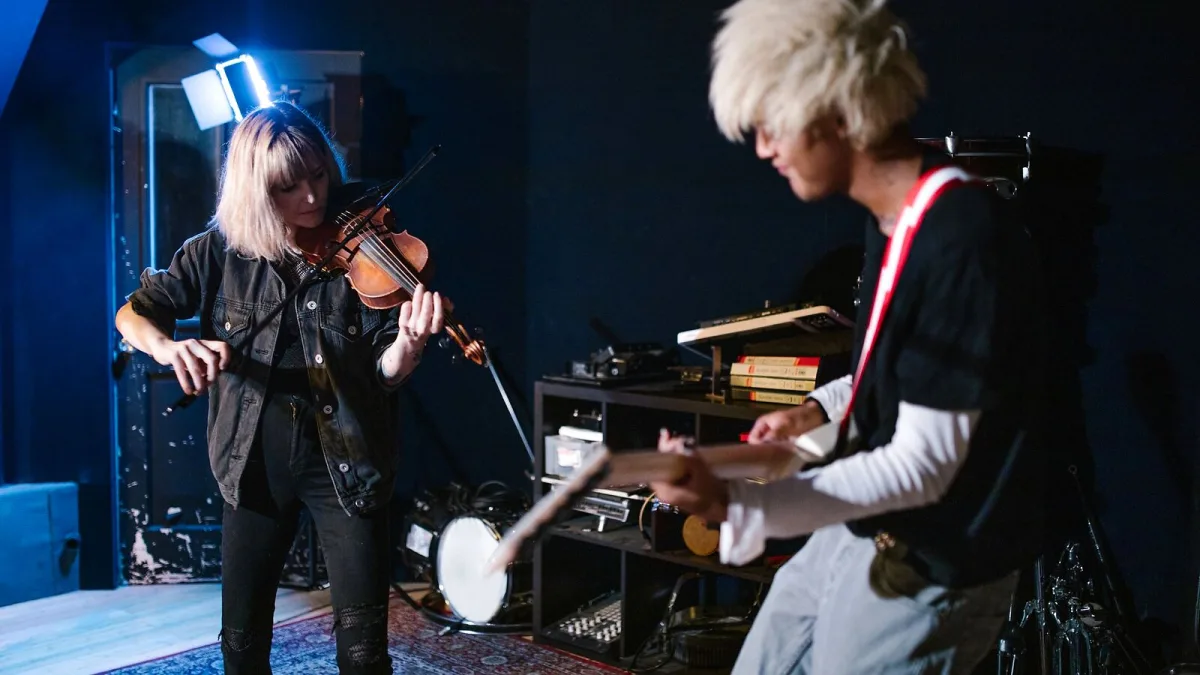
Chamber pop is indie music with ambition — a genre that takes the emotional directness of pop songwriting and surrounds it with instruments that classical composers would recognise: strings, woodwinds, brass, harpsichord, piano. The result is rich and melancholic in a way that electric guitar rarely achieves on its own. If you have heard Sufjan Stevens, Belle and Sebastian, or Arcade Fire and thought "there is something cinematic about this", you have already encountered it.
What Defines the Sound
Chamber pop is not a precise category with fixed rules, which is part of its appeal. What connects the artists who get called by that name is a shared aesthetic: songs built around voice and melody, arranged with acoustic and orchestral instruments, produced with care for texture and space. The electric guitar — dominant in most indie — is either absent or played quietly. What takes its place is the kind of instrumental palette you might find in a small ensemble or chamber orchestra.
Strings, particularly strings, are the genre's most recognisable ingredient. Not the lush string sections of mainstream pop production but something more exposed, closer to a string quartet than a full orchestra. The arrangements tend to be tasteful rather than bombastic — they serve the song rather than overwhelm it.
Key Characteristics
- Orchestral instrumentation: Strings, woodwinds (oboe, clarinet, flute), brass (French horn, trumpet), piano, harpsichord. These are the core instruments rather than decorative additions.
- Melodic songwriting: Hooks and vocal melodies at the centre, not riffs or rhythm-led arrangements. Songs in the conventional sense, built to be remembered.
- Lyrical depth: Themes that tend toward introspection, literary allusion, nature, memory, and loss. Lyrics in this genre often reward careful attention.
- Quiet production: Dynamic range matters. Quiet passages and loud ones coexist; the overall volume level tends to be lower than in rock or indie.
- Lo-fi or studio craft: Some of these artists (Sufjan Stevens, Joanna Newsom) work with full orchestral resources; others (Smog, Mount Eerie) achieve the aesthetic through careful home recording and choice of instruments.
Essential Artists
The names most consistently associated with the genre include Sufjan Stevens — whose Illinois (2005) is often cited as the genre's masterwork — and Belle and Sebastian, whose If You're Feeling Sinister (1996) established a template for literate, orchestrally inflected indie pop. Arcade Fire's Funeral (2004) brought the aesthetic to mainstream attention. Magnetic Fields, Camera Obscura, Joanna Newsom, Nick Drake (as an acknowledged influence), Tindersticks, and Andrew Bird complete the essential listening list.
How It Differs from Baroque Pop
Baroque pop is an older term (used for 1960s artists like The Left Banke, Scott Walker, and late-period Beatles) that describes a similar impulse: rock and pop production enriched with classical instruments. The genre is the contemporary descendant — more lo-fi in origin, more indebted to indie aesthetics, less interested in the grandeur of the baroque. The terms overlap, and neither is rigidly defined, but baroque pop typically describes music from the 1960s–70s while this genre describes work from the 1990s onward.
Why It Has Endured
The genre occupies a space that no other quite fills: it is melodically direct enough for casual listeners but sonically and lyrically rich enough to sustain repeated, attentive listening. It tends to age well. An album like If You're Feeling Sinister sounds as relevant today as it did in 1996. The genre does not depend on production trends or technology — acoustic instruments remain acoustic instruments — which insulates it from the datedness that afflicts a lot of electronic or beat-driven music.
Where to Start
For the newcomer, three albums cover the essentials: Belle and Sebastian's If You're Feeling Sinister, Sufjan Stevens's Illinois, and Arcade Fire's Funeral. Each represents a different facet of the genre — Scottish literary melancholy, American maximalist orchestration, and Canadian communal folk-rock respectively. From any of these starting points, the genre's broader landscape opens up quickly.
Ready to go deeper? The newcomer's guide maps the essential listening path in detail. For the genre's full story, the history traces the genre from its 1990s origins to today.



Comments