


Marching Band article
The History of Marching Band
From soldiers keeping step to Script Ohio and modern drum corps, here's how marching band grew into the layered tradition it is today.
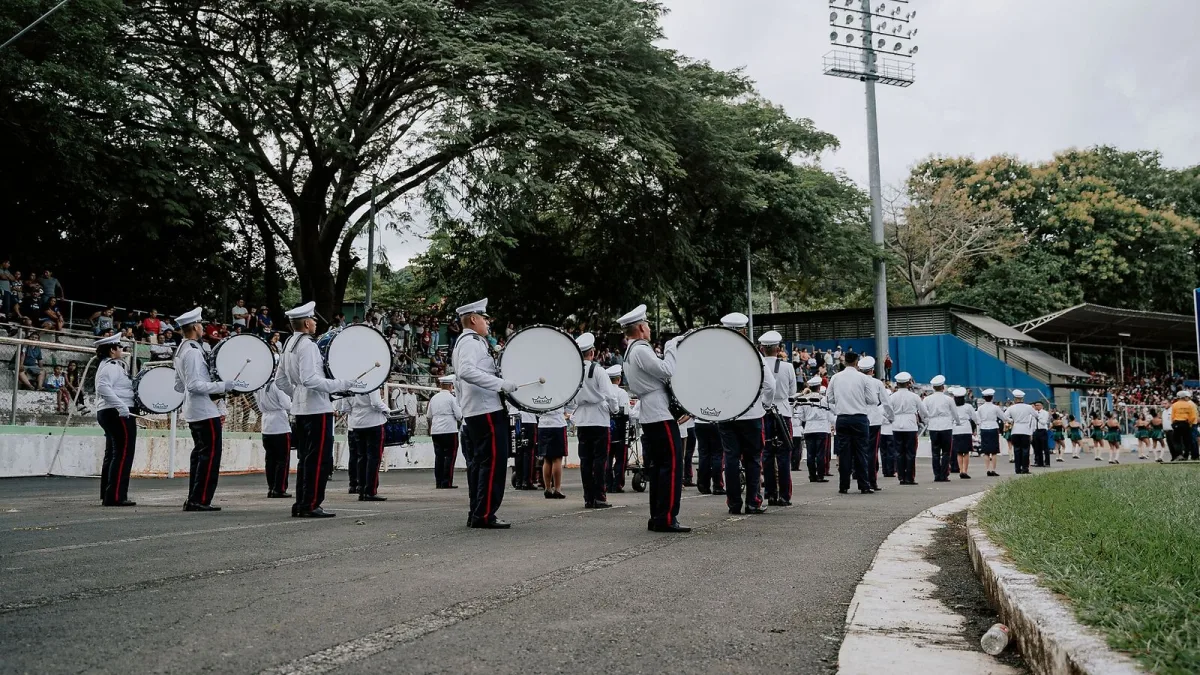
Every tradition has a starting point, and marching band's is easy to trace: soldiers, walking, playing music together to keep step and morale up. From there, it took barely a century to turn into an eight-minute theatrical production with lighting cues, choreography and a full drumline. Here's how that happened.
Where It Began: Military and Civic Bands
Long before any football stadium existed, wind bands accompanied troops, ceremonies and civic parades — music that had to be loud, portable, and playable while walking in formation. That basic requirement, playing well while on the move, is the direct ancestor of everything that followed. The instrumentation, discipline and precision of military bands shaped the DNA of the activity long before it had anything to do with sport.
America Takes It to the Football Field
The tradition found a new home in American college and school culture, where bands began performing at football games — first simply providing music, then gradually taking over the halftime interval as a stage of their own. Pep rallies, parades and ceremonial appearances kept the older civic role alive alongside this new one.
It was this college setting that pushed the activity from "musicians who happen to walk" toward something closer to a visual art form. Directors began experimenting with shapes and patterns the band could form on the field while playing, rather than simply marching forward in blocks.
Script Ohio and the Birth of Show-Style
One of the most famous turning points came from Ohio State University's marching band, whose "Script Ohio" formation — the band spelling out the state's name in cursive script across the field, with a sousaphone player traditionally given the honour of "dotting the i" — became one of the most recognisable moments in American college sport. Formations like it proved that a field show could be genuinely theatrical, not just a band walking in straight lines, and it helped inspire the show-style tradition that spread across college programmes nationwide.
From Veterans' Corps to Drum Corps International
Running alongside the college tradition is a separate but related story: drum and bugle corps. These ensembles trace back to youth and veterans' groups built around bugles and drums, often connected to military and community organisations. Over time they professionalised into a distinct competitive activity, brass-and-percussion-only, judged on musical and visual excellence at a level of polish that rivals the biggest college programmes. Drum Corps International, formed in the early 1970s, brought structure and a touring competitive season to that world, and it remains the sport's most demanding proving ground.
A Different Kind of Show: HBCU Marching Bands
Historically Black colleges and universities developed their own, distinct approach entirely: high-energy, entertainment-first performances built around dance, showmanship and crowd interaction as much as precision drill. Bands built this reputation over generations, and their influence on popular culture, halftime entertainment and the wider sense of what a marching band can be has been enormous, well beyond their own campuses.
The Activity Keeps Evolving
The story hasn't stopped. Indoor percussion and winter guard grew out of the same drill-and-performance DNA, moving the activity into gyms and arenas with an even sharper focus on choreography and staging. Electronics, amplification and increasingly ambitious visual design have kept pushing field shows further from their military-band roots and closer to full theatrical production, even as the fundamentals — play accurately, move precisely, together — haven't changed at all.
If you want to see where all this history lands today, our guide to what marching band actually involves now covers the modern activity section by section, and our guide to its different styles untangles how these traditions diverged.
The Names Worth Knowing From This Story
A handful of college programmes and drum corps carried this history forward and still define it today. Our rundown of marching band's best-known ensembles is the natural next stop.
The Bottom Line
What started as soldiers playing music while keeping step became marching band as we know it — one of the most physically and musically demanding ensemble traditions in existence — built layer by layer through military bands, college football culture, drum corps and HBCU showmanship. Understanding that layered history explains why the activity looks so different from campus to campus, and why so many people take it so seriously.


Comments