


Marching Band article
A Beginner's Guide to Marching Band
Marching band asks its performers to be musicians and movers at once. Here's what the sections, the drill and the different styles actually involve.
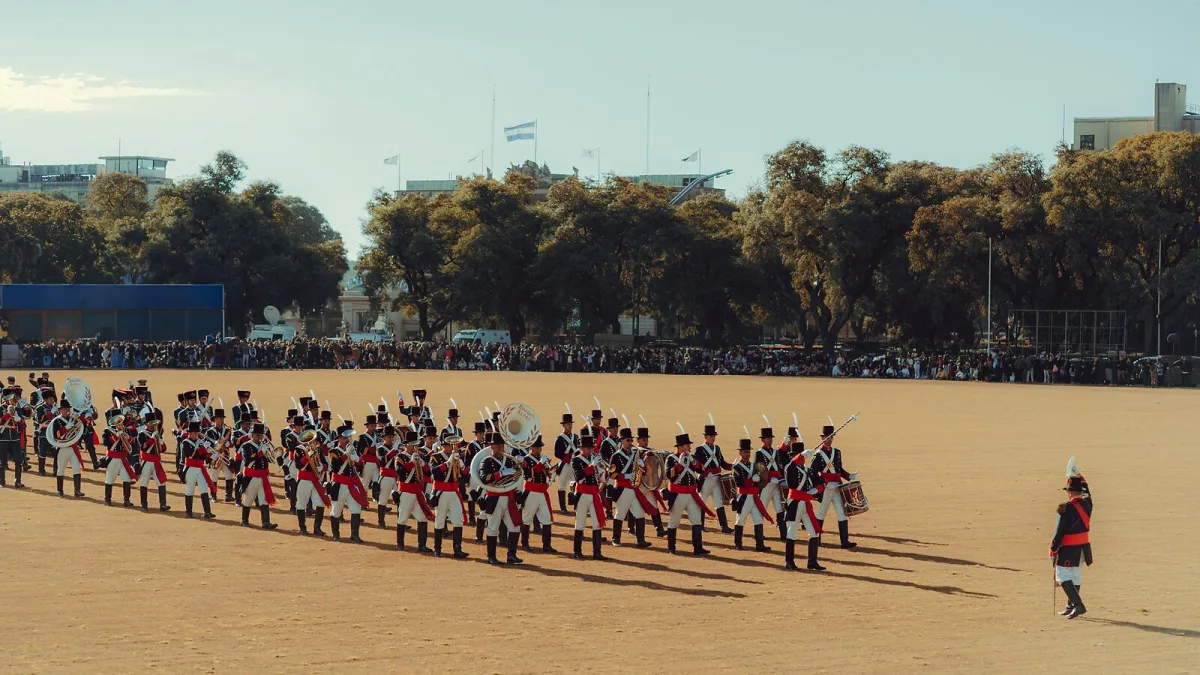
Football halftime, a Fourth of July parade, a Saturday morning competition on a school field somewhere in the rain — that's where you'll find it. Marching band takes live music and asks it to do something a concert never has to: move, in formation, in time, without dropping a note. Here's what the tradition actually involves, in plain terms.
What Marching Band Actually Is
At its simplest, it's a musical ensemble that performs while moving — usually across a football field or along a parade route — combining wind instruments, percussion and, in most modern programmes, a visual element called colour guard. The performers aren't just playing music; they're also walking specific paths, at specific speeds, while staying in tune and in time with everyone around them.
That dual job is what separates the activity from a concert band sat comfortably in chairs. You have to be a musician and a mover at once, and neither skill gets to switch off while the other is working.
The Sections That Make Up a Band
Every band divides its performers into a handful of roles, and understanding them is the fastest way to understand the whole activity:
| Section | Typical instruments | Job on the field |
|---|---|---|
| Brass | Trumpets, mellophones, trombones, baritones, sousaphones | Melody, harmony and low-end power |
| Woodwinds | Flutes, clarinets, saxophones | Melody, colour and agility |
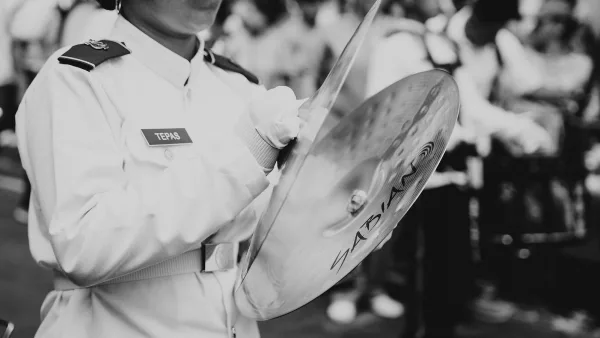
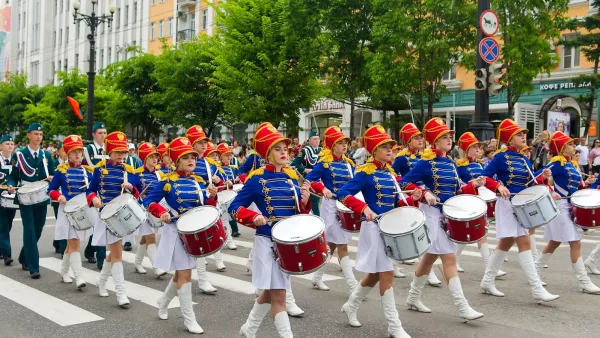
| Battery (drumline) | Snares, tenors, bass drums, cymbals | The mobile rhythmic engine |
| Front ensemble ("the pit") | Marimbas, vibraphones, timpani, keyboards | Stays put on the sideline, adds harmony and texture |
| Colour guard | Flags, rifles, sabres, dance | Visual storytelling alongside the music |
A drum major usually sits above all of this — a student conductor who sets tempo, cues entrances and keeps the whole machine synchronised.
Not All Marching Bands Look the Same
Say the phrase and different people picture completely different things, and honestly, they're all correct. There's the traditional parade band, built for forward motion and a crowd-pleasing repertoire. There's the show-style college band, staging a themed production with shifting formations and pop or classical arrangements. There's drum and bugle corps, a more specialised, brass-and-percussion-only activity under Drum Corps International. And there are the HBCU-style bands, famous for high-energy, dance-driven shows that are as much entertainment as they are music. Our guide to marching band's different styles breaks each of these down properly.
What a Rehearsal and Performance Actually Involve
Learning the music is only half the job. The other half is drill — the planned movement and formations performers execute while playing, usually plotted out on coordinate sheets or a digital drill system. Members learn it in small chunks: counts and movement first, then the music layered on top, then the whole thing built up form by form until an eight-minute show is second nature.
It's genuinely demanding. Performers are managing posture, step size, spacing and instrument technique all at once, often in heat, often carrying real weight, and it takes real physical conditioning as well as musical skill to do it well.
Where the Tradition Comes From
The short version: it grew out of military and civic wind-band traditions, then took on its own identity through American college football and parade culture. If you want the full story — how a stationary marching square became a full theatrical production — our history of marching band covers it properly.
Who to Watch If You're New to This
If you want to see the activity at its best, certain college programmes and competitive drum corps have built genuine reputations over decades. We've rounded up the ensembles worth knowing in our guide to marching band's best-known names.
Thinking of Joining One?
If this has you wondering whether you could actually do this yourself, you can. Our newcomer's guide to marching band walks through picking a section, what a first rehearsal looks like and the gear you'll actually need.
The Bottom Line
Marching band asks more of its performers than almost any other ensemble format — music, memory, movement and stamina, all at once, often in front of a stand full of people. That combination is exactly why it has such a devoted following, on the field and off it.



Comments