


Baroque Music article
The History of Baroque Music
How a Florentine argument about clarity in singing grew, over a century and a half, into the Baroque period we know today.
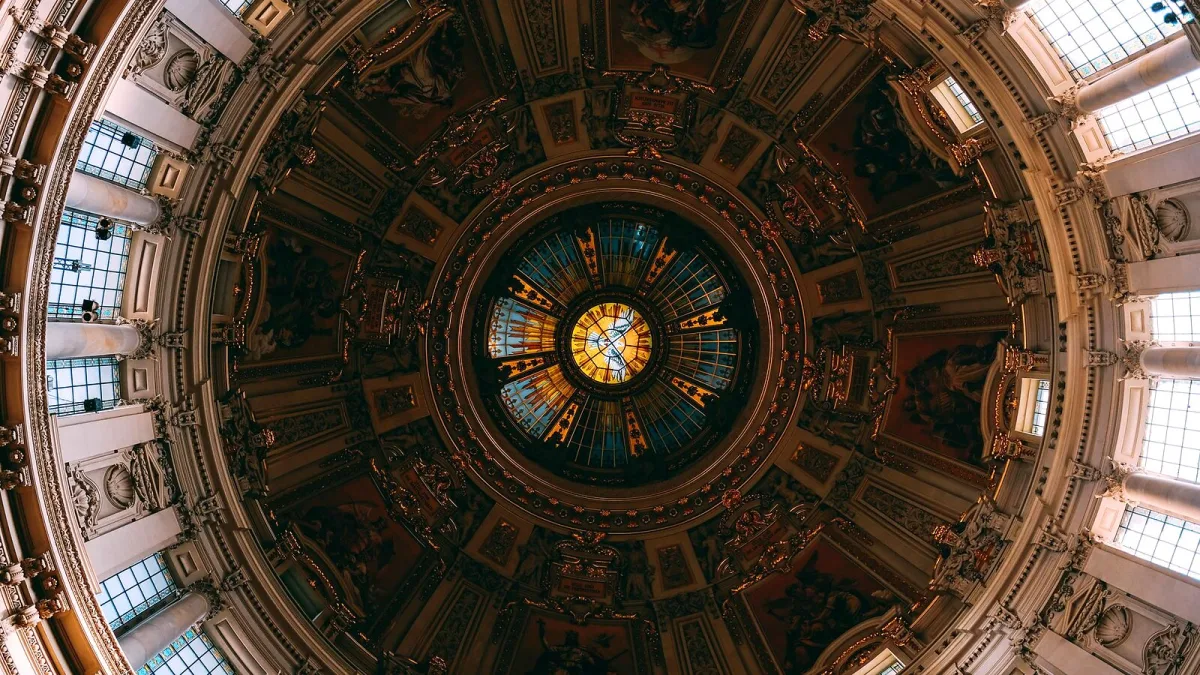
Every era of music has a moment where the old rules stop working and nobody's quite decided on the new ones yet. For Western art music, that moment arrives around 1600, in Italy, and the century and a half of invention that follows is what we now call the Baroque period. This is the story of how it got there, what it changed, and why it eventually gave way to something else entirely.
A Name Nobody Chose at the Time
Nobody living through the Baroque period called it that. The word comes from the Portuguese barroco, meaning an oddly shaped pearl, and later critics applied it — not always kindly — to art and music they found excessive, ornate or overwrought compared with what came before. Only in hindsight did it settle into a neutral label for the period running roughly from 1600 to 1750.
Where It Actually Began: Italy, Around 1600
The Baroque period grows directly out of a very specific argument. Late in the sixteenth century, a group of Florentine scholars and musicians known as the Camerata decided that Renaissance polyphony — several independent vocal lines woven together — buried the words being sung. Their solution was monody: a single expressive vocal line over simple accompaniment, designed to let text and emotion come through clearly. That idea, more than any other, is where opera comes from.
Claudio Monteverdi took this new thinking further than anyone. His 1607 opera L'Orfeo combined the Camerata's clarity with genuinely dramatic instrumental colour, and it remains the earliest opera still regularly performed today. Within a few decades, opera houses had opened across Italy, and the new style was spreading north.
The Middle Years: Building the Rulebook
By the second half of the seventeenth century, composers were less concerned with inventing new ideas from scratch and more interested in refining the ones already on the table. The violin family rose to prominence, and figures such as Arcangelo Corelli established durable models for the sonata and the concerto grosso — a form contrasting a small group of soloists against a fuller ensemble.
This was also the period in which basso continuo became close to universal: a bass line, typically on cello or bass viol, supported by a chord-playing instrument such as harpsichord, organ or lute. Composers stopped writing every harmonic detail out in full, instead using a shorthand called figured bass and trusting performers to fill in the rest. Music was becoming a genuine collaboration between page and player.
Crucially, this was music made largely to order. Courts, churches and the new public opera houses were the employers, and a composer's job title — Kapellmeister, court composer, organist — usually mattered as much to their daily life as any individual piece they wrote.
The Late Baroque: Familiar Names, Bigger Stakes
The final decades of the period, roughly 1700 to 1750, produced the composers most listeners already half-know. Antonio Vivaldi, working largely in Venice, wrote hundreds of concertos distinguished by rhythmic energy and vivid contrast. Johann Sebastian Bach, based in Germany, pushed counterpoint — several independent melodic lines interacting at once — to a level of complexity rarely matched since. George Frideric Handel, having relocated to London, built a career writing for paying public audiences rather than court patrons alone, culminating in English-language oratorios such as Messiah.
Meanwhile in France, Jean-Philippe Rameau was developing harmonic theory that still underpins how musicians talk about chords today, while further south Domenico Scarlatti's keyboard sonatas carried a distinctly Iberian flavour picked up during his years in Spain and Portugal. For a proper introduction to these figures and several others, the best Baroque composers to know covers each in more depth.
What Actually Changed, Decade by Decade
| Period | Roughly | What defined it |
|---|---|---|
| Early Baroque | 1600–1650 | Birth of opera, monody, Monteverdi |
| Middle Baroque | 1650–1700 | Sonata and concerto forms standardise, Corelli |
| Late Baroque | 1700–1750 | Bach, Handel, Vivaldi; counterpoint and public opera reach a peak |
How It Ended
No single event closed the Baroque period; the transition to what we now call the Classical era was gradual, driven largely by changing taste. Audiences increasingly wanted clearer melodies, simpler accompaniment and more balanced phrasing than the dense counterpoint of late Bach could offer. J. S. Bach's death in 1750 is the date most historians use as a convenient marker, but composers such as his own sons were already writing in a lighter style years before then. The Baroque period didn't so much end as get quietly out-fashioned.
Why It Still Matters
Modern classical music inherited more from the Baroque period than most listeners realise: tonality built around major and minor keys, the concerto as a form, the orchestra as an ensemble worth writing specifically for, and the idea that instrumental music could stand entirely on its own rather than merely accompanying singers. If you want to understand how to actually recognise this sound by ear rather than just its history, this beginner's guide to Baroque music is the natural next stop, and the forms it left behind unpacks the opera, cantata, concerto and fugue in proper detail.




Comments