


Baroque Music article
A Beginner's Guide to Baroque Music
What Baroque music actually is, the sound that ties it together, and the composers worth knowing before you dig any deeper.
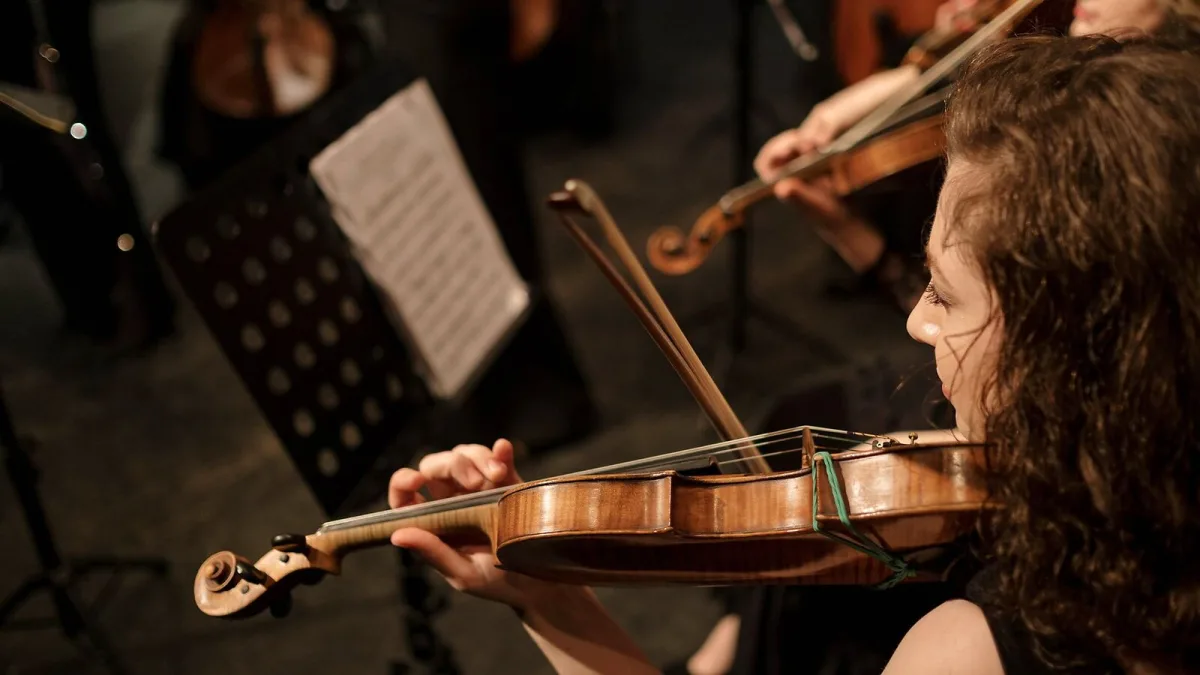
If you've ever heard a harpsichord clatter away under a soaring violin line, or felt a choir suddenly swell into a wall of sound, you've met Baroque music without necessarily knowing its name. This guide sets out what the term actually means, the sound that ties the era together, and the handful of composers and forms worth knowing before you go any further. Take it slowly — nobody needs every fact at once.
What Is Baroque Music, Exactly?
It is the Western art music written roughly between 1600 and 1750. The word itself comes from the Portuguese barroco, meaning an oddly shaped pearl — a slightly unflattering label later writers pinned on the period's ornate, dramatic style. It began in Italy, largely alongside the birth of opera, and spread across Europe over the following century and a half.
It sits between two other periods you may already have heard of: the Renaissance before it, with its calmer, choir-based polyphony, and the Classical period after it, associated with composers such as Mozart and Haydn. It is the noisy, expressive bridge between the two, and it's where much of what we now think of as "classical music" actually took shape.
The Sound That Ties It Together
No two Baroque pieces sound identical, but a handful of habits crop up again and again. Learn to spot these and most of it becomes easy to recognise by ear:
- A driving pulse — repeated fast notes in the strings or bass that keep the music moving forward.
- Basso continuo — a bass line, often played on cello or bass viol, propped up by a chord-playing instrument such as harpsichord, organ or lute. Think of it as the era's rhythm section.
- Ornamentation — trills, turns and other little decorations added to a melody, sometimes written in, sometimes improvised on the spot.
- Bold contrast — loud against soft, soloist against full ensemble, one voice answering another.
- Imitation — a musical idea introduced by one voice, then passed to another, most obviously in a fugue.
Worth remembering: Baroque music was never one uniform style. Composers in Italy, France, Germany and England all had their own habits, and a score from 1610 can sound worlds away from one written in 1740.
Three Stages, One Long Century
It helps to think of Baroque music in three loose phases. Early on (roughly 1600–1650), composers such as Claudio Monteverdi were inventing opera and finding new ways to let a single voice carry real emotion. By the mature period (1650–1700), figures like Arcangelo Corelli were setting the template for the concerto and sonata. The late Baroque (1700–1750) gave us the names most people already recognise — Bach, Handel and Vivaldi — before the style gradually gave way to the lighter, simpler Classical era. For the fuller story, including what changed and why, the history of the genre traces it decade by decade.
The Forms It Gave Us
This period didn't just produce great tunes — it invented or standardised many of the containers classical music still uses: opera, the oratorio (a concert-length sacred drama, sung but not staged), the cantata, the concerto, the sonata, the dance suite and the fugue. Each has its own logic and its own pleasures, and untangling them properly is worth a guide of its own: see the different Baroque forms, explained for the full breakdown.
The Instruments Doing the Work
A typical Baroque ensemble leaned on strings — violins, violas, cellos and viols — alongside oboes, recorders, bassoons and the occasional natural trumpet (a valveless ancestor of the modern instrument, trickier to play in tune). Sitting underneath it all was usually a harpsichord or organ, plucking or sustaining the chords of the basso continuo. The harpsichord itself is worth understanding on its own terms: unlike a piano, its strings are plucked rather than struck, so a player can't simply lean harder on a key to make a note louder. Composers and performers got around this by piling on ornamentation and by contrasting whole blocks of instruments instead, which is one reason the era leans so heavily on those bold shifts between loud and soft.
None of this was written down in the detail modern players are used to. A Baroque score often gives little more than the notes and a bass line with numbers under it — a shorthand called figured bass, which tells a continuo player which chords to build without spelling out every note. Performers were expected to fill in ornaments, tempo and even some harmony themselves, which is part of why two recordings of the same piece can sound genuinely different.
A Few Composers to Know First
You don't need ten names to get started — four will do. Monteverdi opens the door to early opera; Vivaldi supplies instantly likeable, energetic concertos; Bach offers the era's deepest counterpoint and craft; and Handel brings big, public-facing choral drama. Once those four feel familiar, the rest of the period opens up quickly. For a proper introduction to each, including what makes them worth returning to, the best composers to know first goes into more depth.
Where This Leaves You
Baroque music isn't a museum piece — it's a century and a half of composers solving the same basic problem, how to make music that moves people, in strikingly different ways. Understanding a handful of terms and a handful of names is genuinely enough to start enjoying it properly, and there's no exam at the end — just more good listening waiting on the other side of a few unfamiliar words. If you'd like a practical, step-by-step route into actually listening rather than just reading about it, where to start as a newcomer picks up exactly where this guide leaves off.



Comments