


Classical Music article
The History of Classical Music
From plainchant to Stravinsky: a chronological walk through classical music history, era by era, and why the order still matters.
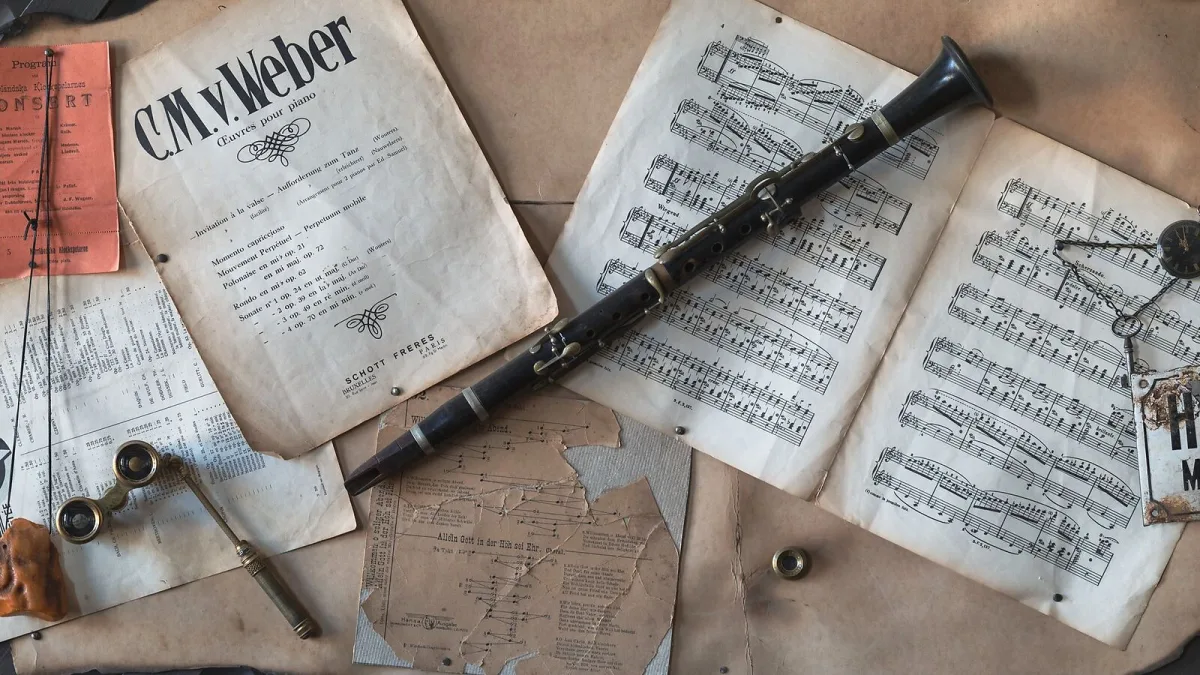
Every symphony, sonata and string quartet you can name today sits at the end of a very long line. Classical music history stretches back well over a thousand years, from monks chanting in stone naves to composers now working with electronics and multimedia. Tracing that line in order — rather than jumping straight to Beethoven — makes it far easier to hear why a Baroque concerto and a Romantic symphony sound like they come from entirely different worlds, because in a real sense they do.
Before Notation: Chant and the Medieval Church
For centuries, sacred music was passed down by ear. That changed as the church developed ways of writing pitch down on the page, allowing melodies to be preserved, taught and combined with other lines rather than relying on memory alone. Plainchant — a single unaccompanied melodic line, most associated with the Gregorian tradition — dominated worship for generations. Hildegard of Bingen, a 12th-century abbess, composer and polymath, remains one of the few named voices from this period whose music still survives and is performed today. Towards the end of the Middle Ages, composers working in and around Notre-Dame in Paris, among them Léonin and Pérotin, began layering independent melodic lines on top of one another — an early form of polyphony that would come to define everything that followed.
The Renaissance: Voices in Balance
Renaissance composers refined that layered writing into something smoother and more carefully balanced. Josquin des Prez became the most celebrated composer of his generation for exactly this skill, weaving several vocal lines together so that no single part dominated. In England, William Byrd did the same for both Catholic and Protestant worship, often at real personal risk given the religious politics of the period. This was still overwhelmingly vocal music, built around choirs rather than instrumental ensembles, and it laid the groundwork for the more dramatic, soloist-driven writing that the Baroque era would bring.
The Baroque: Drama, Ornament and the Birth of Opera
The Baroque period, running roughly from 1600 to 1750, is where a lot of casual classical music history actually begins in people's minds, and for good reason: it gave the world opera, the solo concerto and Johann Sebastian Bach. A steady bass line reinforced by a keyboard or chordal instrument — known as basso continuo — underpinned most Baroque writing, giving it a distinctive forward momentum. Bach's counterpoint remains a benchmark for composers even now; Handel, working largely in London, helped establish the English oratorio, of which his Messiah is the enduring example; and Vivaldi's concertos, especially the four violin concertos known as The Four Seasons, sharpened the contrast between a soloist and the ensemble behind them.
The Classical Period: Clarity After Ornament
Around the middle of the 18th century, taste swung firmly away from Baroque elaboration towards something plainer and more symmetrical. This is the era that gives its name, confusingly, to the whole genre: the Classical period proper, roughly 1750 to 1820. Joseph Haydn did more than almost anyone to shape the symphony and the string quartet into the forms we'd still recognise. Mozart combined that same formal clarity with an almost unmatched gift for melody across opera, concerto and chamber music alike. Beethoven began within this tradition and then spent his career pushing against its edges, stretching the symphony's scale and emotional weight until he'd effectively opened the door to what came next.
The Romantic Era: Music Turns Personal
Romantic composers cared less about balance and more about individual feeling, national identity and sheer scale. Orchestras grew larger, harmony grew more chromatic and unstable, and the public concert — alongside the conservatory and the celebrity virtuoso — became central to musical life for the first time. Schubert poured intense feeling into songs and chamber works written in a tragically short life; Chopin all but reinvented solo piano writing; Wagner built entire music dramas around recurring musical themes tied to characters and ideas; and Brahms, meanwhile, kept faith with older forms even as the language around him grew ever more expansive. Tchaikovsky, working in Russia, fused that Romantic sensibility with a distinctly national voice.
Into the Twentieth Century and Beyond
No single style can sum up the last 120 years or so of classical music history, and that's rather the point. Debussy dissolved traditional harmony into washes of orchestral colour. Stravinsky shocked Paris with the rhythmic violence of The Rite of Spring before moving through several more stylistic phases entirely. Schoenberg abandoned conventional tonality altogether. Shostakovich wrote symphonies that had to survive the scrutiny of the Soviet state as well as the concert hall. Later in the century, minimalism stripped things back to repeating patterns, while other composers pursued folk influences, electronics or graphic notation instead of a fixed score. For a clearer map of how these later, less linear styles relate to one another, see our guide to classical music subgenres.
Rewriting the Record
Traditional accounts of this history lean heavily on a narrow set of European men, and that picture has been shifting. Composers such as Clara Schumann, Fanny Mendelssohn, Florence Price and Joseph Bologne, Chevalier de Saint-Georges, were active and admired in their own time yet were routinely written out of the standard narrative for generations. Their rediscovery is arguably as important a recent chapter in classical music history as any stylistic shift, correcting a story that was always more varied than it was told to be.
Why the Timeline Still Matters
None of these dates are official boundaries; styles overlapped, and composers borrowed freely from what came before. But knowing the rough order — chant, then polyphony, then Baroque drama, Classical balance, Romantic scale, and modern variety — gives you a frame for placing almost anything you hear. If you'd rather meet the people behind these movements directly, our profile of essential classical composers is the natural companion piece, and our broader beginner's guide to classical music covers the forms and orchestral vocabulary this history keeps referring back to.




Comments