


Classical Music article
Classical Music for Newcomers: Where to Start
A friendly, no-pressure starting point: three pieces to try first, honest concert etiquette, and where to listen without any special knowledge required.

If classical music feels like a party you weren't invited to — all that history, all those unfamiliar names — take a breath. Nobody is checking credentials at the door. This is classical music for beginners with the intimidation stripped right out: a few pieces to start with, honest answers about concerts and etiquette, and the reassurance that curiosity is genuinely the only qualification you need.
You Don't Need to “Understand” It First
This is probably the biggest myth holding people back. You don't need to read music, name a key signature or recognise sonata form to enjoy a symphony, any more than you need to understand film editing to enjoy a good movie. Active listening is enough on its own: notice the tune, notice when the mood shifts, notice a moment that gives you goosebumps. Everything else — the terminology, the history, the theory — can follow later, if you're curious, and it never has to.
Three Pieces to Start With
Rather than a long list, here are three well-loved pieces chosen for being immediate, varied and easy to love on a first listen.
- Pachelbel — Canon in D: a gentle, endlessly circling melody that's been used at more weddings than almost anything else in the repertoire, and instantly familiar even if you don't know its name.
- Grieg — “Morning Mood” from Peer Gynt: a short, calm orchestral piece that paints a sunrise almost literally in sound — a lovely way to notice how music can suggest an image without any words at all.
- Holst — “Jupiter” from The Planets: big, warm and generous, with a central melody so well-loved it was later turned into the hymn tune “I Vow to Thee, My Country.”
Listen to all three back to back and you'll already have heard three completely different moods classical music can create in under fifteen minutes.
Choosing How to Listen
You don't need special equipment. A quiet room and any decent pair of headphones will do fine. General streaming services carry enormous classical catalogues, usually organised by composer or work rather than by album in the pop sense, so search by piece name if you're not sure where to look. A few apps, such as IDAGIO, specialise specifically in classical repertoire and tend to organise search results by work and performer more sensibly than a general-purpose service built around three-minute pop tracks. In the UK, BBC Radio 3 is a reliably free way to hear a wide range of repertoire without having to choose anything yourself — useful on days when picking a piece feels like the hardest part.
Common Worries, Answered
- “I won't know when to clap.” Watch the conductor lower their arms and the rest of the audience — you'll never be more than a beat behind.
- “It'll be too long and I'll get bored.” Nothing says you have to start with a ninety-minute symphony. Plenty of the most-loved pieces last five minutes or less.
- “I won't understand the plot of an opera.” Most opera houses provide surtitles or a translated synopsis, so following the story is rarely a real problem.
- “Everyone else will know more than me.” Almost certainly not true, and even where it is, nobody is quizzing you at the interval.
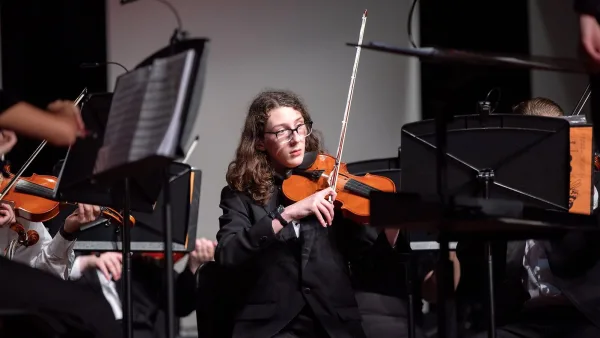
Going to a Live Concert for the First Time
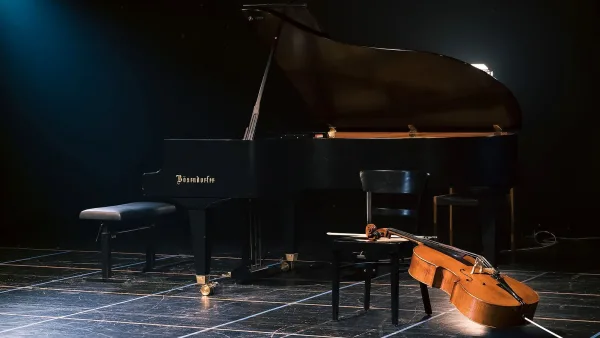
A concert hall can feel like it comes with a rulebook, but most of the actual rules are simpler and kinder than people assume.
- Dress: smart-casual is almost always fine. Very few venues expect formal dress outside of a handful of grand occasions.
- Applause: the long-standing convention is to clap at the very end of a whole piece, not between individual movements — though plenty of audiences are more relaxed about this than they used to be, and nobody will throw you out for guessing wrong.
- Arriving: get there a little early. Programme notes are usually provided and are well worth a quick skim before the lights go down.
- If you're lost: that's completely normal on a first visit. Following the overall shape and mood of the music matters far more than tracking every technical detail.
A Simple Way to Keep Exploring
Once a couple of pieces have caught your ear, there's no need to rush. Follow one composer a little deeper, or branch out with our broader beginner's guide to classical music, which covers the main periods and forms in a bit more depth. Curious about the people behind the music? Our guide to essential classical composers is a friendly next stop, and our pick of essential classical pieces offers plenty more short, easy entry points beyond the three above.
Classical music for beginners doesn't need a plan or a syllabus. Follow whatever catches your ear, let one piece lead to the next, and trust that liking something is reason enough to keep listening to it.



Comments