


Percussion Instruments article
Percussion Instruments for Beginners: A Complete Guide
A grounded, no-pressure guide to starting out in percussion — where to begin, what to buy, and the basic skills everything else builds on.
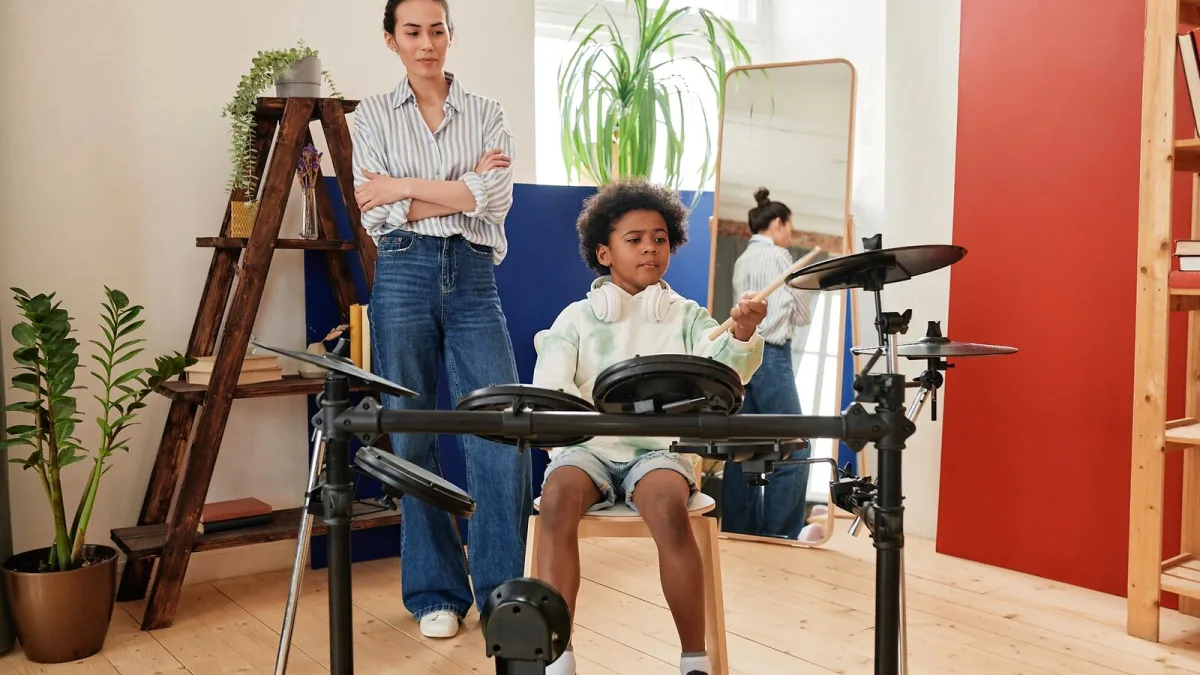
Percussion is one of the friendliest places in music to start, mostly because the barrier to making a genuinely satisfying sound is so low. You don't need years of theory to shake a tambourine in time or hit a drum where it wants to be hit. Here's a grounded, no-pressure look at where to actually begin.
Where Most Beginners Actually Start
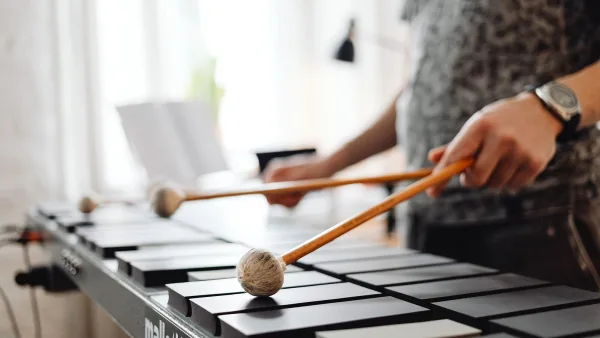
If you're learning through a school or band programme, you'll almost certainly meet snare drum, bells and xylophone first. That combination isn't arbitrary — between them they teach sticking technique, rhythm reading and basic pitch organisation, which is the foundation nearly everything else in percussion builds on. If you're teaching yourself outside that structure, a practice pad and a pair of sticks will get you a long way for very little outlay.
You Don't Have to Start With a Drum Kit
Hand percussion instruments — shakers, tambourines, a cajón, a djembe — are a genuinely good entry point too, and arguably a gentler one. There's no notation to read starting out, no independence between four limbs to coordinate, and an immediate, satisfying result the moment you shake or strike something. Plenty of accomplished drummers started here rather than behind a full kit.
The Handful of Skills Everything Else Builds On
- Relaxed grip: squeezing the stick or mallet tires your hand and deadens the sound.
- Metronome practice: start slow and only speed up once your timing stays even.
- Rebound, not force: let the stick bounce back rather than pulling every stroke by hand.
- Soft playing: quiet, controlled hits are a separate skill from loud ones, and worth practising on purpose.
A Sensible First Gear List
You genuinely don't need much to get going properly:
- One percussion instrument suited to what you actually want to play — a practice pad, a shaker, or a modest snare.
- A pair of sticks or a couple of mallets in different hardness, so you can hear how much that choice changes the sound.
- A metronome app, which is free and non-negotiable.
- A stand or cushion if you need to sit an instrument at the right height and angle.
Practising Without Annoying the Whole House
A practice pad is quiet enough for almost any hour, hand percussion instruments can be muted with a hand or cloth, and if you've gone the electronic route, headphones solve the problem entirely. None of this needs to be expensive kit — it just needs to let you actually practise without a running battle over noise, which is the single biggest reason beginners quietly give up.
How Long Before It Actually Feels Natural
Be patient with the fiddly bits. Coordinating two hands independently, or keeping a steady pulse while your brain wants to speed up on the exciting parts, takes weeks of short, regular sessions rather than one long heroic practice. Fifteen focused minutes most days will get you further than an exhausting hour once a week, and progress on percussion instruments tends to arrive in small, almost invisible steps rather than sudden leaps.
Looking After Your First Instrument
Simple habits go a long way: keep drums and hand percussion instruments away from damp rooms and big temperature swings, store them in a case or cover when not in use, and don't over-tighten a head just because you can. A little care early on means your first instrument stays reliable and pleasant to play while you're still working out what you actually enjoy about percussion.
What to Learn Next
Once the basics feel comfortable, it's worth understanding how the wider percussion family fits together and where you might want to head next. Our overview of percussion instruments covers that ground properly, our complete buyer's guide is there for when you're ready to upgrade, and our best-for-the-money picks will help you spend wisely when that time comes.
Whatever you choose first, the honest truth is that almost any percussion instrument, played regularly, will teach you more than the "perfect" one left in its case.



Comments