


Percussion Instruments article
Percussion Instruments Explained: Features, Types and Tips
The broadest family in music, sorted into something that actually makes sense: what counts as percussion, how it's classified, and why it matters.
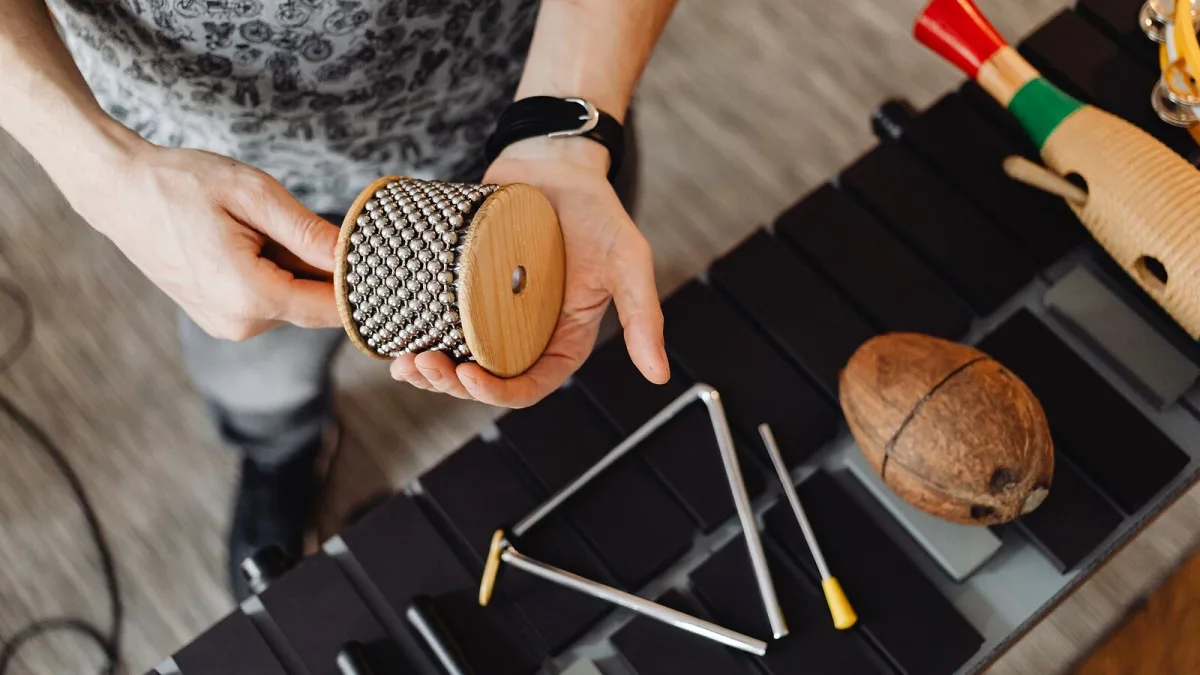
Ask a room full of musicians to define percussion instruments and you'll get a dozen different answers, because it's the broadest family in music by a distance. Anything struck, shaken, scraped or rubbed to produce a sound qualifies, from an orchestral timpani to a shaker made from a dried gourd. Here's a clear, no-nonsense look at how the family is organised, what separates one type from another, and why that actually matters when you're playing or mixing them.
What Actually Makes an Instrument "Percussion"
The definition is refreshingly simple: if the sound comes from striking, shaking, scraping or rubbing the instrument itself, rather than from a vibrating string or column of air, it belongs to the percussion family. That's a huge net. Drums, cymbals, xylophones, triangles, maracas, tambourines and dozens of regional instruments all sit under it.
Membranophones: The Skin-Based Family
Membranophones make their sound through a stretched membrane, or head, vibrating over a shell or frame. This is the group most people picture first when they hear "percussion instruments" — snare drums, bass drums, toms, congas, bongos, djembes and timpani all belong here. The shell material, head tension and where you strike the head all shape the tone: strike near the centre for a fuller fundamental, near the edge for brighter overtones.
Idiophones: When the Body Itself Rings
Idiophones don't need a membrane at all — the body of the instrument vibrates directly. Cymbals, triangles, wood blocks, claves, cowbells, castanets, maracas and xylophone bars all work this way, whether they're struck, shaken, or scraped. Metal idiophones tend to ring brighter and longer; wood ones sound warmer and decay faster.
Pitched or Unpitched: Why It Isn't Always Obvious
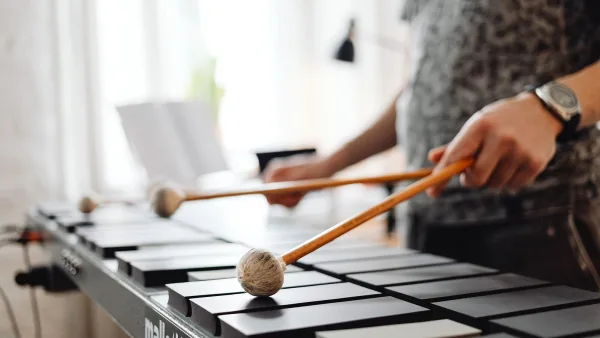
"Pitched" percussion instruments — marimba, vibraphone, xylophone, glockenspiel, timpani, steel drum — produce an identifiable musical note and can play melodies or bass lines. "Unpitched" instruments like the snare drum, shakers and tambourine are used more for pulse, texture and accent. It's a useful split, but not an absolute one: plenty of "unpitched" instruments can still produce a recognisable pitch, and some pitched instruments get used purely for colour rather than melody.
Where You'll Actually Find Them
- Orchestral: timpani, concert snare, bass drum, xylophone, tubular bells, gongs.
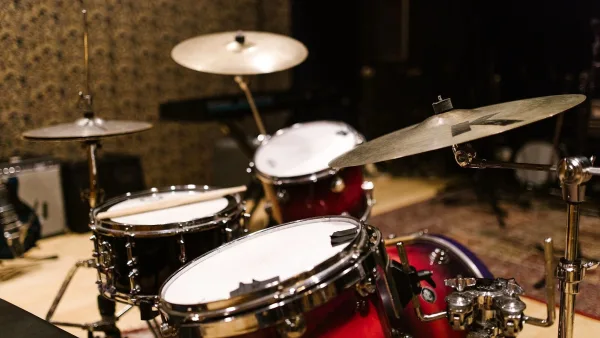
- Drum kit: the standard rock and pop setup — snare, kick, toms and cymbals played by one musician.
- Hand percussion: congas, bongos, djembes, cajóns and frame drums, common across Latin, African and world music traditions.
- Electronic: trigger pads and hybrid acoustic-electronic setups, increasingly common in home studios and live rigs alike.
What Actually Shapes the Sound
From a sound engineer's chair, the same handful of variables explain almost every tonal difference you'll hear across percussion instruments:
| Variable | Effect |
|---|---|
| Material | Metal rings bright and long; wood is warmer and shorter |
| Size / mass | Bigger generally means lower and slower to respond |
| Tension | Higher head tension raises pitch and tightens response |
| Beater/mallet | Hard beaters sharpen the attack; soft mallets round it off |
| Damping | Hands, gels or built-in dampers shorten sustain |
A Family Bigger Than the Orchestra
Western classical teaching leans heavily on the orchestral view of percussion instruments, but that's only a slice of the picture. African, Latin American, South Asian and Middle Eastern traditions all have deep, distinct percussion vocabularies of their own — djembes, tablas, congas, cajóns, udu drums and steel tongue drums, to name a handful — built around local materials, ceremonies and dance rather than a concert-hall seating plan. A classification system built for a symphony orchestra doesn't fully capture how these instruments actually function in their own musical contexts, so it's worth treating the orchestral view as one useful lens rather than the whole story.
Basic Technique, Whatever You're Playing
Whatever corner of the family you end up in, a handful of fundamentals carry across almost every instrument: a relaxed grip rather than a death-grip on stick or mallet, practising with a metronome so timing stays even as speed increases, and learning to let the stick rebound rather than forcing every stroke. Soft, controlled playing is a separate skill from loud playing, and it's usually the one beginners neglect — worth practising deliberately rather than assuming it'll come naturally.
The Bottom Line
Once you can place an instrument as a membranophone or idiophone, and pitched or unpitched, the rest of the percussion family stops feeling like a random pile of noisemakers and starts making sense as a genuinely organised system. If you're weighing up which one to actually buy, our complete buyer's guide covers the practical checks, our best-for-the-money picks break it down by budget, and if you're starting from zero, our beginner's guide is the friendliest place to begin.



Comments