


Vinyl Player roundup
The Best Vinyl Players for the Money
The vinyl player market breaks down by price and purpose far more than by brand name. Here's how each tier stacks up, and who genuinely gets the best value from it.
"Best" is a slippery word when it comes to a vinyl player, because the honest answer always depends on what you're actually trying to do with it. A DJ, a casual listener with a shelf of inherited records, and a serious collector building a proper hi-fi system are shopping in three completely different markets, even though every one of them technically wants "a turntable." Here's how the market actually breaks down by price and purpose, so you spend your money in the right tier rather than the loudest one.
Budget all-in-one players
At the accessible end of the market, brands including Victrola, Crosley, 1byone Audio and Steepletone dominate, alongside all-in-one specialists like Lenco. These decks pack speakers and amplification into a single case, which is genuinely convenient — plug in and play, no separate amp required. Lenco's LS-440, for example, is an all-in-one model built around four speakers and a replaceable Audio-Technica cartridge, which is worth noting because plenty of rivals at this price skip a replaceable cartridge entirely.
This tier suits casual listeners, gift buyers, and anyone who wants vinyl on a shelf without building a wider hi-fi system. It's not the tier for records you genuinely treasure — check specifically for a replaceable stylus before buying, since several suitcase-style players are built around fixed styli that aren't kind to grooves over time.
If your budget is genuinely tight, a budget vinyl player from this group is still a perfectly reasonable way in. Just go in with realistic expectations about longevity and upgrade room, rather than assuming it will grow with you the way a standalone deck can.
Mid-range hi-fi turntables
Step up and you're in standalone-deck territory, where names like Audio-Technica, Fluance, Denon and U-Turn Audio (with its Orbit range) are the familiar faces. These require a separate amplifier and speakers, or at least a set of powered speakers, but in return you get an upgradeable cartridge, a more rigid plinth, and proper adjustment for tracking force and anti-skate.
This is the sensible tier for anyone who already owns, or plans to build, a real listening setup and wants a vinyl player that can be improved piece by piece rather than replaced outright when it's outgrown.
Premium and audiophile decks
Further up sit specialists such as Pro-Ject Audio Systems, Rega Research, Thorens and TEAC, whose reputations rest on tonearm engineering, bearing precision and manually operated simplicity. Many audiophile designs deliberately avoid automatic mechanisms, on the theory that fewer moving parts means less to interfere with the signal.
This tier is for the collector who already has a resolving amplifier and speakers and wants the turntable itself to stop being the weak link in the chain.
DJ and direct-drive decks
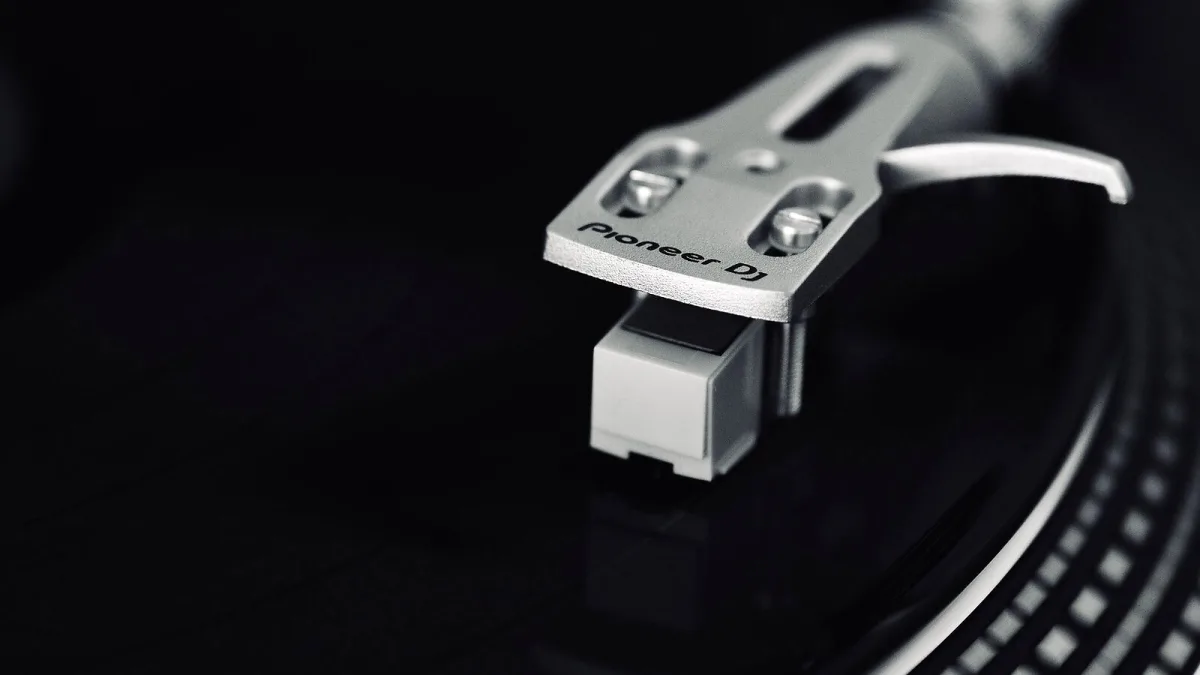
Technics remains the historically dominant name in direct-drive DJ turntables, with Pioneer DJ also a major presence in the space. High torque and near-instant speed stability matter far more here than in home listening, because scratching and beatmatching punish anything slow to respond.
If mixing or scratching is the goal, don't be tempted by a belt-drive deck marketed for hi-fi use — it simply isn't built for that job.
Bluetooth, USB and wireless options
Wireless convenience now reaches across most tiers. Sony has announced Bluetooth-equipped automatic models for 2026, the PS-LX3BT and PS-LX5BT, which suggests every price bracket will keep gaining wireless options rather than reserving them for one segment. USB output turns up at similar price points too, letting you digitise records onto a laptop — useful if part of the appeal of a vinyl player is finally archiving a collection you've been meaning to back up for years.
None of this should be the deciding factor over which tier suits you, though. A wireless-equipped budget deck is still a budget one underneath, with the same fixed-stylus caveats as any other all-in-one player.
Matching the tier to the buyer
| Tier | Typical strength | Best suited to |
|---|---|---|
| Budget all-in-one | Convenience, no separate amp needed | Casual listeners, gifts, first exposure to vinyl |
| Mid-range hi-fi | Upgradeable cartridge, proper adjustment | Builders of a real listening system |
| Premium audiophile | Tonearm and bearing precision | Collectors chasing the last word in detail |
| DJ direct-drive | Torque and speed stability | Mixing, scratching, live performance |
The bottom line
The best vinyl player for the money is simply the one matched honestly to what you'll actually do with it — a casual all-in-one deck is not a poor purchase if casual listening is genuinely the goal, and a premium audiophile turntable is wasted on a system with no amplifier worth the name. If you want the criteria behind each of these tiers spelled out in full, our buyer's guide covers exactly what to check, and our explainer walks through how the mechanics work in the first place. New to all this? Our beginner's guide is the gentler starting point.




Comments