


Universal Audio Company article
Universal Audio Company: A Complete Guide
From 1958 tube consoles to Apollo interfaces reaching into live sound, here's what Universal Audio actually is and how it got here.
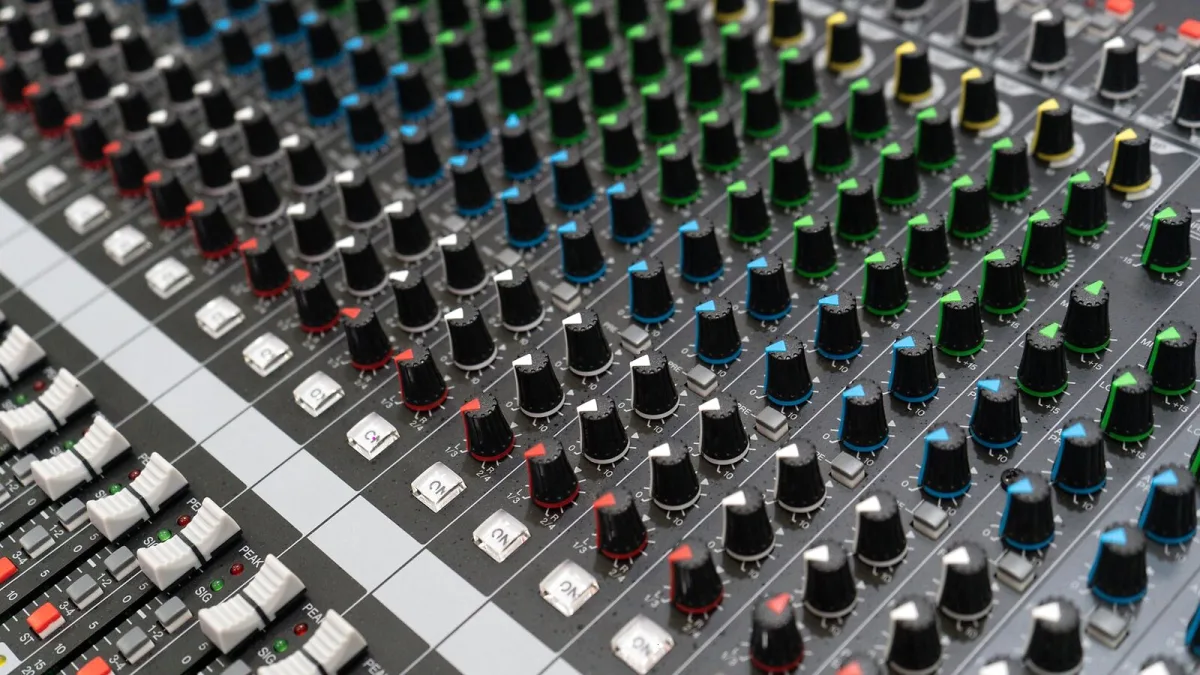
Few names carry as much weight in recording studios as Universal Audio, and the story behind it is genuinely brilliant once you dig in. What started with a legendary engineer building his own gear in the 1950s is now a software-and-hardware ecosystem sitting on desks from bedroom studios to major facilities. Here's what Universal Audio actually is, how it got here, and what each part of the current range actually does.
From Bill Putnam's Tube Consoles to Modern Apollo
Universal Audio traces back to 1958, founded by recording engineer Bill Putnam Sr., who was already behind gear like the 610 tube console, the 1176 limiting amplifier and the LA-2A leveling amplifier — pieces of equipment that shaped how records were made for decades. The original company wound down in the 1970s, and Putnam Sr. died in 1989. His sons, Jim Putnam and Bill Putnam Jr., revived the brand in 1999, initially focused on faithfully manufacturing and restoring that classic analogue gear before pushing hard into digital signal processing.
What Universal Audio Actually Makes Today
The modern company's central idea is that carefully modelled software can capture meaningful behaviour from classic analogue hardware — not just its frequency response, but things like tube nonlinearities, transformer saturation and program-dependent compressor behaviour. That philosophy now spans several distinct product families:
| Product family | What it does |
|---|---|
| Apollo | Audio interfaces combining conversion, monitoring and real-time UAD processing |
| UAD plug-ins | Software emulations of classic compressors, EQs, preamps and effects |
| UAD Spark | Subscription access to a rotating selection of UAD plug-ins |
| LUNA | Universal Audio's own digital audio workstation |
| UAFX | Guitar and bass pedals built on the same modelling technology |
| Analogue hardware | Modern hardware versions of classic UA compressors and preamps |
Notably, the historic 610 preamp and EQ design — the very circuit Putnam Sr. built his early reputation on — became available as a free native plug-in collection, a nice full-circle moment for a company that started with that exact piece of hardware.
Unison: The Technology That Makes Apollo Different
Apollo's most distinctive trick is a system called Unison. Rather than just applying EQ or compression after the fact, Unison-enabled plug-ins are designed to influence the interface's actual front-end behaviour while you're recording — modelling things like input impedance and gain staging to more closely match the original hardware being emulated. It's a genuinely different approach from a conventional plug-in, which only ever processes a signal that's already been converted.
Apollo DSP vs Native Processing
You'll often see UAD plug-ins described as either DSP-based or native, and the distinction matters practically. DSP processing happens on dedicated chips inside the Apollo interface itself, which is brilliant for low-latency monitoring while tracking but depends on the interface having spare DSP capacity. Native processing runs on your computer instead, which is more flexible for a large mix but leans on your CPU. Most people end up using a hybrid workflow: Apollo DSP while recording, native plug-ins once they're deep into a mix.
Universal Audio Goes Live: Apollo E Series and Dante
Universal Audio has traditionally lived in recording studios, but the Apollo x16D and Apollo E Series peripherals extended that reach into live sound and broadcast, using the Dante audio-networking protocol. The idea is straightforward but significant: letting engineers use the same UAD processing on a touring console or in a broadcast truck that they'd normally reach for in a studio, rather than treating live and recorded audio as entirely separate worlds.
The Classics: 1176 and LA-2A
Two pieces of hardware come up constantly in any discussion of this company's heritage. The 1176 is a FET compressor known for its fast attack and release, prized for punchy vocals, drums and bass. The LA-2A takes the opposite approach: an optical tube compressor that reacts more gently, smoothing out a performance rather than clamping it. Both were originally hardware units, and both now exist as software plug-ins alongside continued hardware production — a good example of how the modern business keeps one foot in analogue manufacturing and one in digital emulation.
UAFX: Same Technology, Different Pedalboard
It's easy to think of this brand purely as a studio-interface company, but its pedal line, UAFX, applies the same modelling philosophy to guitar and bass players directly. Amplifier emulation, reverb, delay, modulation and overdrive pedals all draw on the same research used in the studio plug-ins, just packaged for a pedalboard rather than a rack. It's a genuinely different market from recording studios, and it says something about how confident the company is in its core modelling technology that it's willing to compete there too.
Getting Started or Choosing the Right Product
If you're weighing up which Apollo or UAD product actually suits you, our complete buyer's guide breaks the decision down properly, and if you're brand new to the ecosystem, our beginner's guide is a gentler starting point. It's also worth reading our list of common mistakes before you commit any money.
The Bottom Line
Universal Audio's whole appeal rests on a fairly simple bet: that the character of classic analogue recording gear is worth preserving in software, and that doing it properly is worth the engineering effort. From Bill Putnam's original tube consoles to Apollo interfaces now reaching into live sound, that bet has clearly paid off — and it's why the name still carries real weight on a spec sheet decades on.




Comments