


AKG Headphones roundup
Akg Headphones: A Complete Buyer's Guide
A practical, no-nonsense checklist for buying AKG headphones, from deciding your use case to what actually needs checking before you pay.
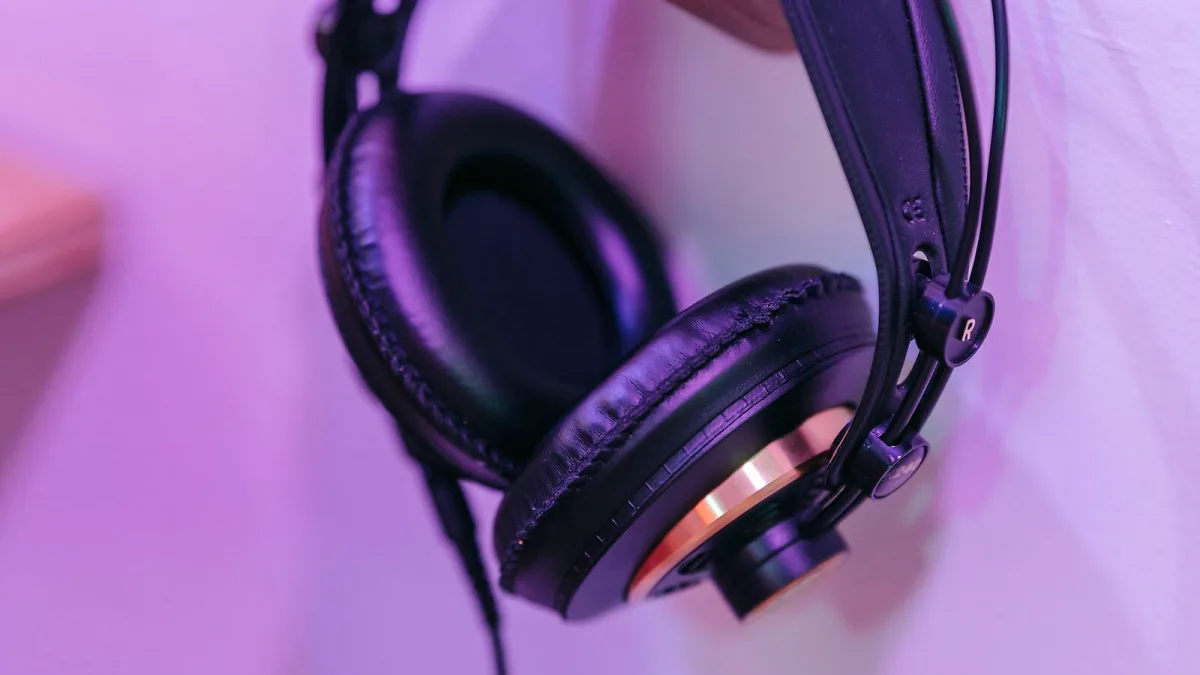
Buying a pair of AKG headphones is straightforward once you stop shopping by model number and start shopping by job. AKG's range runs from budget closed-back tracking cans to Bluetooth studio hybrids, and the "best" one depends entirely on what you'll actually be doing with it. Here's the practical checklist I'd talk a mate through before they spend any money.
Step One: Decide What You'll Actually Use Them For
Be honest about your main use case before anything else:
- Recording near a live microphone — vocals, drums, guitar amps.
- Mixing and critical listening in a reasonably quiet room.
- Studio work that also needs to travel with you.
- General or budget studio use where cost matters more than nuance.
Every other decision below flows from that answer.
Closed-Back or Open-Back?
This is the single most important spec, and it isn't printed on the box in plain English. A closed-back design seals the rear of the earcup, so almost nothing leaks either way — essential if you're tracking near an open microphone, because a semi-open or open pair will bleed straight into the recording. An open-back design vents the rear and tends to sound more spacious for critical listening, but leaks freely, so it's a non-starter for tracking. AKG's K240 sits in between as a semi-open design: less closed-in than most sealed headphones, but still not something to wear next to a live mic.
If in doubt: closed-back is the safer default for home studio work, because it works for both tracking and casual mixing, whereas open-back only really works for the latter.
Checklist Before You Buy
- Impedance: lower-impedance models (the K371 sits at 32 ohms) are easy to drive from a laptop, phone or basic interface. Higher-impedance models (the K240 at 55 ohms) still work from most interfaces, but check your source can push enough level.
- Driver size: both the K361 and K371 use 50mm drivers, which can help with low-end output, though driver size alone doesn't guarantee accuracy.
- Wired vs Bluetooth: wired is the safer choice for recording and mixing. If you want both, the K371-BT covers wired studio use and Bluetooth listening in one headphone.
- Folding and portability: the K361 folds flat, which matters if the headphones are travelling with you.
- Comfort and ear-pad shape: check this before buying, not after — a headphone you can't wear for a two-hour session isn't a bargain at any price.
- Region and model variant: AKG models like the K240 exist in more than one version over the years, so confirm the exact spec sheet, cable and warranty for the listing you're buying.
Comparison: Key AKG Studio Models
| Model | Design | Impedance | Best suited to |
|---|---|---|---|
| K92 | Closed-back, wired | Standard, phone/laptop friendly | Budget tracking and general studio use |
| K240 Studio | Semi-open, wired | 55 ohms | Home studio monitoring and editing |
| K271 MKII | Closed-back, wired | Standard, interface friendly | Professional tracking and monitoring |
| K361 | Closed-back, folding, wired | Standard, portable friendly | Studio work plus travel |
| K371 | Closed-back, wired | 32 ohms | Reference-style mixing and monitoring |
| K371-BT | Closed-back, wired + Bluetooth | 32 ohms (wired) | Studio use plus portable listening |
Do You Need a Headphone Amplifier?
Usually not, for AKG's studio range. A headphone amp is worth adding only if your interface or laptop genuinely can't drive the headphones to a usable level cleanly. It's also important to be realistic about what an amp can and can't fix: it can add clean level, but it cannot correct a poor frequency balance or turn an inaccurate headphone into a reference monitor. Try your source first before spending on an amp you might not need.
Wired for the Studio, Bluetooth for Everything Else
If you're buying primarily to record and mix, prioritise a wired connection — there's no battery to manage and no codec or latency variable to test. If portability genuinely matters too, the K371-BT is the sensible AKG option: full wired performance in the studio, and a claimed 40 hours of Bluetooth battery life plus a built-in microphone when you're out and about.
After You Buy: Warranty and Aftercare
Once you've settled on a model, register the purchase and keep the receipt, since warranty terms and support can vary by retailer and region. It's also worth budgeting mentally for replacement ear pads down the line — they're a wear part on any headphone, and a fresh set restores both comfort and the intended tonal balance once the originals compress. None of this affects the buying decision itself, but it's the sort of detail that's easy to forget in the excitement of a new purchase and annoying to discover you've missed later.
Where This Fits Against the Rest of the Range
If you want the full technical picture before deciding, our AKG headphones overview explains the whole range in more depth, and the best AKG headphones for the money ranks the options by budget tier. New to buying gear generally? Start with our beginner's guide to AKG headphones instead.
The Bottom Line
Buying AKG headphones well comes down to matching the design — closed, open or semi-open — to your actual use case, then checking impedance and connection type against your gear. Skip the marketing language around "reference" and "professional" and focus on the checklist above, and you won't go far wrong. Before you check out, it's worth a quick read of the common AKG headphones mistakes people make, just to be sure you're not about to repeat one of them.



Comments