


Adam Audio roundup
The Best Adam Audios for the Money
Matched to your room and budget, not a lab test that doesn't exist — here's which ADAM Audio range genuinely suits which setup.
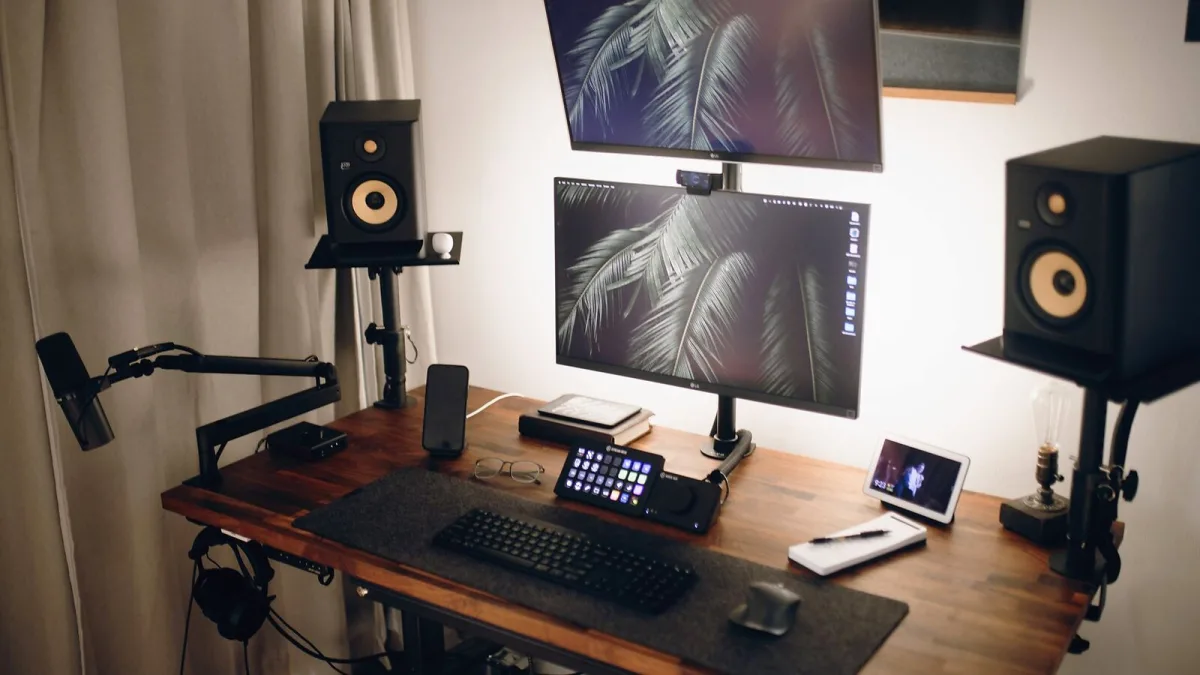
Right, no invented benchmarks and no pretending I've A/B tested every model in a lab — just an honest rundown of where each Adam Audio range actually earns its keep, so you can match your money to your actual setup instead of chasing whatever's loudest on a forum thread.
Best Budget Pick: The T5V
If you're setting up your first proper pair of monitors and don't want to remortgage anything to do it, the T5V is where most people should start. It's part of ADAM's entry-level T Series, built to bring the brand's ribbon-tweeter approach to project studios without the professional-range price tag. It won't do everything the pricier ranges do, but for a bedroom setup on a sensible budget, it's the obvious first call.
Best All-Rounder: A Series
Once you're past the absolute entry point, the A Series (think A4V or A7V, depending on how much low end you need) is where most home and project studios genuinely land. You get DSP for boundary compensation and EQ, more flexible connectivity, and enough headroom to grow into as your room and your ears both improve. It's the range I'd point most serious hobbyists and semi-pro producers towards.
Best for a Cramped Desk: The D3V
Not everyone has room for a full-size nearfield pair either side of their screen. The D3V is a fully active, compact desktop system with D-ART tweeters and USB-C connectivity, designed specifically for that reality. You trade some low-end extension for genuinely usable desk space, which for a lot of laptop-based producers is a completely fair swap.
Best for a Proper Control Room: S Series
This is the one to skip unless your room actually justifies it. The S Series is ADAM's high-end professional range, built for control rooms with real acoustic treatment and proper listening distance. It's genuinely excellent kit, but buying it for a untreated box bedroom is spending money on headroom you'll never get to use.
Best Backup Reference: H200 Headphones
Worth a mention because people forget headphones entirely when budgeting for monitors. The H200 gives you a second, completely different way of checking a mix — useful late at night, on a train, or whenever your monitors and your room aren't an option. Not a replacement for proper monitors, but a genuinely smart addition.
The Shortlist
| Pick | Best for | Trade-off |
|---|---|---|
| T5V | First-time buyers on a budget | Fewer features than pricier ranges |
| A4V / A7V | Serious home and project studios | Costs more than the T Series |
| D3V | Small desks and tight spaces | Less low-end extension |
| S Series | Treated control rooms | Overkill for most home setups |
| H200 | A second reference check | Not a substitute for monitors |
How Adam Audio Sits Against the Competition
Worth a quick reality check before you commit to any of the above: Adam Audio isn't the only serious option in this space. Genelec, Neumann, Focal, KRK and Yamaha all compete directly across similar price tiers, and each has its own house sound and design philosophy. ADAM's main point of difference is that folded-ribbon tweeter, which tends to give a more detailed, revealing top end than most dome-tweeter rivals. Whether that suits you is genuinely a matter of taste and genre, not a settled argument either way, so a proper listen against a rival at the same price point is time well spent before you buy.
Worth Buying Secondhand?
Genuinely, yes, if you're careful. Active monitors like these have amplifiers built in, so it's worth actually asking the seller to power them on and play something with a wide frequency range before you hand over money. Check the ribbon tweeter for any visible damage or dents in the folded diaphragm, and if the model has DSP, confirm it's still functioning rather than assuming it is. A well looked-after secondhand Adam Audio monitor can be genuinely excellent value; a damaged one is a false economy.
What "Best" Doesn't Mean Here
None of these picks are backed by lab measurements I've personally run, and neither is anyone else's "best of" list unless they say exactly how they tested it. Words like "accurate" and "transparent" on a spec sheet are marketing language until an independent frequency-response or distortion test backs them up. What I can tell you honestly is which range suits which situation — the actual sonic fine print is worth checking against independent reviews before you commit.
The Bottom Line
Match the range to your room and your budget, not the other way round, and any of these picks will serve you well. For the full breakdown of what makes the brand tick, our complete guide to Adam Audio covers the tech in depth, and our buyer's guide walks through the decision criteria in more detail than a simple shortlist can. Brand new to studio monitors? Start with our beginner's guide instead, and once you've picked something, our common mistakes to avoid is worth reading before you set it up.




Comments