


Sheet Music & Learning Chords / Tabs resource
The Essential Guitar Chords Every Player Should Know
You do not need hundreds of chords. You need about a dozen open shapes, two movable barre forms and the confidence to change between them in time.
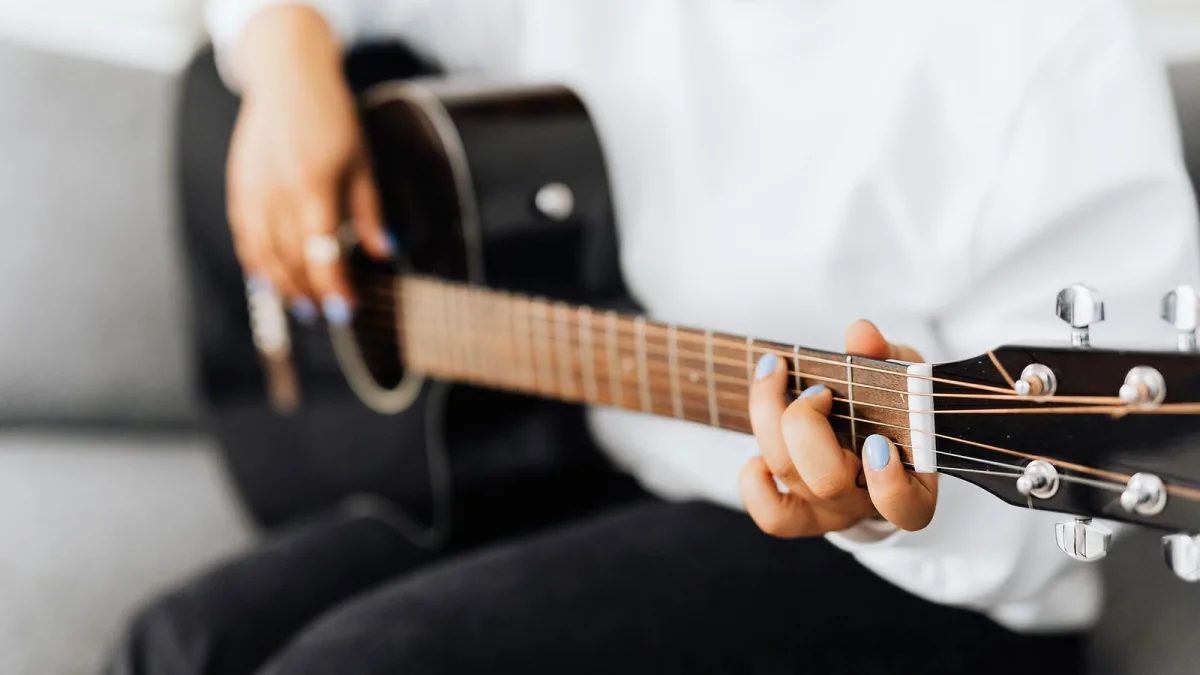
Search for guitar chords and you will find libraries running to thousands of shapes. That is an intimidating place to start, and an unnecessary one. The overwhelming majority of popular music, across every decade, leans on a small group of chords. Learn those properly and you can play along with far more than you would expect.
Start with the open chords
Open chords use unfretted strings alongside fretted ones, which is what gives them their ringing quality and makes them comparatively easy on the hand. The ones that earn their place first are:
- Major shapes: E, A, D, G and C.
- Minor shapes: Em, Am and Dm.
Those eight cover a huge amount of ground. E minor is usually the first chord anybody learns because it needs two fingers and no string muting. C and G are the fiddliest of the group, so expect them to take longer, and do not treat that as a verdict on your ability.
Make each note ring
Press just behind the fret rather than on top of it, keep the fingers arched so the fingertips land cleanly, and pick each string of the chord one at a time to find the ones that are buzzing or muted. Fixing a chord one string at a time is far more productive than strumming it repeatedly and hoping.
Barre chords: the same shapes, moved
A barre chord uses the index finger laid flat across the strings to do the job the nut does in an open chord. Because nothing is relying on open strings any more, the whole shape becomes movable.
Two forms do most of the work. The E shape, barred, gives you a major chord rooted on the sixth string, and its minor version is the same shape with one finger lifted. The A shape does the same job rooted on the fifth string. Learn where the notes fall along those two strings and you can play any major or minor chord anywhere on the neck with two shapes.
Barre chords are hard at first for everyone. The fix is almost never more strength. It is thumb position behind the neck, rolling the index finger slightly onto its bony side, and keeping the barre close to the fret.
Power chords
A power chord is a root and a fifth with no third, which is why it sounds neither major nor minor and why it survives heavy distortion so well. Two fingers, movable anywhere, and the backbone of rock and punk rhythm playing. It is also a gentle introduction to movable shapes for a hand that is not ready to barre.
The CAGED system
CAGED is the observation that the five open major shapes, C, A, G, E and D, can each be moved up the neck to play any major chord, and that they interlock in a fixed order along the fretboard. It is worth meeting once you are comfortable with barre chords, because it turns the neck from a set of memorised positions into a map you can navigate.
Practise the changes, not just the chords
Most players can form a chord long before they can arrive at it in time. That gap is where the frustration lives, and it closes faster with targeted practice:
- Pick two chords and swap between them on a slow, steady count, strumming once per bar. Speed comes later; landing on the beat comes first.
- Watch for the fingers that do not need to move. Changing from E minor to C major, for instance, leaves a finger in place, and noticing those anchors makes changes far smoother.
- Use a metronome or a drum loop. Practising without one lets you unconsciously slow down at the hard change, which is exactly the habit you are trying to break.
A capo is not cheating
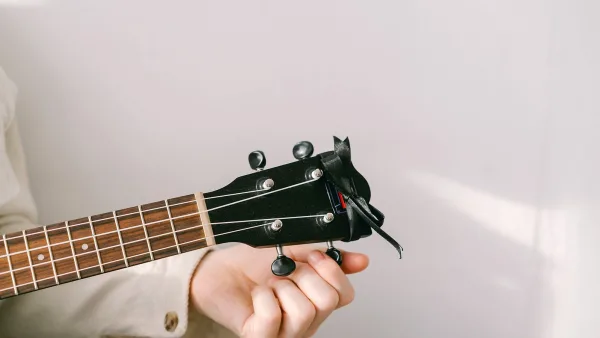
Clamping a capo across the neck shifts everything up by the number of frets you place it behind, letting you keep using comfortable open shapes in keys that would otherwise demand barre chords. Working singers do it constantly to fit a song to their range.
Where to go next
Once the open shapes and both barre forms are secure, add the sevenths, sus2 and sus4 chords, which are small alterations to shapes you already know and instantly make your playing sound less like a beginner. Learn the common chord progressions in a couple of keys as well, because after that you will start recognising songs from their chord sheets before you have played a note.



Comments