


Music Theory article
The Ultimate Guide to Music Theory
Music theory is friendlier than it looks — not a rulebook, but a shared language for what you already hear. Here's what it covers and a calm order in which to learn it.
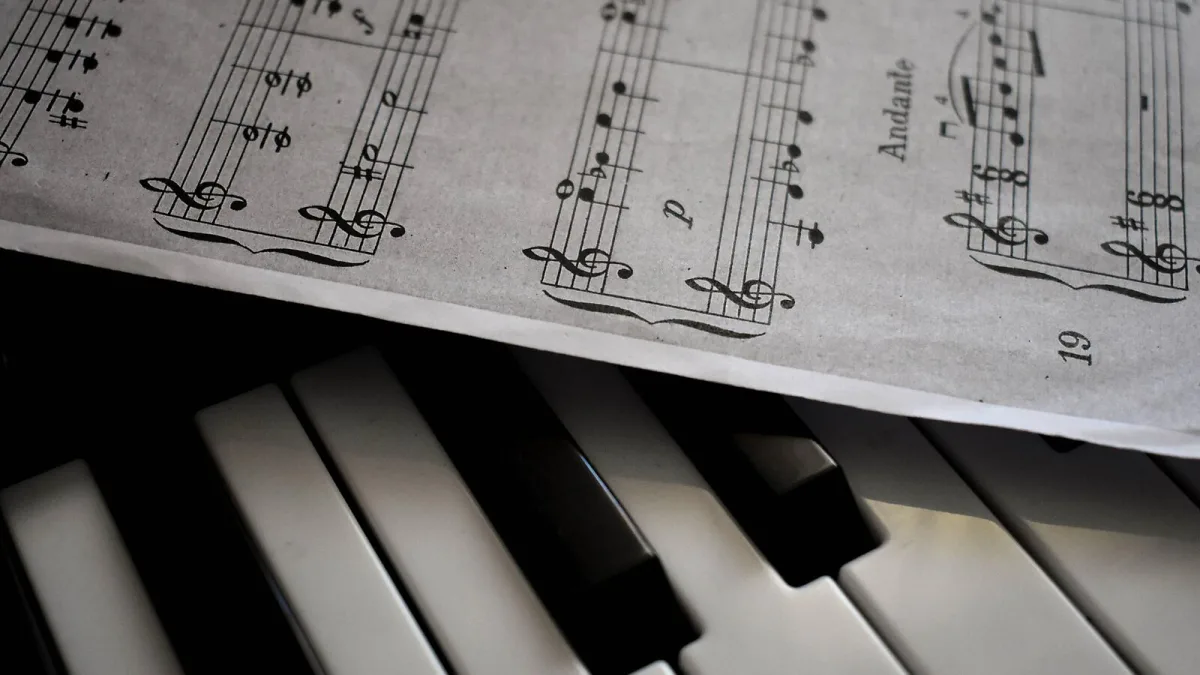
For something that puts so many people off, music theory is really rather friendly once you meet it properly. It is not a test you can fail, and it certainly isn't a rulebook that decides whether your music is “allowed.” Think of it instead as a shared language for describing what you can already hear. This guide lays out what it covers and, just as importantly, a calm order in which to learn it.
What music theory actually is
Music theory is simply the study of how music is put together — how we organise pitch, rhythm, harmony and form, and how we write it all down. A gentle but important point: it is not one universal set of rules. Different periods, genres and cultures organise sound in different ways, and the theory most of us start with describes Western tonal music (the major-and-minor system behind most pop, rock and classical). That's a wonderful place to begin, but it isn't the whole story, so hold it lightly.
Above all, theory doesn't replace listening or playing — it makes them richer. It is at its best when a concept is tied to a sound: hearing a chord resolve, singing a scale, tapping out a rhythm.
The three pillars
Almost everything grows from three ideas:
- Melody — a succession of single pitches over time (the tune you'd hum).
- Harmony — how pitches sound together, or in relation to one another.
- Rhythm — how sounds and silences are organised in time.
Hold on to those three and the rest of it slots in around them.
A calm order to learn it in
The single kindest thing I can tell a beginner is: don't try to swallow it whole. Here is a sensible path.
- Notation and pitch. The staff (the five lines), clefs, note and rest values, and accidentals — a sharp raises a note by a semitone (the smallest step in Western music), a flat lowers it by one, and a natural cancels either.
- Rhythm and meter. Beat, tempo and time signatures. A quick clarification that saves a lot of confusion: meter is how beats are grouped (say, four to a bar), while tempo is simply how fast they go.
- Scales, keys and intervals. A scale is an ordered set of pitches; a key is a scale system organised around a home note called the tonic. An interval is the distance between two notes — the raw material of both melody and chords.
- Chords and harmony. Stack three notes and you have a triad (major, minor, diminished or augmented); add another and you reach seventh chords and beyond.
- Melody, voice leading and a little counterpoint. How lines are shaped and how they move smoothly from chord to chord.
- Form and texture. The bigger picture — how sections are arranged (verse–chorus, AABA and so on).
- Ear training and analysis. Tying it all back to what you hear, which is where it truly comes alive.
How to make chords make sense
In a key, each chord has a function — a job. The tonic feels like home and rest; the dominant creates tension that wants to fall back home; the predominant leads you from one to the other. We label chords with Roman numerals relative to the key, so in C major, I is C, ii is D minor, V is G and vi is A minor. That famous jazz progression, ii–V–I, is just those functions in action. Do remember, though, that pop, folk, hip-hop and electronic music often lean on loops, modal harmony or borrowed chords that happily ignore the textbook — and that's not a mistake, it's a style.
Learn it in four gentle steps
Whatever the topic, I'd nudge every student to do four things with it:
- Read the concept.
- Play or sing it, so it lives in your hands and ears, not just your eyes.
- Listen for it in real music you love.
- Write or create something small with it — a rhythm, a chord progression, a four-bar tune.
A concept you've heard, played and used is one you actually own. A concept you've only read is one you'll forget by Thursday.
A quick reassurance about ear training
Ear training — learning to recognise intervals, chords and rhythms by ear — frightens people needlessly. The trick is to hear things in context first: recognising a note as the third degree of a scale you're in is far easier, and far more useful, than trying to name a lonely interval in the abstract. Start there and it feels less like a party trick and more like listening properly.
Myths worth letting go of
- Theory doesn't decide whether music is any good — plenty of beloved songs use three simple chords.
- “Major is happy, minor is sad” is a loose hint, not a law.
- Modes aren't just “scales starting on a different note” — the home note and context are what give them character.
- Reading notation is useful, but it isn't the same as understanding theory as a whole.
Which instrument helps?
The piano is the great theory teacher — scales, intervals and chords are laid out plainly under your fingers. The guitar makes movable shapes and riffs instantly practical, so long as you connect those shapes to note names. Drums make rhythm and meter physical, and a DAW's piano roll (the grid in music software) makes pitch and timing visible. Any of them will do; the point is to use one.
The bottom line
You don't need every corner of music theory to write a good song, and you certainly don't need it all at once. Learn a little, play it, hear it, use it, and let the next piece follow when you're ready. Treated that way, music theory stops being a hurdle and becomes what it was always meant to be: a friendly set of tools for making the music in your head real.





Comments