


Piano Sheet Music article
The Ultimate Guide to Piano Sheet Music
Whether you are a complete beginner or returning to the piano, this guide covers everything from reading notation to finding the best sheet music for your level.
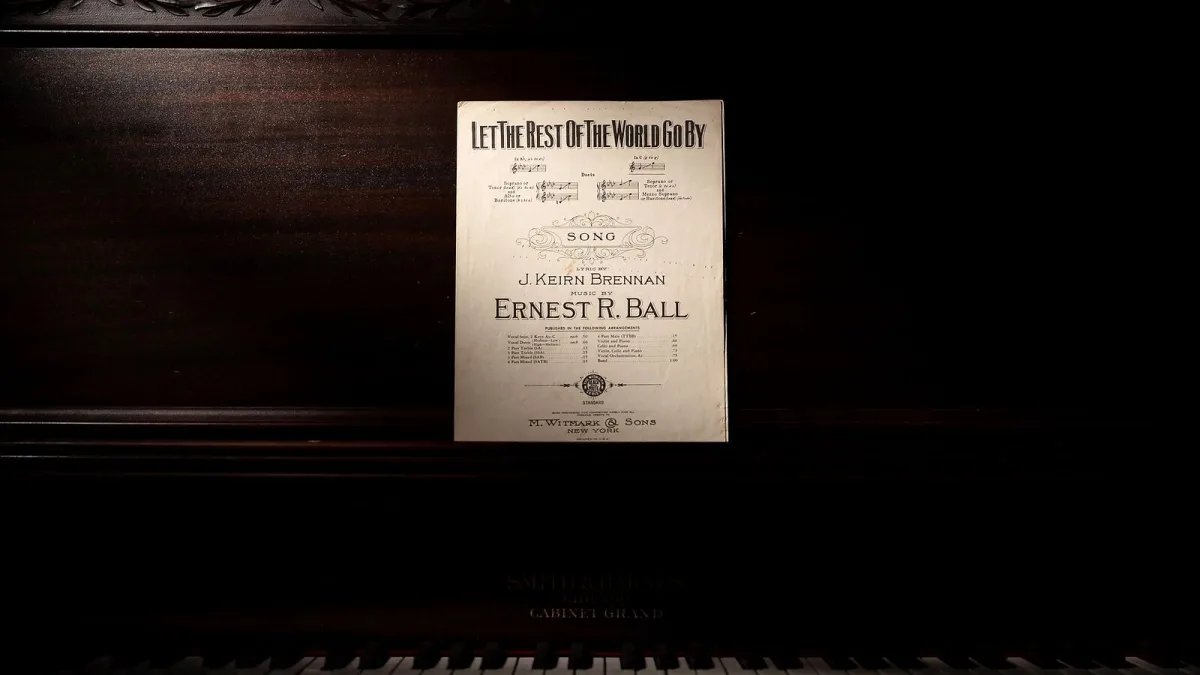
If you are learning the piano or helping a child learn, you will need sheet music — but working out where to start, what to look for, and how to read it confidently can feel overwhelming. This guide walks you through everything: what piano sheet music actually is, how it works, where to find it, and how to choose the right pieces for your level. By the end, it should feel a great deal less daunting.
What Is Piano Sheet Music?
Piano sheet music is a written representation of a piece of music, showing which notes to play, when to play them, how long to hold them, and at what dynamic level. Unlike guitar tablature (which shows finger positions rather than actual notes), piano sheet music uses the full standard notation system — the treble and bass clef on a grand staff — that has been the language of Western music for centuries.
A complete piano score typically has two staves (lines of notation) joined together: the right hand generally reads from the upper stave (treble clef, marked with a curling symbol) and the left hand from the lower stave (bass clef, marked with a dot-and-curve symbol). Both are read simultaneously, which is part of what makes playing the piano such rewarding — and initially demanding — work.
Reading the Notation: The Basics
You do not need to master music theory to start reading, but knowing a few fundamentals makes everything much easier.
Notes and the Staff
Each line and space on a stave represents a specific pitch. In the treble clef, the lines from bottom to top spell out Every Good Boy Deserves Food (E, G, B, D, F), and the spaces spell FACE. In the bass clef, the lines are Good Boys Deserve Fine Always (G, B, D, F, A) and the spaces All Cows Eat Grass. These mnemonics feel silly at first and become second nature faster than you expect.
Rhythm and Note Values
The shape of a note tells you how long to hold it. A hollow oval with no stem is a semibreve (whole note — four beats in common time). Add a stem and it becomes a minim (half note — two beats). Fill it in and it is a crotchet (quarter note — one beat). Add a flag to the stem and it becomes a quaver (eighth note — half a beat). A rest is a silence of equivalent length.
Time Signatures and Key Signatures
The time signature (the two numbers at the start of a piece, like 4/4 or 3/4) tells you how many beats are in each bar and what kind of note gets one beat. The key signature (the sharps or flats after the clef symbol) tells you which notes to raise or lower throughout the piece, reflecting the key the music is written in.
Choosing the Right Level
One of the most common frustrations for learners is choosing piano sheet music that is too difficult. Most publishers grade their publications, and understanding these grades helps enormously.
Grading Systems
- ABRSM grades — the Associated Board of the Royal Schools of Music grades pieces from Initial (pre-Grade 1) to Grade 8, with a diploma level above that. These are widely recognised and used as reference points even outside formal examinations.
- Trinity grades — Trinity College London uses a similar grade 1–8 structure, also widely used in UK teaching.
- Publisher difficulty markings — many publishers use their own labels: Beginner, Easy, Intermediate, Advanced. These are less standardised but usually give a reasonable indication.
A Rough Guide by Level
- Complete beginner — look for pieces that use only a few notes, minimal hand coordination, and simple rhythms. Five-finger position pieces (where each finger stays over one note) are ideal starting points.
- Early learner (Grades 1–2) — simple melodies in both hands, basic time signatures (4/4, 3/4), and no complex rhythms.
- Intermediate (Grades 3–5) — more complex rhythms, wider hand positions, dynamics, and some use of the sustain pedal.
- Advanced (Grades 6–8 and above) — technically demanding pieces with complex fingering, layered dynamics, pedal technique, and musical expression as a primary concern.
Where to Find Piano Sheet Music
The options have expanded dramatically in recent years, and most players use a combination.
Printed Music from Specialist Retailers
Physical sheet music books from publishers like Faber Music, Hal Leonard, Boosey & Hawkes, and ABRSM remain the gold standard for learners. They are professionally edited, properly engraved, and hold up to years of use on a music stand. In the UK, shops like Musicroom (now primarily online) and many local music shops stock a wide range.
Digital and PDF Sources
IMSLP (Petrucci Music Library) is the most significant free resource for classical piano sheet music — the vast majority of the standard repertoire is there legally, as copyright has expired on works by Beethoven, Chopin, Bach, Mozart, and their contemporaries. It is enormous, free, and legitimate.
For contemporary and pop piano sheet music, legal paid options include Musicnotes, Sheet Music Plus, and the official publications of the relevant composers' estates. Be cautious with unofficial sites offering free downloads of current copyrighted work — the quality is often poor and the legality is questionable.
Apps and Interactive Platforms
Platforms like Flowkey and Simply Piano include built-in sheet music libraries that respond to your playing in real time. For learning purposes, these have real advantages — instant feedback, adjustable tempo, and a large song library. They are not a replacement for reading notation from a page, but as a supplement they are genuinely useful.
Tips for Practising with Sheet Music
A few approaches that make working from notation more efficient and more enjoyable.
- Learn hands separately first. Practise the right hand part until it is secure, then the left hand, and only then put them together. Combining hands before either is solid creates confusion.
- Go slowly. A piece played slowly but accurately is always more useful than a stumbling fast run-through. Use a metronome at a tempo where you make no mistakes.
- Mark your music. Pencil fingerings directly on the score, circle tricky passages, and note dynamic markings you keep forgetting. This is not vandalism — it is efficient practice.
- Listen to recordings first. Knowing what a piece should sound like gives your brain a target. This is especially helpful for phrasing and expression, which notation only partially conveys.
Popular Starting Points
If you are choosing beginner or early-intermediate piano sheet music and want a reliable starting point, these are widely used and well-regarded:
- Faber Adult Piano Adventures — a well-structured method series for adult beginners.
- John Thompson's Easiest Piano Course — a classic beginner series, well-graded and widely available.
- ABRSM Piano Anthologies — collections of pieces at each grade level, useful even outside formal exam preparation.
- Really Easy Piano series (Hal Leonard) — accessible arrangements of familiar pop and classical pieces at a beginner level.
For common pitfalls when working from notation, read common piano sheet music mistakes to avoid.
Bottom Line
Piano sheet music is a tool, not an obstacle — and with the right starting point and a sensible approach to reading and practising, it quickly starts to feel like a second language rather than a foreign one. Choose a level that is genuinely achievable, build your sight-reading gradually, and do not rush. The ability to pick up any piece of piano sheet music and work through it is one of the most satisfying skills a musician can develop — it opens the entire written repertoire of keyboard music, which is very nearly everything ever written for it.




Comments