


Guitar Tab Books article
The Ultimate Guide to Guitar Tab Books
Guitar tab is the dominant notation format for guitarists learning songs — this guide explains how it works, what types of tab books exist and what separates good transcriptions from poor ones.
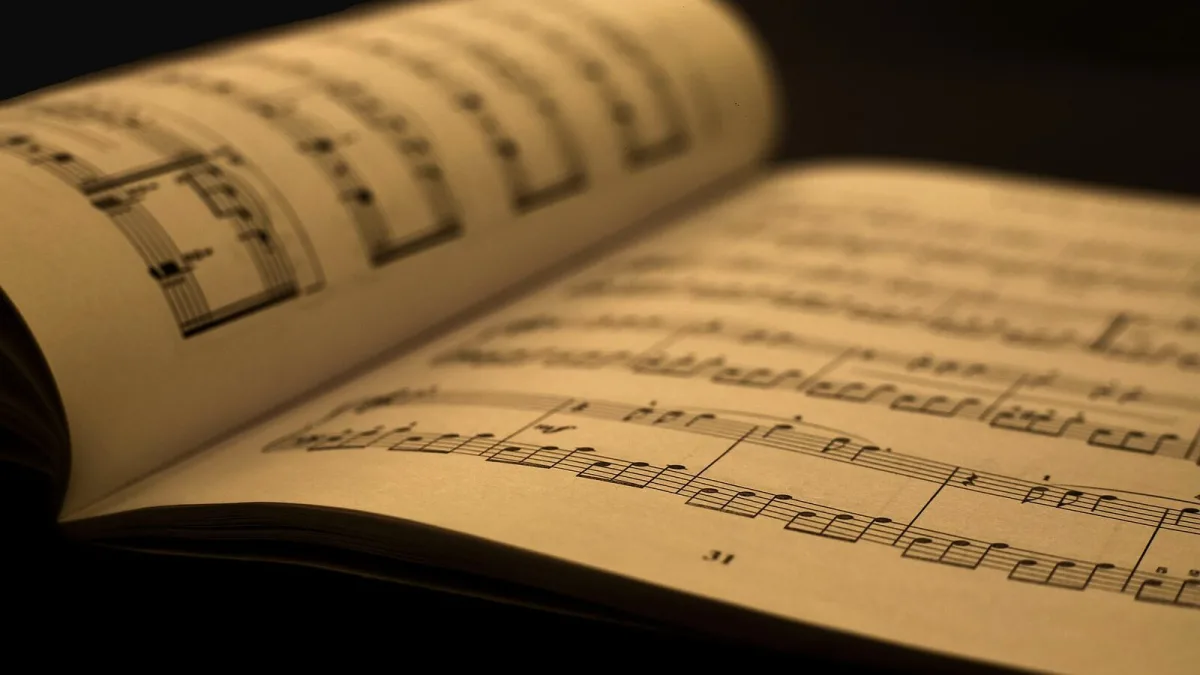
Guitar tab books are printed or digital publications that transcribe guitar parts using tablature notation — a staff of six horizontal lines representing the six strings of the guitar, with numbers indicating which fret to press. Unlike standard notation, tab shows you exactly where to put your fingers rather than which pitch to produce. That makes it considerably more accessible to guitarists who have not learned to read music, which is most of them.
The format has been the dominant way guitarists learn songs since Hal Leonard and Mel Bay began publishing tablature books in the 1970s and 1980s. Today, these publications remain the standard physical format for learning specific songs, studying a particular artist's technique, or working through a structured method that uses songs rather than exercises as the teaching vehicle.
Types of Guitar Tab Books
- Artist songbooks — transcriptions of one artist or band's catalogue. Examples include complete collections for Jimi Hendrix, AC/DC, Led Zeppelin, Metallica, and most significant rock acts. These typically include full notation above the tab, chord diagrams, and performance notes. They are the most commercially prevalent format.
- Method books with tab — structured teaching books that use tablature to teach technique, scales, and music theory through song examples. Hal Leonard's Guitar Method series and John Petrucci's Rock Discipline are well-known examples. These are more systematic than songbooks and more useful for developing skills in a defined sequence.
- Genre compilations — collections of songs from a particular style (classic rock, blues, fingerpicking standards). These give learners a spread of material in one genre rather than one artist's work, which is useful for building a repertoire in a specific style.
- Technique books in tab — books focused on a specific skill (bending, sweep picking, fingerstyle patterns) with exercises written in tab. These complement song-focused publications rather than isolated technique work.
How Tab Works
The six lines in tab notation correspond to the six strings: the lowest line is the lowest-pitched string (low E), the highest line is the highest-pitched string (high e). Numbers on a line indicate fret position — a 0 means play the open string, a 3 means press the third fret. Chords appear as stacked numbers played simultaneously. Common embellishments are shown by letter codes: b for bend, h for hammer-on, p for pull-off, / for slide up, \ for slide down.
The limitation of tab is that it does not inherently show rhythm — you need to know how a song sounds (or read the notation above the tab if it is included) to know how long each note lasts. Better-quality publications address this by including standard notation above the tab staff, or by using note duration symbols above the tab numbers.
What to Look For
Accuracy is the most important quality in guitar tab books. Poorly transcribed tab — with wrong fret positions, incorrect chord voicings or missing parts — teaches bad habits that take time to unlearn. Look for books from publishers with established accuracy standards (Hal Leonard, Music Sales, Alfred). User reviews on music retailers (Thomann, Andertons, Amazon) are a reliable indicator of whether a book's transcriptions are trustworthy. Official transcription books (licensed directly by the artist or their estate) are generally more accurate than unofficial third-party transcriptions.





Comments