


Trinity Music Exams article
Common Trinity Music Exams Mistakes to Avoid
Most Trinity music exam disappointments come down to a handful of avoidable preparation mistakes. Here is what to watch out for — and how to put it right.
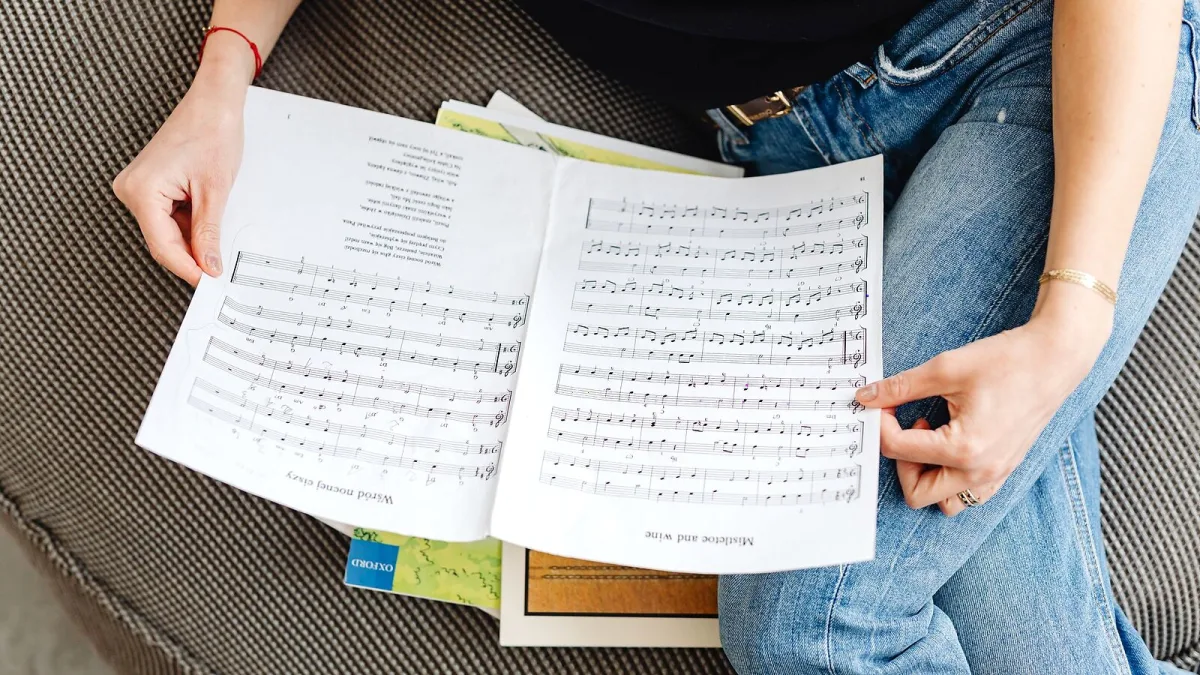
Preparing for Trinity music exams takes real effort, and most candidates who do not reach the mark they hoped for have not failed for lack of practice. The reasons are usually more specific: preparation that missed a particular area, a decision made at the wrong point, or a misunderstanding about how the exam actually works. Here are the most common mistakes — and what to do instead.
Mistake 1: Not Reading the Current Syllabus
Trinity syllabuses are updated periodically, and the pieces on approved repertoire lists can change. One of the most avoidable errors is selecting music from an outdated edition or assuming last year’s list still applies. Before choosing any piece, check that it appears on the current syllabus for your instrument, grade and examination year.
This also applies to requirements that surround the pieces: accompaniment rules, memory requirements, repeat conventions and any special instructions vary by instrument and are set out in the syllabus. Reading it thoroughly before you begin repertoire selection saves considerable trouble later.
Mistake 2: Choosing Repertoire That Is Too Technically Demanding
It is tempting to choose a piece that sits at the absolute top of what a candidate can play — the piece that sounds most impressive, the one that requires the most technical stretch. In practice, a piece just below the technical ceiling often produces a better musical result in an examination than one that is slightly beyond reliable control.
When technique is stretched to its limit, musical attention is consumed by note accuracy and mechanical control. A candidate who plays a slightly more comfortable piece with shape, dynamics and genuine expression will typically score better than one who struggles through a technically ambitious programme. Aim for pieces that are secure enough to leave mental space for musicality.
Mistake 3: Neglecting Technical Work
For Trinity music exams in the face-to-face format, and for the digital Technical Work pathway, scales and technical exercises carry a meaningful portion of the marks. Many candidates practise their pieces thoroughly while treating technical work as an afterthought, cramming scales in the final week of preparation.
Technical work rewards consistent, gradual practice over time rather than short intensive bursts. Scales practised slowly and accurately every day for three months will be considerably more reliable under examination pressure than the same scales practised intensively for two weeks. Build technical work into every practice session, not just the final run-up.
Mistake 4: Ignoring the Aural and Supporting Tests
In face-to-face Trinity exams, supporting tests — which typically include sight-reading, aural tests or musicianship tasks depending on the instrument and grade — are a distinct part of the assessment. Candidates who focus almost entirely on repertoire and give minimal attention to these components can find themselves underprepared for a quarter or more of the available marks.
Sight-reading in particular benefits from regular short practice rather than occasional longer sessions. Even five minutes of sight-reading at the start of each practice session, sustained over several months, builds the skill more reliably than intensive preparation in the weeks before an exam. If aural tests are included, use Trinity’s published materials to practise them in a structured way.
Mistake 5: Failing to Prepare for the Digital Recording (If Taking That Route)
Digital Trinity exams are assessed from a recorded video submission. Candidates who approach this as simply “recording a performance at home” sometimes encounter avoidable problems. The recording is an assessment document, and its technical quality matters alongside the performance itself.
Common pitfalls include:
- Poor camera placement that does not clearly show the performer and instrument.
- Audio that clips (distorts), is too quiet, or is obscured by room noise or reverberation.
- Incomplete recordings where cuts, edits or retakes are not permitted.
- Backing tracks or accompaniment that are poorly balanced against the candidate.
- Uploading a test file rather than the final submission, or missing the four-week upload window.
Test your recording setup well in advance. Play through the piece, listen back critically, and check that the audio and video quality accurately represent your performance. Submit with time to spare.
Mistake 6: Not Understanding the Mark Bands
Some candidates prepare for Trinity music exams with a vague aim of “passing” without understanding exactly what marks are required. Trinity’s published attainment bands are straightforward: Pass begins at 60 marks out of 100, Merit at 75, and Distinction at 87. Understanding this helps with goal-setting: a candidate aiming for Merit needs to be consistently producing 75% quality in mock performances, not just occasional moments of 80%.
It also helps to understand that the overall performance component in the digital Technical Work pathway is not simply a check of accuracy. It assesses broader musicianship — including musical delivery, consistency and focus across the submitted video. Attention to performance quality throughout a piece matters, not just in the climactic moments.
Mistake 7: Leaving the Mock Performance Too Late
A full mock examination — running through everything in exam order, under realistic conditions, without stopping — is one of the most valuable things a candidate can do in the weeks before the assessment. It reveals which pieces feel reliable and which wobble under pressure. It surfaces habits that are hard to notice in ordinary practice, such as pausing after a mistake, losing tempo when nervous, or skipping technical work when tense.
Ideally, candidates should have completed at least two or three full mock run-throughs before their exam date. If your teacher has not suggested this, request it. The first time through often reveals a great deal; the third gives confidence that the improvements are real.
Mistake 8: Not Verifying Current Fees Before Booking
Trinity exam fees are published by Trinity College London, but fee schedules can be revised and may vary by format, grade and booking period. It is sensible to check the current fee on Trinity’s official booking pages or support articles rather than relying on figures quoted in secondary sources, which may be out of date. Fees for graded exams, diplomas and digital formats differ, so verify the specific amount for your exam before completing any payment.
The Underlying Pattern
Most of these mistakes in Trinity music exams come down to preparation that is uneven — strong in one area, underprepared in another — or based on an incomplete understanding of how the exam is structured. The solution is simply to read the syllabus carefully, prepare every component, and run a realistic mock before the real thing. Candidates who do that rarely have serious surprises on the day.
For a full overview of how Trinity music exams work — grades, formats, fees and mark bands — read our complete guide to Trinity music exams, which covers the whole system in one place.





Comments