


Yamaha P45 article
Yamaha P45 for Beginners: A Complete Guide
Most of the complexity disappears once you know what actually matters. Here's a step-by-step start on the Yamaha P45.
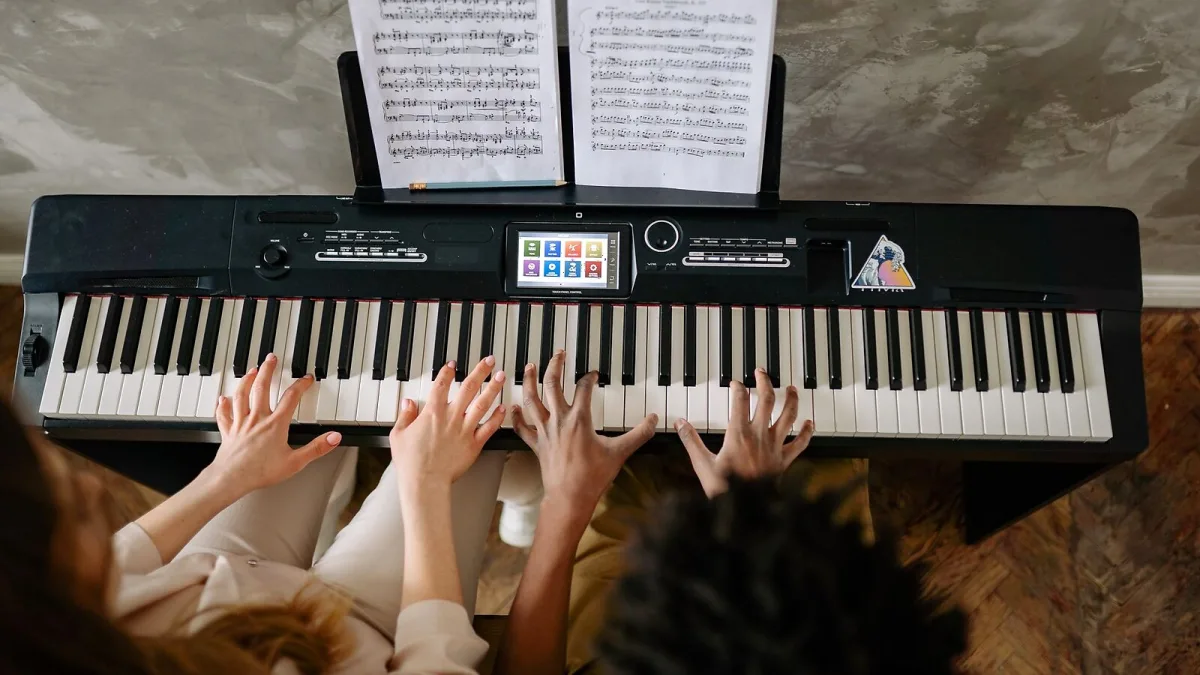
Starting piano as a genuine beginner can feel like there's a hundred things to learn before you've even touched a key. Good news: with the Yamaha P45, most of that complexity disappears. This guide to the Yamaha P45 walks through exactly what matters for you, step by step, without the jargon getting in the way.
Step One: Understanding Why the Weighted Keys Matter
The single most important thing about the Yamaha P45, for a beginner, is its Graded Hammer Standard action. Unlike a lightweight keyboard or synthesiser, the P45's keys push back against your fingers the way an acoustic piano's do, with the bass end feeling heavier than the treble end. That resistance is doing real work early on: it's teaching your hands correct finger strength and touch control from your very first lesson, rather than habits you'll have to unlearn later on a "real" piano.
Step Two: Setting the Touch Response for You
Don't skip this. The instrument offers four touch settings, and picking the right one makes those first weeks noticeably less frustrating:
- Soft — a gentle option if you're younger or find the standard response too demanding at first.
- Medium — the sensible default for most beginners; leave it here unless you have a specific reason to change it.
- Hard — only worth trying once your fingers have built some strength and you want a firmer feel.
- Fixed — removes touch sensitivity entirely; genuinely useful for very first exercises where consistent volume matters more than dynamics.
Step Three: Getting Your Setup Right
A good instrument on a wobbly, badly positioned stand undermines your own progress. Set the keyboard at a height where your forearms sit level and relaxed, not angled up or down. Keep it a reasonable distance from a wall or corner, since bass sound can build up unpleasantly close to a hard surface. If you'll be practising somewhere with other people around, invest in a decent pair of headphones early — it removes the self-consciousness that stops a lot of beginners from practising as often as they should.
Step Four: Using the Practice Tools You Already Have
You don't need extra apps or gadgets to start using these properly:
- Metronome — turn it on early and often. Playing in time is a skill in itself, and it's far easier to build from day one than to fix later.
- Transpose — shifts the whole keyboard up or down by semitones, useful if a song sits awkwardly for your hands or a singing voice you're accompanying.
- Duo mode — splits the keyboard into two identical ranges, so a teacher or parent can sit beside you and demonstrate on the same notes you're playing.
What You Genuinely Don't Need to Worry About Yet
It's easy to get distracted by spec sheets. As a beginner, the Yamaha P45's modest 10-voice sound set and 64-note polyphony are simply not going to hold you back — you'll spend your early months on far more basic pieces than anything that would test those limits. Save the worrying about advanced connectivity, huge sound libraries or workstation features for a much later stage, if you ever need them at all. It's genuinely rare for a beginner to outgrow this instrument's core capabilities before their technique has developed enough to need something more advanced anyway.
Building a Simple Practice Routine
Little and often beats long, rare sessions every time. Fifteen to twenty focused minutes a day at your Yamaha P45, with the metronome on for at least part of that time, will move you forward faster than an occasional hour-long marathon. Use the medium touch setting, keep your wrists level, and resist the temptation to rush ahead to harder pieces before the easier ones feel genuinely comfortable under your fingers.
When You're Ready to Learn More
Once the basics start clicking, you'll probably want the fuller technical picture. Our complete overview of the Yamaha P45's features covers everything from polyphony to USB connectivity in more depth, and if you're still deciding whether to buy one, our buyer's guide walks through new, used and bundle options properly.
A Note on Patience
Progress on any weighted instrument feels slower at first than it does on a lightweight keyboard, and that's actually a sign things are working correctly rather than a problem with you or the instrument. The Yamaha P45's action is building real strength and control in your hands from the start, which pays off enormously once you move on to more demanding pieces later. Don't compare your first month's progress to someone practising on an unweighted keyboard — you're doing something genuinely more useful, even if it feels harder in the short term.
The Bottom Line
As a first instrument, the Yamaha P45 does the one thing that actually matters for a beginner: it teaches your hands the right habits from day one, without overwhelming you with features you don't need yet. Get the touch setting right, practise little and often with the metronome on, and the rest of the instrument's features can wait until you've actually outgrown the need to ask about them.



Comments