


Church Organ article
Church Organ for Beginners: A Complete Guide
A reassuring starting point for anyone new to the console — what's actually different from piano, and how to begin without overwhelm.
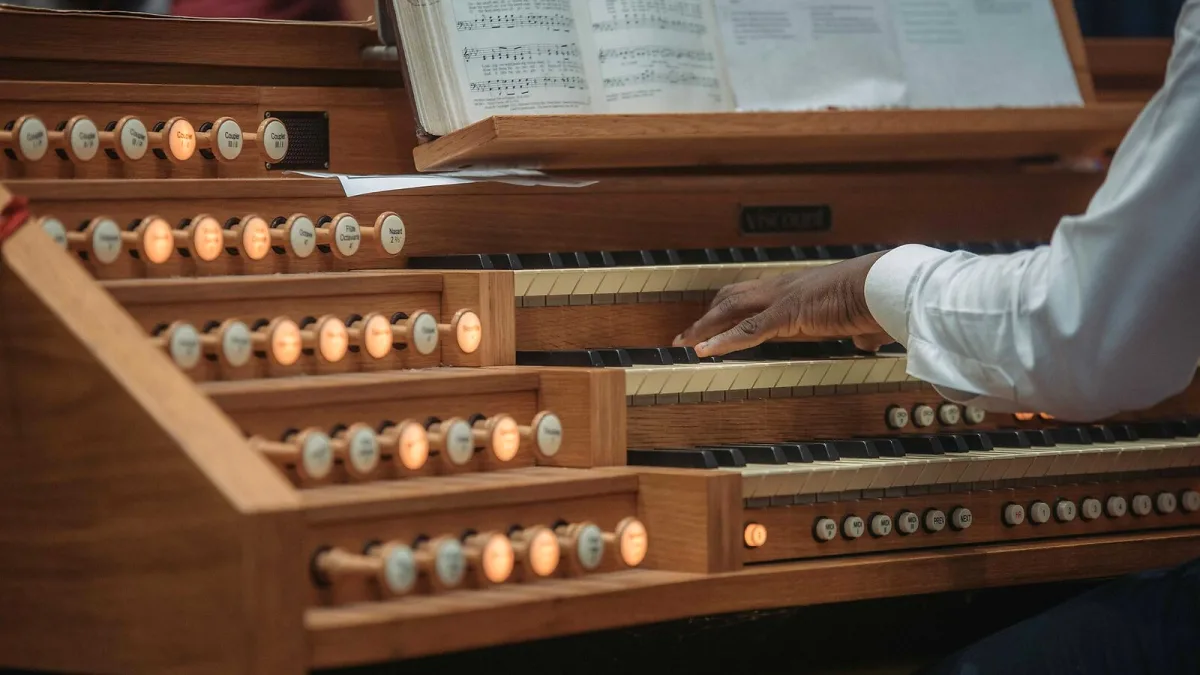
Sitting down at your first church organ console can feel like being handed the controls of an aeroplane. Rows of stops, two or three keyboards, and a whole extra keyboard for your feet — it's a lot to take in at once. Take a breath. Nobody expects you to understand all of it on day one, and you genuinely don't need to.
What Makes This Different From Piano
The biggest adjustment when moving from piano to church organ, even for a confident pianist, is that a note keeps sounding for as long as you hold the key down, rather than fading away like a piano string does. There's no "loud or soft" from how hard you press, either — dynamics come from your choice of stops and, on some divisions, a swell pedal, not from touch. It genuinely changes how you think about phrasing.
Your Hands: Manuals, Gently Introduced
Don't worry about using every manual at once when you're starting out. Most beginners spend their early lessons on a single keyboard, getting comfortable with the different feel and slightly heavier touch before adding a second manual or any coupling between them. There's no rush — the instrument will still be there once you're ready for more.
Your Feet: The Pedalboard, Without the Panic
The pedalboard understandably worries a lot of newcomers, but it's genuinely learnable in small steps. Start by simply finding notes by feel, without looking down, using just your toes on the most basic bass lines. Heel-and-toe technique and independent pedal lines come later — there's no expectation that your feet will do anything complicated in your first weeks.
Choosing Your First, Simple Registration
You don't need to understand every stop on the console to make a pleasant sound. A good starting point:
- Pick a clear 8-foot foundation stop as your base — often labelled Principal or Flute.
- Leave the mixtures and reeds alone for now; they're powerful, characterful sounds best introduced once you're comfortable.
- Ask your teacher or a more experienced organist to show you two or three reliable, simple combinations to start with.
Common Beginner Worries, Answered
- "What if I press the wrong stop?" Nothing breaks. You'll just get a sound you didn't expect, and you'll learn what that stop does in the process.
- "Do I need to memorise every stop name?" Not at first. Learn the handful you actually use regularly, and build outward gradually.
- "Why does it sound different every time I play somewhere new?" Every building's acoustics genuinely change how it sounds, even with identical registration — that's normal, not a mistake.
- "Is it too late to start as an adult?" Not at all. Plenty of church organ players come to it later in life, often after years on piano.
Curious how the pipes and wind system actually work underneath all this? Our full overview explains the mechanics clearly, and if you're helping choose an instrument for your own church, our buyer's guide is a useful companion read.
The Bottom Line
Nobody starts out comfortable at a church organ with two keyboards, a pedalboard and rows of stops all at once — and nobody expects you to be. Learn one manual first, find pedal notes by feel before worrying about technique, and stick to a simple, honest registration while you build confidence. Everything else genuinely comes with time. Our guide to the best options for the money is worth a look too, if you're weighing up your own first instrument.




Comments