


Church Organ article
Church Organ Explained: Features, Types and Tips
A genuinely clear explanation of how these instruments actually work, from the blower to the pipe, plus a few practical playing tips.
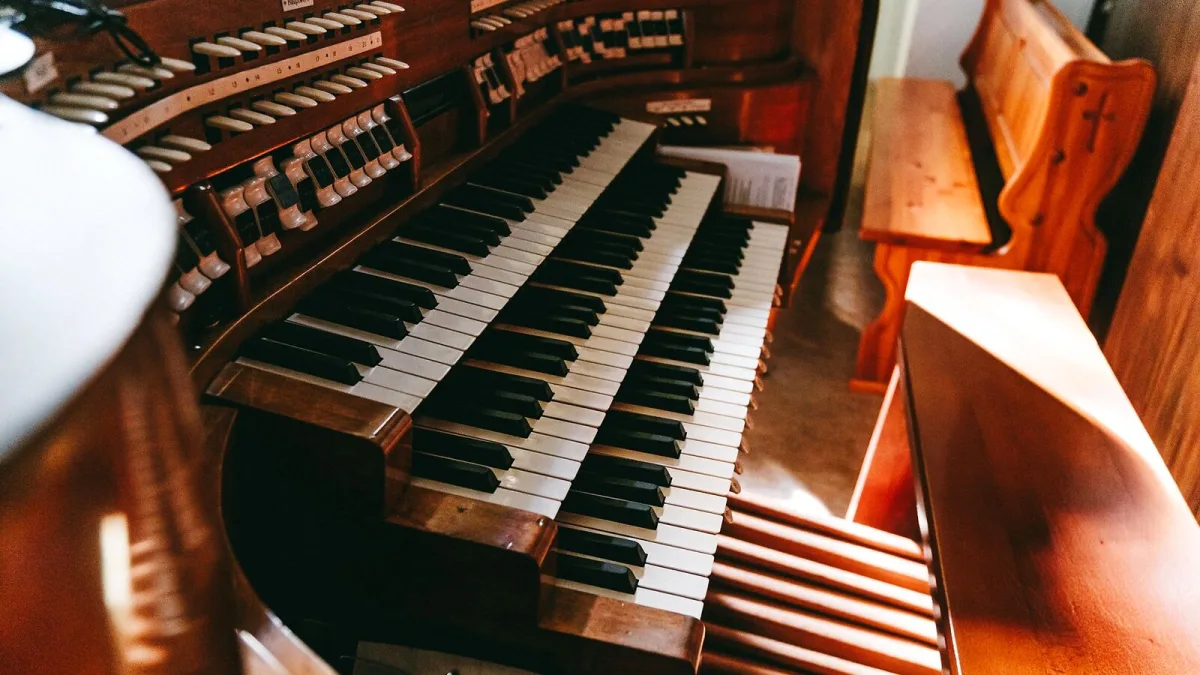
There's something wonderfully unhurried about learning how a church organ actually works — it rewards curiosity rather than punishing it. Whether you're a new organist, a curious congregation member, or just someone who's always wondered what's happening behind all those pipes, here's the genuinely clear version.
What It Actually Is
At its heart, a church organ is a wind instrument. Pressurised air is directed into tuned pipes, and the organist controls exactly which pipes sound, and how, using keyboards, pedals and stop controls. That's true whether you're looking at a small single-manual instrument in a village chapel or an enormous cathedral organ with thousands of pipes.
How the Sound Is Actually Made
The whole process happens in a logical sequence:
- A blower produces a steady supply of air.
- Reservoirs regulate that air to a stable pressure.
- Windchests distribute the air beneath the pipes.
- Stop controls decide which sets of pipes are available to play.
- Pressing a key or pedal opens a valve for the chosen pipe.
- Air enters the pipe and the note sustains for as long as the key stays down.
That last point is the key difference from a piano: a piano's sound decays after the hammer strikes, while an organ pipe keeps sounding steadily until you let go.
Manuals, Pedals and Divisions
The keyboards on a church organ are called manuals, and a typical instrument has two or three, plus a pedalboard played with the feet. Each manual usually controls a division — a group of stops with its own character:
- Great — the principal, foundational division.
- Swell — often enclosed in a box with shutters for dynamic control.
- Choir or Positiv — softer, often used for accompaniment.
- Pedal — the bass division, played by the feet.
Stops, Ranks and Pitches
A rank is a set of pipes, one per key, all sharing a similar construction and tone. A stop activates a rank, and the numbers you'll see next to stop names — 16′, 8′, 4′, 2′ — describe pitch level rather than volume: 8′ sounds at written pitch, 4′ an octave above, and so on. The main families are foundation stops (principals and flutes), mutation stops (non-unison pitches), mixtures (several high-pitched ranks combined) and reed stops, which use a vibrating tongue to produce trumpet, oboe or bassoon-like colours.
Pipe Organ or Digital Organ?
Plenty of modern churches use digital organs, which reproduce sampled or modelled pipe sounds through loudspeakers. They're often more affordable and place fewer demands on a building, but they can't replicate every physical characteristic of real pipes interacting with a room's acoustics. Neither option is universally "better" — it genuinely depends on the church's space, budget and needs. Our complete buyer's guide covers exactly what to weigh up.
A Few Practical Registration Tips
- Start with a clear 8′ foundation stop as your base sound.
- Add a 4′ stop for brightness once you're comfortable.
- Save reeds for climactic or solo moments rather than leaving them on throughout.
- Always test a registration from the seating area, not just the console — church acoustics change everything.
If you're just starting to learn, our beginner's guide walks through your first steps at the console properly.
The Bottom Line
A church organ looks intimidating from a pew, but the underlying idea behind every church organ is genuinely simple: controlled air, tuned pipes, and a set of choices about which ones sound at once. Once you can picture that basic chain — blower, reservoir, windchest, pipe — the rest of the instrument's complexity starts making sense rather than feeling overwhelming.






Comments