


Virtual DJ roundup
Virtual Dj: A Complete Buyer's Guide
The real VirtualDJ buying decision isn't the software — it's which licence you need and whether your controller is properly supported. Here's how to get both right.

Right, so you have decided VirtualDJ is the software for you, or you are still weighing it up against the alternatives — either way, the actual decision is not "should I get VirtualDJ" so much as "which licence, which controller, and am I about to buy something my computer cannot run properly." Let's sort all three, in order, before any money changes hands.
Step one: work out which licence you genuinely need
Atomix, the company behind VirtualDJ, sells it on a tiered licence model rather than a single one-off price, and it is worth reading the small print because the tier decides what hardware you are even allowed to use.
| Tier | Price | What you get |
|---|---|---|
| Free | £0 | Full software for non-professional use without professional equipment; entry-level controllers only, with branding and audio drops noted on this tier by the official comparison. |
| Home | $4/month | Removes the branding restriction for home/personal use; still aimed at entry-level controllers. |
| Pro | $19/month | Full professional use, USB/MIDI controllers and external analogue mixers. |
| Business | $99/month | Aimed at venues, with annual billing discounts available. |
The one to get honest with yourself about is that "non-professional" line. If you are practising at home on your own gear, the free tier is a genuinely capable way to learn before spending anything. The moment you are being paid, or you are plugging into a proper controller and analogue mixer at someone else's event, you are into Pro territory. Pricing on software licences shifts fairly often, so treat these as the figures on Atomix's own pricing page rather than gospel, and double-check before you commit.
Step two: check controller compatibility before you check anything else
This is the step people skip and regret. VirtualDJ's whole appeal is that it talks to an enormous range of DJ controllers, external mixers and timecode gear — but "compatible" is doing a lot of work in that sentence, and it does not always mean every feature of a given controller works identically to that controller's own bundled software.
- Is it officially supported by VirtualDJ, or does it need a community-made mapping?
- Which features are plug-and-play versus requiring manual configuration?
- Do jog wheel displays, screens, motorised platters and performance pads work fully, or only partially?
- Which licence tier does that specific controller require — Home-level entry controllers, or Pro-level professional gear?
- Are audio routing and any microphone inputs supported the way you expect for your use case (weddings and karaoke especially)?
- Is the controller's firmware current, since older units can behave unpredictably with newer VirtualDJ builds?
If you are buying a controller specifically to pair with VirtualDJ, it is worth reading a dedicated buying guide for that hardware category before you commit — support quality varies far more by controller model than most marketing copy admits.
Step three: match the software to how you will actually DJ
Not every buyer needs the same features, so it is worth being honest about your use case before you pay for a tier you will not use.
Mobile and wedding DJs
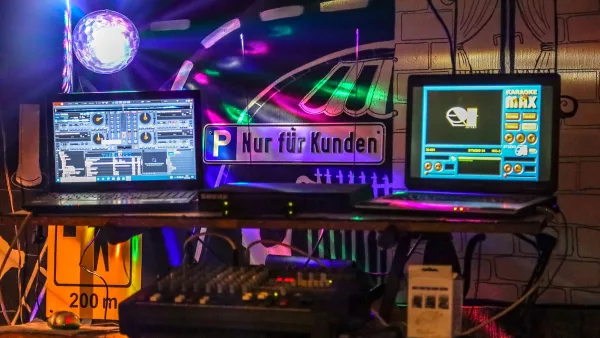
You will lean on VirtualDJ's video and karaoke playback, so factor in your laptop's graphics capability and an external display, not just the software cost. Pro licensing is generally the sensible baseline here, since you are working professionally and often on rented or client-supplied controllers.
Club DJs with turntables or CDJs
If you want the tactile feel of vinyl with digital-library access, you are looking at a DVS (digital vinyl system) setup — timecode records or timecode CDs, a compatible audio interface, and the correct licence. Also check the new OneLibrary export, AlphaTheta's format for pushing a prepared VirtualDJ library onto compatible CDJ/XDJ hardware — reported to include the CDJ-3000X, CDJ-1500X, XDJ-AZ, XDJ-AN, OPUS-QUAD and OMNIS-DUO. Test an export before you rely on it at a booking; USB formatting and firmware quirks can catch out any cross-platform transfer.
Open-format, hip-hop and live-tempo material
If your sets involve live-band recordings or tracks whose tempo drifts, the 2026 build's Fluid BPM system and BPM Stabiliser are a genuine reason to be on the current version rather than an older licence, since fixed beatgrids struggle with that material.
Features worth weighing against price
- Stems — real-time separation into vocal, drum, bass and melodic layers, useful for mashups and vocal transitions, but not flawless: audition anything important first, since artefacts can appear around reverb or dense backing vocals.
- Effects engine — MusicTech has reported more than 122 professional effects in the current build, including some modelled on familiar Pioneer DJ and Rane mixer sounds, which matters if you currently rent hardware and want the software to feel similar.
- AI tools — Shoutout AI for voiceovers and Scripting AI for natural-language custom functions are new for 2026. Useful, but treat them as conveniences layered on top of solid preparation, not a replacement for it.
- Streaming access — services such as TIDAL, SoundCloud, Beatport, Deezer and iDJ Pool have been reported as supported, though availability depends on region, your own subscription and the VirtualDJ licence tier. Do not assume a service on the list means unrestricted offline access.
Common buying mistakes
Paying for Pro before confirming your specific controller is properly supported. Assuming the free tier will cover a paid gig — it will not, and the branding and restrictions are there deliberately. Buying an ageing second-hand controller without checking current firmware compatibility. And banking on streaming-service tracks being available offline on the night — always keep a local backup library of anything you cannot afford to lose access to. For a longer list of pitfalls once you are actually using the software, see our guide to common VirtualDJ mistakes to avoid.
Bottom line
Buy based on how you will use it, not on the flashiest feature. Home users learning the ropes are well served by the free tier; anyone earning money or plugging into serious hardware should budget for Pro from the start rather than upgrading mid-project. If you want the full picture of what the software does before you commit to a tier, our VirtualDJ overview covers every feature group in detail, and if you are brand new to DJing altogether, start with our beginner's guide to VirtualDJ instead.



Comments