


Mpc Sample article
Mpc Sample Explained: Features, Types and Tips
Akai's battery-powered MPC Sample turns recorded or imported audio into playable beats — here's what it does and how to get clean results out of it.
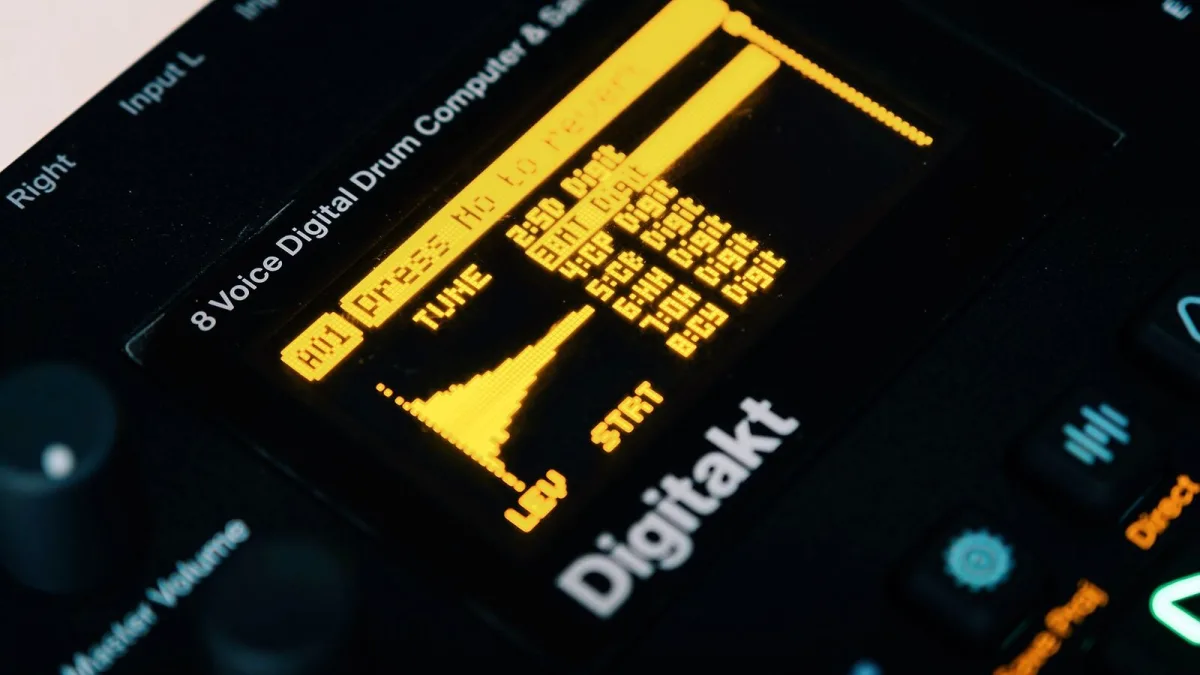
Akai's MPC lineage has been the backbone of sample-based production since the MPC60 and MPC3000, and the MPC Sample is the newest, most portable member of that family — a battery-powered box built specifically for turning recorded or imported audio into playable beats. Here's what it actually does, the sample types it's built around, and a few tips for getting cleaner results out of it.
What the MPC Sample Actually Is
MPC stands for MIDI Production Center, and the name covers a lineage of drum-machine-meets-sampler instruments going back decades. It's Akai's compact, battery-powered take on that idea: 16 velocity-sensitive pads with polyphonic aftertouch, a built-in microphone and speaker, and the classic MPC sequencing workflow, all designed to work away from a conventional studio setup as easily as inside one.
Under the hood, it offers 32 stereo voices of polyphony, room for up to 128 samples and 128 sequences per project, 2 GB of RAM and 8 GB of internal storage, plus a factory library of roughly 2 GB of drum kits and melodic loops, according to Akai's own support documentation.
The Sample Types It's Built Around
Most of that work falls into a handful of categories, and knowing which one you're dealing with shapes how you should approach it:
- One-shots: single drum hits or short sounds — kicks, snares, hats, claps, vocal stabs — each mapped to its own pad for real-time playing and sequencing.
- Loops: complete rhythmic or melodic phrases, useful as-is or as raw material for further chopping. Worth checking the tempo, key, bar length and downbeat placement before committing to one.
- Chopped samples: a longer recording divided into playable slices. Akai's Instant Sample Chop mode speeds this up, though manual chopping still wins when exact musical boundaries matter.
- Melodic samples: played as separate slices to preserve character, or mapped chromatically when the source is a single sustained note or tone.
- Resampled material: the unit's own output recorded back in, useful for printing effects or combining several pads into one playable sound.
Where the Samples Actually Come From
The unit can record from its built-in microphone, stereo quarter-inch inputs, USB-C audio, or its own internal resampling path — and it accepts common formats including WAV, MP3, AIFF, FLAC and OGG at up to 24-bit/96kHz, per Sweetwater's quick-start documentation. That flexibility is a big part of what makes it usable away from a studio: you can sample a rehearsal room, a phone recording or a previous MPC session with the same workflow.
Features Worth Knowing
| Feature | What it does |
|---|---|
| Instant Sample Chop | Automatically slices a recording into playable sections |
| Time-Stretch & RePitch | Adjust tempo and pitch independently in real time |
| Four effects engines | Over 60 effect types across pads, knobs, filters and dynamics |
| Built-in mic & speaker | Sample and audition ideas with no other gear required |
How It Fits Alongside Other MPC Models
Akai's current standalone range also includes the MPC One, MPC Live and MPC X, all of which run the same underlying MPC software environment but offer larger screens, more onboard storage and broader connectivity. This one is deliberately smaller in scope: built-in battery power, a compact footprint and a focus on getting audio in and chopped up quickly, rather than serving as a full studio-in-a-box. If portability and quick sampling matter more to you than a big screen and extensive plugin support, that trade-off is worth weighing before deciding between models.
It also sits in a long line going back to the MPC60 and MPC3000, the machines that originally established the pads-plus-sequencer workflow this whole family still uses. The core idea hasn't changed much in decades — what's changed is how small and battery-friendly Akai can make it.
A Few Practical Tips
A handful of habits make a real difference to how the MPC Sample's output actually sounds: record with enough level to avoid noise but leave headroom to prevent clipping, trim silence tightly around drum hits, and use velocity rather than volume knobs to add movement across a kit. Time-stretching is genuinely useful but easy to overdo — extreme settings introduce audible artefacts, so treat it as a tool for small adjustments rather than a fix for badly chosen source material.
Where to Go Next
If you're weighing up whether to actually buy one, MPC Sample: A Complete Buyer's Guide covers the specifics that matter before you commit. New to hardware sampling generally? MPC Sample for Beginners: A Complete Guide walks through your first sample step by step, and Common MPC Sample Mistakes to Avoid is worth a read before you get too deep into a project.
The Bottom Line
The MPC Sample compresses a lot of what made the MPC lineage useful — fast sampling, hands-on pad performance, real sequencing — into something small enough to run on battery power. Get comfortable with one-shots, loops and chops first, and the rest of the unit's features start making sense on their own.



Comments