


Post Punk article
The History of Post Punk
From punk's fading shout to Joy Division, Gang of Four and beyond — the real timeline of how post-punk came together, spread and splintered.
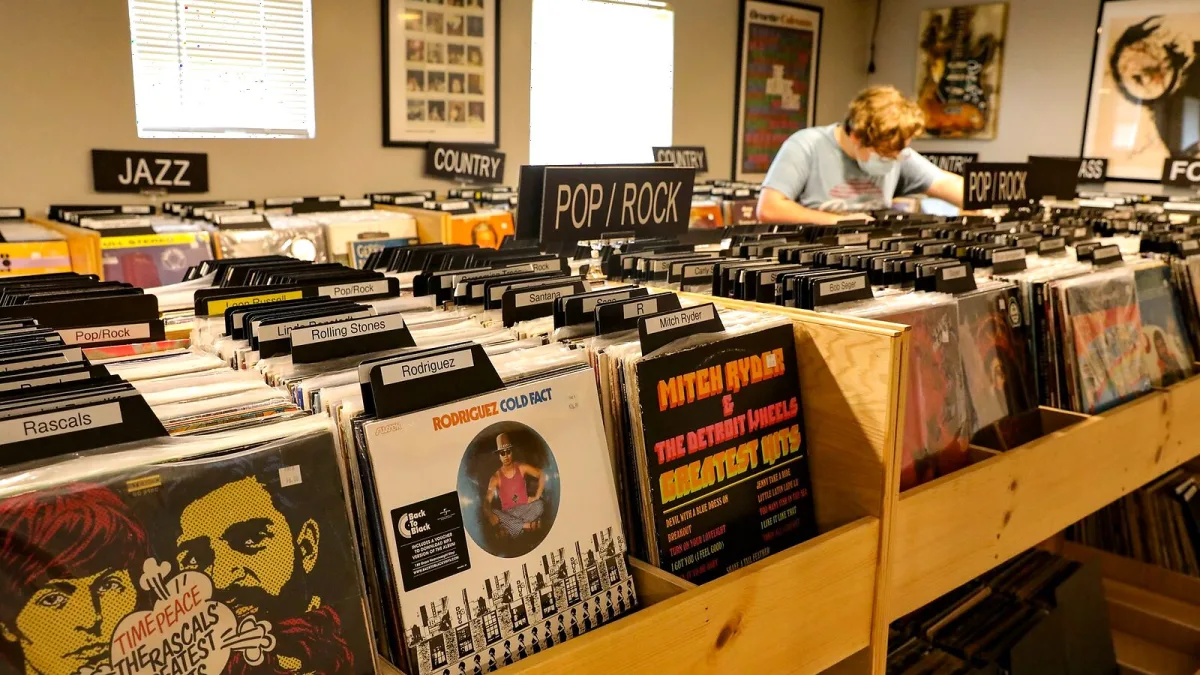
Every genre has a moment where the old rules stop applying and nobody quite agrees on what replaces them. For British rock, that moment came in 1977, when punk had already made its point and a handful of bands started asking what came after the shouting stopped. This is the story of post-punk, told roughly as it happened: from punk's collapse, through a remarkably fertile handful of years, and out into the music that still carries its fingerprints today.
1976–77: punk clears the ground
Punk's real achievement wasn't a sound so much as a permission slip. It proved a band didn't need major-label money, technical polish or years of gigging to release a record that mattered. By late 1977, though, the format was already calcifying into its own conventions — three chords, a sneer, a fast tempo. A number of musicians who'd absorbed punk's energy started looking for somewhere else to take it, and they didn't have to look far: dub reggae's cavernous production, funk's rhythmic discipline, Krautrock's hypnotic repetition and art-school ideas about irony and texture were all sitting right there, largely untouched by rock music. What resulted, once these ingredients started mixing with punk's leftover urgency, is what we now call post-punk.
1977–79: the post-punk sound arrives
Wire's debut album, Pink Flag, arrived in 1977 and is often cited as the earliest fully formed statement of what would come to be called this new sound — clipped, structurally strange songs that said their piece in under two minutes and left. The following year brought a rush of landmark singles: Magazine's "Shot by Both Sides", Siouxsie and the Banshees' "Hong Kong Garden", Public Image Ltd's "Public Image" and Cabaret Voltaire's Extended Play all appeared in 1978, each pulling in a different direction while sharing a refusal to sound like straightforward punk.
1979 is where the picture sharpens into focus. Joy Division released Unknown Pleasures, a bleak, spacious record built around Peter Hook's melodic bass and producer Martin Hannett's unconventional treatment of the drums — an approach that arguably shaped the genre's atmosphere as much as any band did. The same year gave us Gang of Four's Entertainment!, which fused funk's rhythmic bite with Andy Gill's dry, percussive guitar and pointedly political lyrics, and Public Image Ltd's dub-soaked Metal Box. Three records, three completely different routes out of punk, released within months of each other.
1980–84: the sound spreads and splinters
By 1980, what had started as a scattering of like-minded bands had become a genuine movement with its own infrastructure. Siouxsie and the Banshees' Kaleidoscope pushed towards theatre and texture; The Cure's Seventeen Seconds stripped things down to minimal, melancholic essentials; and Talking Heads, working with Brian Eno on Remain in Light, folded polyrhythmic, Afrobeat-influenced production into the mix, connecting the movement to dance music in a way British bands rarely had. The Fall kept churning out sardonic, structurally unstable records under Mark E. Smith's singular direction, while Bauhaus and Killing Joke pulled the darker, more theatrical strand towards what would soon be labelled goth. Echo & the Bunnymen's Ocean Rain, released in 1984, is often treated as a natural closing statement for this first era — lush, melodic and a long way from the austere records of 1979.
None of this happened in a vacuum. Independent labels carried nearly the entire movement on their backs: Manchester's Factory Records built its identity around Joy Division and New Order, London's Rough Trade backed The Fall and Scritti Politti, and Fiction Records gave The Cure room to develop at their own pace. Without that infrastructure — cheap studio time, sympathetic A&R, sleeve art treated as seriously as the music — a great deal of this simply wouldn't have been recorded.
An Atlantic conversation
It's worth resisting the temptation to tell this purely as a British story. New York's No Wave scene was developing in parallel, sharing the same appetite for dissonance and the same suspicion of commercial rock, and Talking Heads and ESG were actively bridging the two scenes, pulling funk and disco into music that British critics were simultaneously filing under the same broad heading. The transatlantic exchange of ideas — dub reggae travelling one way, dance rhythm travelling the other — is a large part of why the genre resists a tidy, single-country definition.
The long afterlife
The influence didn't switch off when the "classic" period ended. Goth, new wave, industrial and much of 1980s and '90s indie rock all drew directly on ideas post-punk had already worked through. Two clear revival moments followed: Interpol, Editors and Franz Ferdinand brought a version of the sound back into the mainstream in the early 2000s, and more recently Fontaines D.C., IDLES and Shame have carried a related spirit forward, even if they also pull from garage rock, folk and straightforward punk in ways the 1979 originators didn't. For the fuller family tree of who did what, our piece on the best post-punk artists to know goes deeper into individual careers, and our essential albums guide lines up the key records in listening order.
Why the timeline still gets argued over
Historians and fans genuinely disagree about where this all begins and ends. Some start the clock with Pink Flag in 1977; others insist the term only really applies once punk's first wave had fully broken in 1978. The label itself was applied retrospectively — contemporary journalists weren't using it consistently at the time — which is exactly why its edges stay blurry and why arguments about which current bands "count" show no sign of stopping.
The short version
The post-punk story, in short, runs like this: between roughly 1977 and 1984, a loose network of British and American bands took punk's independence and pointed it at dub, funk, Krautrock and art-rock instead of just speeding up the same three chords. The records that resulted — from Pink Flag to Ocean Rain — still sound genuinely strange decades later, and the movement's DNA is audible in guitar music released this year, never mind the last one. If you're new to all this, our newcomer's starting guide is the fastest route from curiosity to a proper listening habit.





Comments