


Post Punk article
A Beginner's Guide to Post Punk
Punk tore up the rulebook — post-punk decided to keep going. Here's what the genre actually sounds like, where it came from and who shaped it.
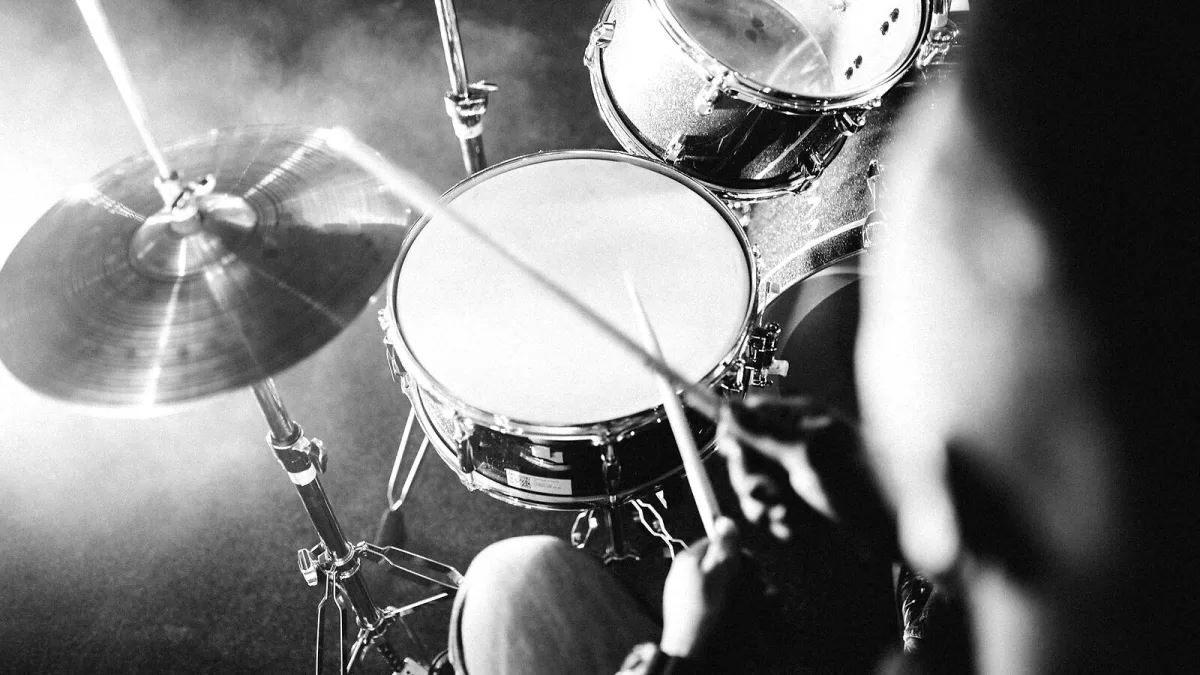
Punk burned fast and, by 1977, it had already said most of what it set out to say. What came next is the interesting bit. A wave of bands kept punk's urgency and its do-it-yourself nerve but threw out the rulebook on what a rock song was supposed to sound like. That's post-punk: less a genre with a fixed sound, more an attitude that said the story wasn't over yet. If you've heard the name thrown about and want the full picture — what it is, where it came from and who made it — this is your primer.
So what actually is post-punk?
The term describes the wave of British (and some American) groups who took punk's independence and speed and pointed it somewhere stranger. Instead of three chords and a shout, these bands reached for dub reggae's use of space, funk's rhythm, Krautrock's repetition and art-school ideas about texture and irony. There's no single riff or tempo that defines it — the common thread is a restless refusal to repeat punk's own formula.
Musically, a few habits turn up again and again:
- The rhythm section leads. Bass and drums often carry the song, with the guitar reduced to a rhythmic interruption rather than the main event.
- Guitars go textural. Short, staccato chords, single-note lines and dissonant intervals replace the big rock riff — think choppy and spacious rather than driving.
- Vocals get detached. Spoken, deadpan or theatrical delivery is common, and lyrics lean towards observation and politics rather than romance.
- Production is part of the song. Space, reverb and tape effects are used deliberately, not just to make things sound "bigger".
From punk to something stranger
Punk had already proved that you didn't need major-label backing or years of practice to make a record that mattered. These bands took that lesson and ran with it in a different direction — towards experimentation rather than three-chord immediacy. Early landmark releases arrived in a tight cluster: Wire's Pink Flag in 1977, then Magazine's "Shot by Both Sides", Siouxsie and the Banshees' "Hong Kong Garden" and Public Image Ltd's "Public Image" all in 1978. The genre's first great flowering is usually dated from around 1978 to 1984, though plenty of people trace its roots a year or two earlier.
The strands that make up the genre
The genre isn't one sound — it's several overlapping ones. Knowing the main strands makes the whole picture click into place.
| Strand | What it sounds like | Key acts |
|---|---|---|
| Atmospheric | Space, reverb, minor-key tension | Joy Division, early The Cure |
| Funk and dub-influenced | Rhythm-forward, bass-led, syncopated | Gang of Four, Public Image Ltd |
| Art-rock and experimental | Fragmented, ironic, structurally odd | Wire, Magazine, The Fall |
| Gothic and theatrical | Darker, dramatic, visually driven | Bauhaus, Siouxsie and the Banshees |
| Dance-oriented | Polyrhythmic, funk and disco-adjacent | Talking Heads, ESG |
These strands blurred into one another constantly — Siouxsie and the Banshees moved from the atmospheric camp towards the theatrical, and Talking Heads' dance-oriented take fed straight into new wave. That fluidity is very true to the genre's spirit: nobody was following a manual.
The bands that shaped it
A handful of records did most of the heavy lifting in defining what the genre could be. Joy Division's Unknown Pleasures (1979) set the template for stark, bass-led atmosphere, with Peter Hook's melodic bass lines effectively acting as the lead instrument. Gang of Four's Entertainment! (also 1979) fused funk rhythm with Andy Gill's dry, percussive guitar and openly political lyrics. Public Image Ltd's Metal Box leaned hard into dub's spaciousness, while Wire's Pink Flag proved you could say a huge amount in under two minutes. The Cure, Talking Heads, The Fall and Echo & the Bunnymen each pulled the sound in their own direction — melancholic, danceable, sardonic and expansive respectively.
None of this happened without the right infrastructure. Independent labels made the whole scene possible: Manchester's Factory Records (Joy Division, New Order), London's Rough Trade (The Fall, Scritti Politti) and Fiction Records (The Cure) gave these bands room to experiment without a major label's commercial pressure. Producer Martin Hannett, working largely for Factory, became almost as influential as the musicians — his spacious, unconventional approach to recording drums and vocals is a huge part of why these early records sound the way they do.
Beyond Britain — and beyond the first wave
The genre was never a purely British story. New York's parallel No Wave scene shared the same appetite for dissonance and anti-commercial presentation, and Talking Heads and ESG connected the sound to funk, disco and minimal dance music happening downtown. The influence didn't stop in 1984, either — it fed directly into goth, new wave, industrial and indie rock over the following decade.
There have been genuine revivals since. Interpol, Editors and Franz Ferdinand carried that sound into the early 2000s, and a newer wave — Fontaines D.C., IDLES and Shame among them — has kept it alive more recently, even if these bands also draw on indie rock, garage rock and folk in ways the originators didn't. Whether every one of them counts as "the real thing" is a favourite argument among fans, and honestly, that's rather in keeping with a genre that never had firm edges to begin with.
Where to go from here
If this has whetted your appetite, our full history of post-punk traces the timeline in far more detail, while the best post-punk artists to know profiles the people behind the records. If you'd rather just press play, our essential albums guide and newcomer's starting path will get you listening in the right order.
The bottom line
Post-punk isn't a costume or a chord shape — it's the sound of musicians who'd just watched punk tear the rulebook up and decided to keep going. Dub space, funk rhythm, art-school nerve and independent labels combined to produce some of the most inventive British music of the late 1970s and early 1980s, and its fingerprints are all over the alternative music that followed. Start with a handful of the records above, and the rest of the picture falls into place fast.





Comments