


Cumbia article
A Beginner's Guide to Cumbia
Cumbia isn't one sound but a whole family of related styles — here's where it began, what to listen for, and how it grew into so many regional forms.
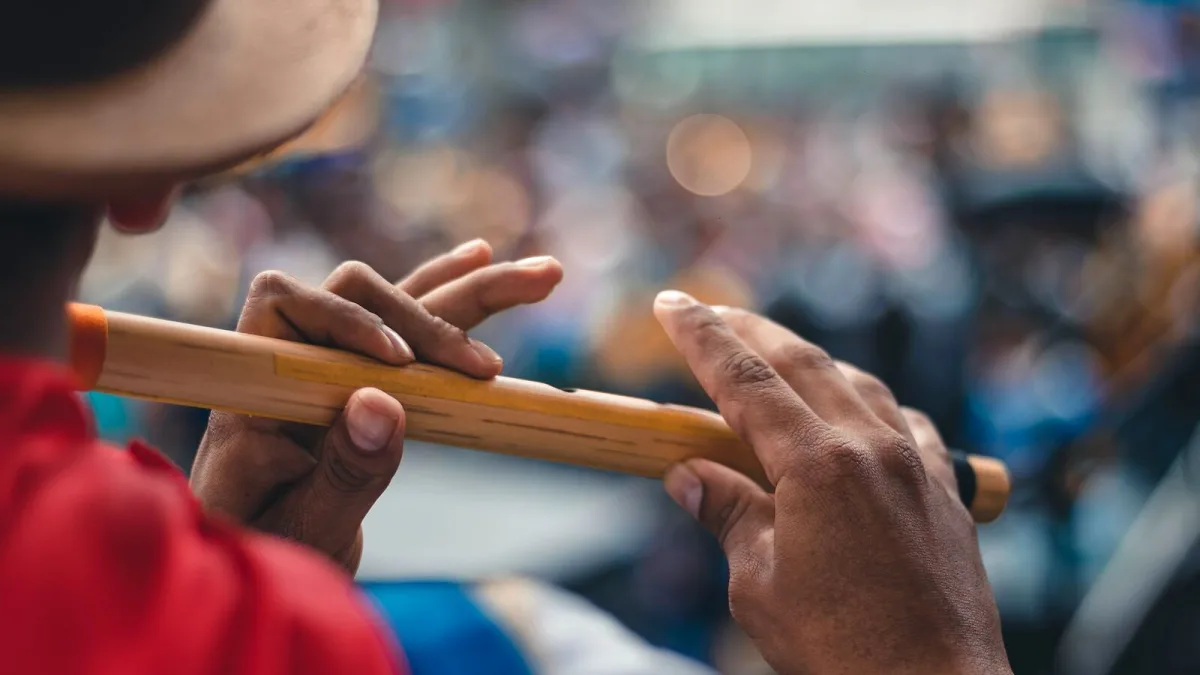
If you've heard a steady, rolling dance rhythm under a Latin American song and wondered what it was called, there's a good chance it was some form of cumbia — a whole family of related styles rather than one fixed sound. It began on Colombia's Caribbean coast and has since travelled across Mexico, Peru, Argentina and beyond, changing instruments and character at every stop while keeping the same underlying pulse. This guide takes it slowly, starting with the roots and working outward to the many forms it takes today.
Where It Came From
The most widely accepted account traces its origins to Colombia's Caribbean region, particularly the area around the Magdalena River delta and the Momposina region, where African-derived percussion, Indigenous flutes and instruments introduced through European colonial society came together. It's worth being honest that historians differ on the exact date and setting of that first meeting — the "three cultures blended" story is a useful starting point, not a precise, settled fact, and it developed through real communities living under slavery and colonialism rather than as a tidy fusion experiment.
The Traditional Sound
Two traditional ensemble types are usually mentioned first. The conjunto de cumbia, or cumbiamba, centres on drums, shakers and melodic instruments such as the caña de millo. The conjunto de gaitas is built instead around the gaita flutes alongside drums and rattles. Among the drums, the llamador holds down the underlying pulse, the alegre improvises around it, and the tambora adds a deeper, low-frequency accent, while the guacharaca — a ribbed scraper — fills the gaps with a dry, continuous texture. None of these roles are completely fixed; they vary somewhat between regions and ensembles, so treat this as a helpful starting map rather than a strict rulebook.
One Rhythm, Many Regional Families
| Region | Local Name | What Changed |
|---|---|---|
| Colombia | Traditional and orchestral cumbia | Added accordion, brass and piano to the original percussion-and-flute core |
| Mexico | Cumbia sonidera, cumbia norteña | Keyboards, electric bass and sound-system presentation |
| Peru | Chicha | Electric guitar becomes the lead melodic voice, blended with Andean melody |
| Argentina | Cumbia villera | A street-level, working-class urban identity and direct lyrical themes |
As it moved into commercial recordings, orchestras and radio during the twentieth century, musicians layered in accordion, brass, piano, electric guitar and eventually drum machines and synthesizers, which is exactly why there's no single modern sound you can point to and call definitive.
What to Listen For
Underneath all that regional variety, the groove itself is remarkably consistent. Listen for a steady duple-meter pulse — usually felt in two or four — built from interlocking percussion rather than one strong backbeat: a consistent bass pulse, a repeating shaker or scraper pattern, a drum part marking the main cycle, and syncopated accents that keep the whole thing moving forward. The chords are often simple; the movement comes from rhythm, orchestration and repetition rather than harmonic complexity, which is exactly what makes it so danceable.
Cumbia Today
It hasn't stood still, and it isn't a museum piece. Contemporary artists continue to use it as a flexible framework rather than a fixed genre, folding it into pop, hip-hop, psychedelic rock and electronic production. That willingness to keep absorbing new instruments and technology, from accordion and brass a century ago to samplers and synthesizers today, is arguably the most consistent thing about the whole tradition — change is the constant, not the exception.
The Bottom Line
Once you can hear that shared pulse underneath the accordion, the electric guitar or the synthesizer, the whole family starts to make sense as one tradition rather than a confusing list of regional names. If you'd like a gentler, encouragement-first route in, our newcomer's listening guide lays out exactly where to start. For the fuller story of how it got here, read our history piece, and to put names to the sound, see the artists worth knowing, essential albums, essential tracks and the subgenres explained in full.




Comments