


Concerto article
The History of Concerto
Four centuries and at least five major reinventions — here's how the form actually evolved, from Baroque Italy to the modern orchestra.
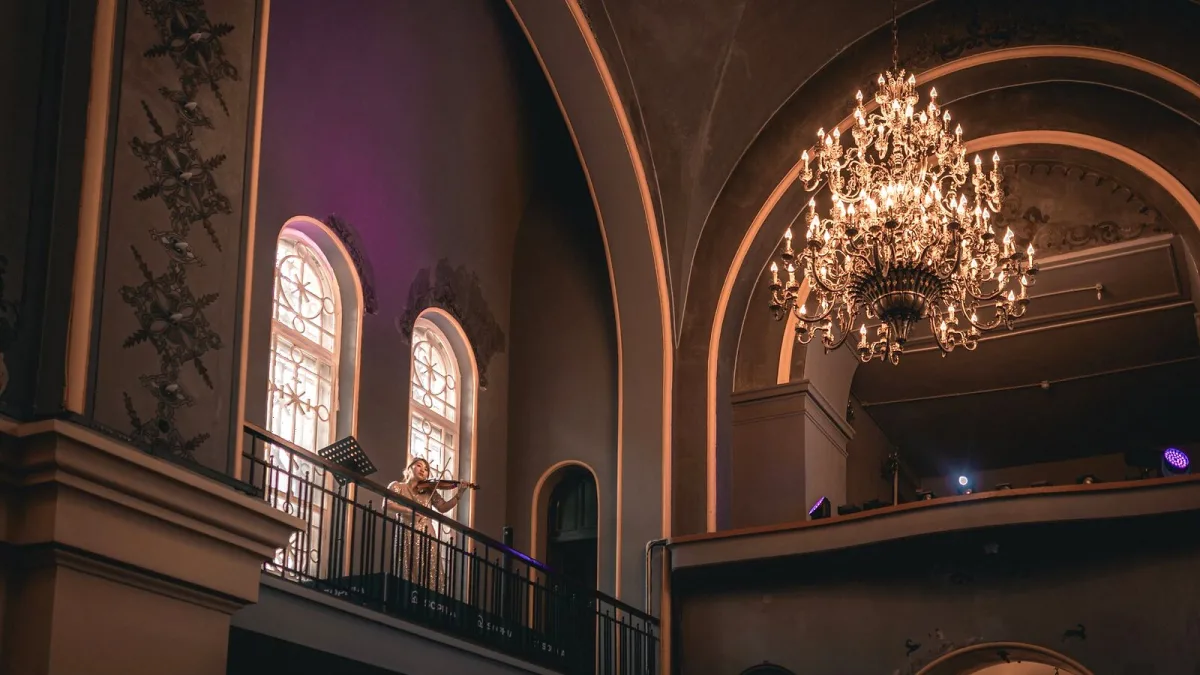
The word arrived in music long before the form we now recognise did. Its history is not a single invention but a slow accumulation of ideas across four centuries, each era reshaping the relationship between one instrument and many.
Before the Instrumental Concerto
The term traces back to the Italian concerto, connected to ideas of agreement, concerted action and contest — a fitting root for a form built on collaboration and tension in equal measure. Its earliest uses, in the late sixteenth and early seventeenth centuries, described contrasting vocal and instrumental groups rather than the instrumental form audiences know today. There is no single agreed starting date; some accounts favour this earlier vocal usage, others focus on what came next in Italy.
Italy, and the Concerto Grosso
It was in late-seventeenth-century Italy that the instrumental form we'd recognise properly took hold. The earliest widespread version was the concerto grosso, which set a small group of soloists — the concertino — against the larger ensemble, the ripieno. Arcangelo Corelli and Giuseppe Torelli were central figures in developing this Baroque approach, establishing the contrasts of volume, texture and material that still define the form's basic appeal.
Antonio Vivaldi then pushed things further, becoming the central figure in developing the solo concerto — a single featured player rather than a small group — particularly for the violin. His recurring orchestral passages, known as ritornellos, gave listeners something familiar to return to between the soloist's more adventurous excursions.
Bach, Handel, and the Baroque in Full Flow
Johann Sebastian Bach wrote for both single and multiple soloists, using the form to explore contrapuntal writing — several independent melodic lines woven together — with real sophistication. George Frideric Handel contributed to the orchestral tradition too, including notable organ concertos. Between them, the Baroque era established a genuinely rich, varied body of work that still forms the backbone of introductory listening today.
The Classical Era Finds Balance
As the eighteenth century progressed, the relationship between soloist and orchestra grew more balanced and conversational. Composers increasingly borrowed structural ideas from sonata form for the opening movement, while slow movements leaned into lyrical expression and finales often took a recurring, rondo-like shape.
Wolfgang Amadeus Mozart is the composer most associated with perfecting this Classical balance, expanding the piano concerto in particular into a sophisticated dialogue rather than a simple soloist-plus-backing arrangement. It's here that the form also became a major vehicle for a performer's individual technique and personality — not just the composer's ideas, but the specific player bringing them to life.
Beethoven Breaks the Frame
Ludwig van Beethoven took the balanced Classical model and pushed its scale, drama and technical demands considerably further, treating the soloist-orchestra relationship as something closer to genuine confrontation at points. That expanded ambition opened the door for what came next.
The Romantics Go Bigger
Through the nineteenth century, composers pushed the emotional and technical scope of the form further still. Felix Mendelssohn combined Classical clarity with newer Romantic energy; Robert Schumann favoured continuous development and poetic expression over strict sectional breaks; Johannes Brahms treated the form as a large-scale, symphonic structure in its own right.
Pyotr Ilyich Tchaikovsky and Sergei Rachmaninoff gave the Romantic era some of its most instantly recognisable results — sweeping themes, virtuosic solo writing and richly coloured orchestration that still dominate concert programming today. Jean Sibelius, meanwhile, wrote a violin concerto so demanding and atmospheric that it remains a benchmark for any violinist attempting it. For more on the individual figures behind this evolution, our guide to the best concerto artists to know covers composers and performers side by side.
Into the Twentieth Century and Beyond
Maurice Ravel showed how the form could absorb jazz-inflected rhythm and modern orchestral colour, while Béla Bartók broadened its rhythmic and harmonic language considerably, including in his large-scale Concerto for Orchestra — a striking twentieth-century variant with no single dominant soloist at all. Modern composers have continued to stretch the definition since, incorporating expanded orchestras, electronics and non-Western instruments while keeping the central principle intact: contrasting instrumental forces in genuine dialogue.
Why the Timeline Still Matters
None of this evolution happened by accident, and knowing the rough shape of it changes how you hear individual pieces. A Vivaldi ritornello pattern sounds completely different once you know it's a structural convention rather than a random repeat; Beethoven's dramatic contrasts land harder once you know he was actively pushing against the Classical balance that came before him. If you're new to all this, our beginner's guide is a gentler place to start than this history, and our guide to the different forms sorts the concerto grosso, solo concerto and later variants into one clear map.
The Bottom Line
Four centuries, at least five major reinventions, and no single inventor to credit. That's not a weakness in the story — it's exactly why the form has stayed vital across such wildly different musical eras, from Corelli's Rome to Bartók's twentieth century.



Comments