


Concerto article
A Beginner's Guide to Concerto
One voice, one crowd, and a genuine musical conversation between them — here's the gentle way into the concerto.
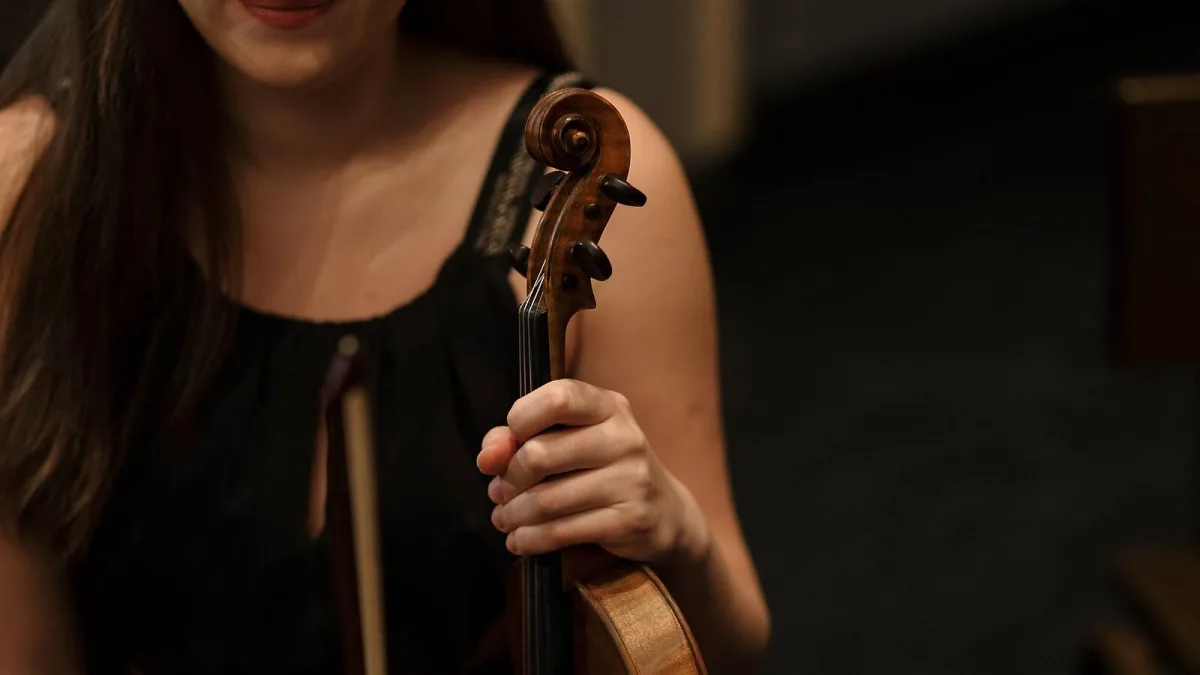
A concerto can sound daunting on paper — three movements, a soloist, a whole orchestra, sometimes forty minutes with no lyrics to hold onto. In practice, it's one of the most approachable forms in classical music, once you know the handful of things worth listening for. Here's the gentle way in.
What Is a Concerto, in Plain Terms?
At its simplest, this is a piece written for one instrumental soloist (or occasionally a small group) set against a larger ensemble, usually an orchestra. The relationship between the two is the whole point: the soloist might lead, converse with, answer, or even seem to compete with the group around them, and that back-and-forth is what gives the form its energy.
It isn't the same thing as a symphony, which is written for the full orchestra with no single dominant player, or a sonata, which is usually just one instrument (sometimes with piano). A concerto sits in between: one voice, one crowd, and a genuine musical conversation between them.
The Shape You'll Usually Hear
Most concertos from the Classical and Romantic eras follow a familiar three-part shape:
- A substantial opening movement — often fast, energetic, and the longest of the three.
- A slower middle movement — lyrical, reflective, usually where the soloist gets to be most expressive.
- A faster finale — lively, often catchy, and built to send the audience out on a high.
That's a convention, not a rule — plenty of composers have bent or ignored it entirely — but knowing the pattern gives you a map for your first few listens.
Five Things to Actually Listen For
- Who's leading? Notice whether the orchestra introduces the main tune first, or whether the soloist gets there before anyone else.
- The conversation. Listen for the orchestra answering, echoing or interrupting the soloist — it's rarely just accompaniment sitting quietly underneath.
- The cadenza. Near the end of a movement, the orchestra often drops away entirely and leaves the soloist alone for a moment of pure, unaccompanied virtuosity.
- Recurring material. Many concertos bring a theme back in a new key or a different mood — spotting the return is genuinely satisfying once you catch it.
- The mood shift between movements. Compare the energy of the opening to the stillness of the slow movement, then to the finale's lift.
Where to Actually Start Listening
Rather than diving in randomly, try this order:
- Vivaldi's The Four Seasons — vivid, immediately recognisable, and a gentle introduction to how a soloist and orchestra trade ideas.
- Mozart's Clarinet Concerto — balanced, warm, and a lovely example of soloist and orchestra genuinely listening to each other.
- Tchaikovsky's Piano Concerto No. 1 — big, immediately hummable themes and a properly dramatic soloist-versus-orchestra energy.
Once you know which of those grabbed you, our guide to the best concerto artists to know introduces the composers and performers behind this repertoire properly, and our guide to essential concerto albums points you towards specific recordings worth owning.
A Word on Terminology
A couple of terms come up constantly and are worth knowing early: the soloist is the featured player, the orchestra is everyone else, and tutti simply means a passage where the full ensemble plays together. You don't need the full glossary on day one — our guide to concerto subgenres covers the rest of the vocabulary as you need it.
The Bottom Line
You don't need to read a score or count bars to enjoy this music. Listen for the relationship between one voice and the crowd around it, notice when the mood shifts, and let the cadenza's moment of solo freedom land the way it's meant to. That's genuinely most of what there is to it.




Comments