


Concerto article
Concerto Subgenres, Explained
Treat every concerto as one interchangeable shape and you'll miss most of what makes the form interesting. Here's how it actually splits up.
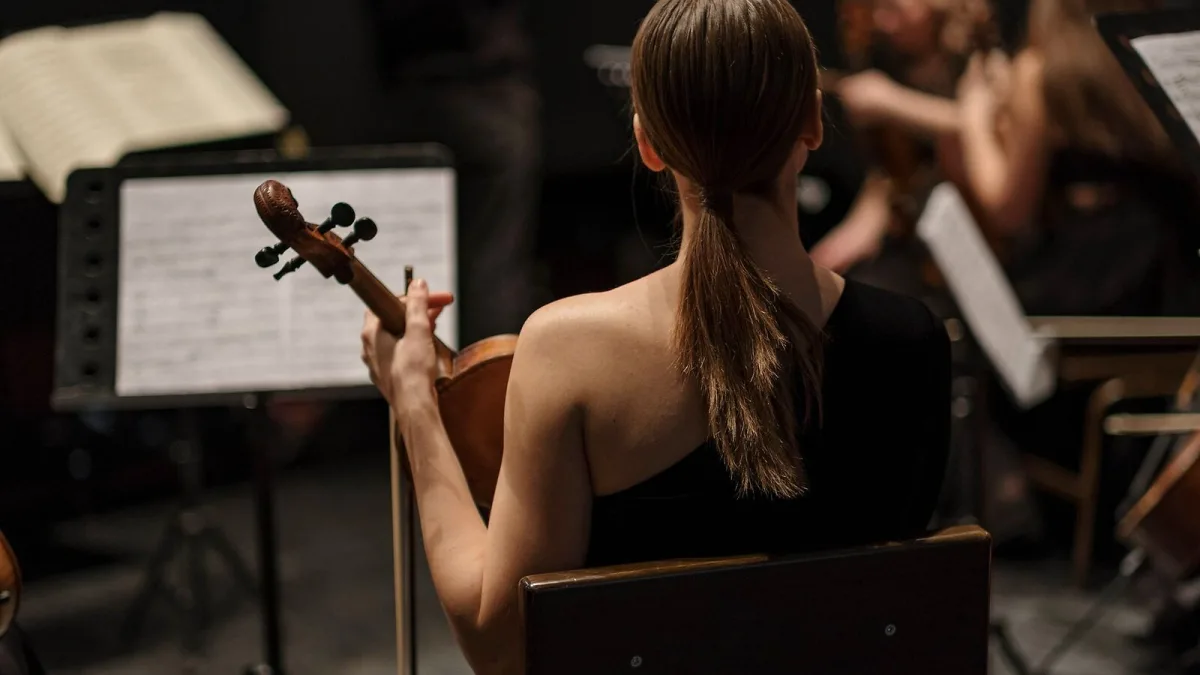
Treat every concerto as one interchangeable shape and you'll miss most of what makes the form interesting. Across four centuries it has split into several genuinely distinct concerto subgenres, sorted by how many soloists are involved, which era shaped them, and which instrument stands at the front.
Sorted by Forces: Concerto Grosso vs Solo Concerto
The earliest widespread version, the concerto grosso, contrasts a small group of soloists — the concertino — against the larger ensemble, the ripieno. Rather than one player carrying the spotlight, several trade material back and forth, developed chiefly by Arcangelo Corelli and Giuseppe Torelli in late-seventeenth-century Italy.
The solo concerto, featuring one prominent instrument against the full ensemble, became the more familiar version, driven forward especially by Antonio Vivaldi. Most of what a newcomer encounters today — a single pianist or violinist against an orchestra — belongs to this branch.
Sorted by Era: Baroque, Classical and Romantic
The character of the form shifted considerably across three major periods:
| Era | Character | Key Figures |
|---|---|---|
| Baroque | Recurring orchestral material (ritornello), motor rhythms, clear solo-ensemble contrast | Vivaldi, Bach, Handel |
| Classical | Balanced, conversational relationship; sonata-based first movements; rondo finales | Mozart |
| Romantic | Expanded emotional and technical scope; more dominant soloist; symphonic orchestral role | Beethoven, Brahms, Tchaikovsky, Rachmaninoff |
Our history of the concerto traces exactly how one era's approach grew out of the last, in far more depth than a table can capture.
Sorted by Instrument
The form isn't limited to piano and violin, however central those two have become to the popular imagination:
- Piano concerto — arguably the most celebrated branch, from Mozart's balanced dialogues to Rachmaninoff's expansive Romantic writing.
- Violin concerto — Vivaldi, Mendelssohn and Sibelius each brought a distinct character to the same solo instrument.
- Cello concerto — a smaller but deeply loved repertoire, with Elgar's contribution among its most celebrated examples.
- Wind and brass concertos — flute, oboe, clarinet, bassoon, trumpet and horn all have significant, if less mainstream, repertoire of their own.
The Twentieth-Century Outlier: Concerto for Orchestra
Béla Bartók's Concerto for Orchestra deliberately breaks the form's central assumption: there's no single dominant soloist at all. Instead, different sections and individual players within the full orchestra take turns in the spotlight, treating the whole ensemble as a collection of soloists rather than one featured performer against many. It's proof the concept could keep stretching even after three centuries of established convention.
Modern Departures
Contemporary composers have continued pushing at the edges of these established concerto subgenres — expanded orchestras, electronics, non-Western instruments, and unconventional solo combinations all now sit under the same broad umbrella term. What holds the whole tradition together, across every one of these branches, is the same central principle: contrasting instrumental forces in genuine dialogue with one another.
A Quick Reference Guide
If you're trying to place an unfamiliar piece, a few quick questions usually sort it into the right category. Is there one soloist or several? That tells you concerto grosso from solo concerto. Does the orchestra sound restrained and repetitive, or fully symphonic and dominant? That points towards Baroque or Romantic. Is the featured instrument something other than piano or violin? You're likely in wind, brass or cello territory, each with its own smaller but rewarding repertoire.
Why Sorting These Out Actually Helps
Knowing which branch you're listening to changes what you should expect from it. A Baroque concerto grosso isn't failing to showcase one dazzling soloist — it was never trying to. Bartók's Concerto for Orchestra isn't a symphony that forgot its soloist — it's deliberately redistributing the spotlight. If you're brand new to any of this, our beginner's guide to the concerto is a gentler starting point, and our guide to the best concerto artists to know puts real names against each of these branches.
The Bottom Line
These concerto subgenres break down into two performing forces, three major eras, half a dozen instrument traditions, and at least one deliberate twentieth-century exception. Learn to place a given piece within that map, and the whole tradition stops sounding like one interchangeable form and starts sounding like the genuinely varied, centuries-spanning tradition it actually is.




Comments