


Funk Music article
The History of Funk Music
How rhythm took over from melody: the history of funk music, from its 1960s roots to its legacy in disco and hip-hop.
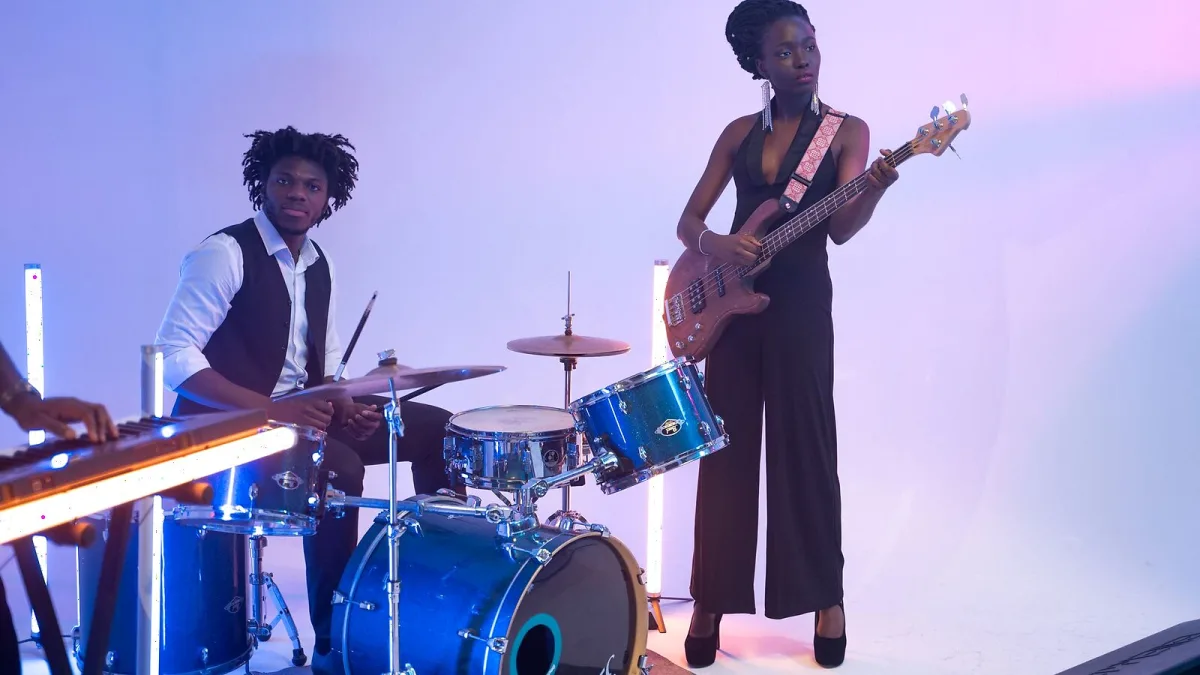
Every genre likes to imagine itself springing fully formed from a single spark, and the history of funk music resists that story more than most. It wasn't invented in a single session or by a single artist. It was assembled, over roughly a decade, from gospel's call and response, blues' bent notes, jazz's rhythmic nerve and soul's directness — until, somewhere around the mid-1960s, rhythm itself became the point.
The Roots: Gospel, Blues, Soul and Jazz
To understand the history of funk music, you have to start further back than funk itself. From gospel, it inherited call-and-response phrasing and a sense of participatory performance. From blues, repeated harmonic patterns and expressive, "dirty" tones. From soul and rhythm and blues, strong backbeats and emotionally direct vocals. From jazz, improvisation and rhythmic complexity. Funk didn't reject any of these traditions — it distilled them, stripping arrangements back until the groove itself carried the weight a melody once did.
New Orleans and the Rhythmic Seed
New Orleans deserves particular credit in this story. The city's blend of rhythm and blues, jazz and Afro-Cuban percussion produced a rhythmic sensibility that would prove essential to funk's development. The Meters, formed in the city in the late 1960s, later distilled that regional character into some of the most economical, tightly locked funk ever recorded — bass, drums and a spare keyboard figure, with almost nothing wasted.
James Brown and the Birth of the Groove
If any single figure marks the turn from soul into funk, it's James Brown. His 1965 single "Papa's Got a Brand New Bag" is widely cited as an early landmark, followed by 1967's "Cold Sweat" — a record built almost entirely around a one-chord vamp and a relentless, syncopated rhythm section. By 1970's "Get Up (I Feel Like Being a) Sex Machine", the transformation was complete: melody had become secondary to groove.
It would be too neat to credit one song with "inventing" funk — this history is a story of accumulation, not a single eureka moment. But Brown's band, drilled to hit rhythmic accents in unison, gave the genre its structural backbone: the emphasis on "the One", the strong downbeat the whole ensemble locks onto together.
The 1970s: Funk's Golden Era
The 1970s is where the history of funk music becomes a story of expansion. Sly and the Family Stone's 1969 album Stand! had already shown funk could carry pop songwriting without losing its rhythmic edge; the group's mixed-race, mixed-gender lineup also gave the music a distinctly countercultural profile.
George Clinton then took the genre somewhere stranger. Running Parliament and Funkadelic as two branches of the same project, he built theatrical, concept-driven records — Funkadelic's Maggot Brain (1971) leaned into psychedelic funk-rock, while Parliament's mid-decade singles, including 1976's "Give Up the Funk (Tear the Roof off the Sucker)" and 1977's "Flash Light", pushed towards huge, synthesiser-driven arrangements.
Elsewhere, Stevie Wonder folded funk's clavinet-driven rhythms into sophisticated solo albums, and Isaac Hayes stretched soul and funk into long-form, orchestrated arrangements. Earth, Wind & Fire, Kool & the Gang and the Ohio Players carried funk toward the mainstream charts, setting the stage for its overlap with disco later in the decade. For a closer look at the individuals involved, our companion piece on the best funk music artists to know goes name by name.
Fracturing Into Subgenres
By the late 1970s, funk had splintered into distinct strands rather than a single sound: P-Funk's theatrical concept records, jazz-funk's instrumental ambition, funk-rock's heavier guitar work, and the beginnings of boogie's more electronic, synthesiser-led feel. Our full breakdown of funk subgenres traces exactly how each one diverged from the core sound described above.
Funk's Legacy: Disco, Hip-Hop and Beyond
No account of the genre is complete without tracing where its DNA ended up. Disco borrowed funk's dance-floor orientation and bass-centred rhythm, smoothing it into a more continuous, four-on-the-floor pulse. Early hip-hop producers went further still, sampling funk drum breaks — those exposed stretches of rhythm section with no vocals or horns over the top — directly into new records. James Brown's drummers, in particular, became some of the most sampled musicians in popular music without most listeners realising it.
Later, neo-soul artists reworked funk, soul and jazz techniques for a new generation, proving the genre was never a closed chapter but an ongoing musical language.
Why This History Still Matters
Reading the history of funk music in order changes how you hear it. A James Brown record from 1967 and a Parliament single from 1977 can sound worlds apart, but they share the same underlying logic: rhythm first, melody second, and a whole band locked onto the same downbeat. If you're only just discovering the genre, our beginner's guide is a gentler starting point than a chronological deep dive, and our piece on where to start as a newcomer offers a practical listening path rather than a timeline.



Comments