


Funk Music roundup
The Best Funk Music Artists to Know
The funk artists who actually matter, from the architects of the groove to the players behind them.
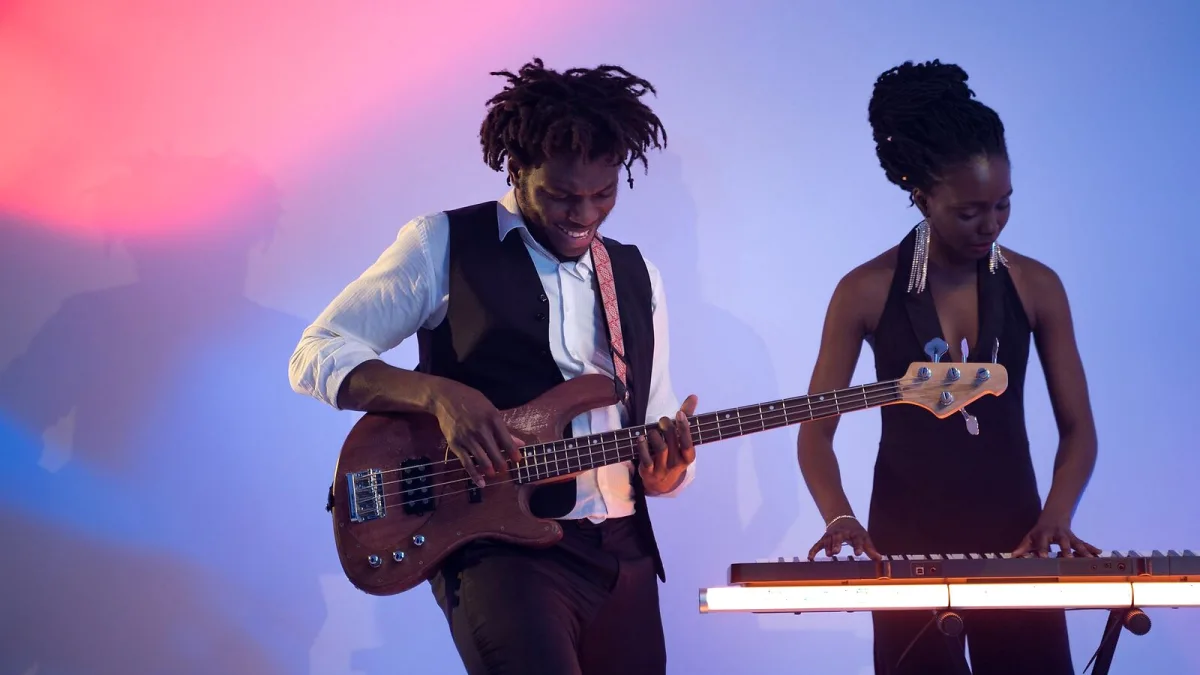
Every great funk artist solves the same puzzle differently: how do you make a groove that repeats itself feel like it's constantly moving forward? Some do it with sheer discipline, some with theatrical excess, some by folding funk into pop songwriting so smooth you barely notice the machinery underneath. Here are the funk artists worth knowing first, and what each one actually contributes to the sound.
James Brown: The Architect
You can't talk about funk artists without starting here. James Brown's mid-1960s singles — "Papa's Got a Brand New Bag" (1965) and "Cold Sweat" (1967) — are the records historians point to as the moment the rhythm section stopped supporting the song and became the song. By 1970's "Get Up (I Feel Like Being a) Sex Machine", the formula was set: a hard-locked bass and drum pattern, minimal chord movement, and vocals used almost as another rhythm instrument.
What made Brown different from his peers wasn't just the songs — it was the discipline. His bands were drilled to hit accents together with military precision, and drummers like Clyde Stubblefield and Jabo Starks became hugely influential in their own right, well beyond funk itself.
Sly and the Family Stone: Funk With a Message
Sly Stone's band brought something different to the genre in the late 1960s: a genuinely mixed-race, mixed-gender lineup and a knack for pop songwriting that never sacrificed groove. Their 1969 album Stand! is the obvious entry point, with "Sing a Simple Song" and "Thank You (Falettinme Be Mice Elf Agin)" showing how a tight funk arrangement can still carry a hook.
It's worth reading alongside our history of funk music piece, which places Sly and the Family Stone at the exact moment funk crossed over into the pop mainstream.
Parliament-Funkadelic: George Clinton's Empire
No overview of the genre gets far without George Clinton, who ran Parliament and Funkadelic as two sides of the same theatrical coin — one heavier on horns and concept, the other closer to psychedelic funk-rock. Funkadelic's Maggot Brain (1971) is a genuine landmark, while Parliament's mid-1970s run produced "Give Up the Funk (Tear the Roof off the Sucker)" and 1977's "Flash Light", both essential listening.
Clinton's genius was scale: mothership stage props, sprawling concept albums and a huge, rotating cast of musicians, all built on the same tight rhythmic foundation as everyone else on this list.
The Meters: New Orleans Funk, Distilled
Where Parliament-Funkadelic went big, the Meters went the other way. As New Orleans's defining act, the Meters proved a groove could be built from almost nothing — a repeated keyboard figure, a lean guitar part, and bass and drums locked so closely together there's barely room for anything else. It's some of the most economical, endlessly sampled funk ever recorded.
Stevie Wonder and Isaac Hayes: Funk Meets Songcraft
Not every essential funk artist built a career purely on rhythm. Stevie Wonder folded funk grooves — especially his clavinet playing — into sophisticated, melodic 1970s songwriting, while Isaac Hayes stretched soul and funk into long-form, orchestrated arrangements that expanded what the genre could sound like. Both prove funk was never a stylistic dead end; it was raw material for genuinely ambitious songwriting.
More Funk Artists Worth Your Time
| Artist | Why they matter |
|---|---|
| Earth, Wind & Fire | Horn-driven funk polished into massive pop crossover hits |
| Kool & the Gang | Party-starting funk that carried straight through into the disco era |
| Ohio Players | Deep-pocketed grooves with a raw, unpolished edge |
| Tower of Power | Arranged horn sections studied by funk and soul musicians alike |
| Rufus & Chaka Khan | Vocal-forward funk with real crossover charisma |
| Rick James and Prince | Funk carried into the 1980s with synths and star power |
The Musicians Behind the Names
Some of the most important funk artists were never frontpeople at all. Bootsy Collins played bass for both James Brown's band and Parliament-Funkadelic, carrying his percussive, effects-heavy style between the two. Larry Graham, from Sly and the Family Stone, is widely credited with popularising the slap-bass technique that countless funk and soul players have leaned on since. And George Porter Jr., the Meters' bassist, is a masterclass in restraint — proof that leaving space is as much a skill as filling it.
If you're serious about understanding the sound, spend as much time following these players as you do the singers standing in front of them.
How to Actually Get Into This Lineup
Don't try to absorb a discography in one sitting. Pick one track from each name above, and on a second listen, ignore the vocals entirely — follow just the bass and drums. That's where these names actually differ from one another. If you'd rather work from albums instead of scattered tracks, our guide to essential funk albums gives you a proper listening order, and our piece on funk subgenres explains how P-Funk, jazz-funk and funk-rock actually differ.
The Bottom Line
These funk artists didn't just make good records — between them, they wrote the rulebook that soul, disco, hip-hop and neo-soul have been borrowing from ever since. Start with James Brown for the blueprint, then branch out from there; total newcomers might prefer our funk for newcomers guide, which walks through a gentler entry point.



Comments