


Funk Music article
A Beginner's Guide to Funk Music
Funk music is dance music built on rhythm, not melody. Here's what makes the groove work, and where to start listening.
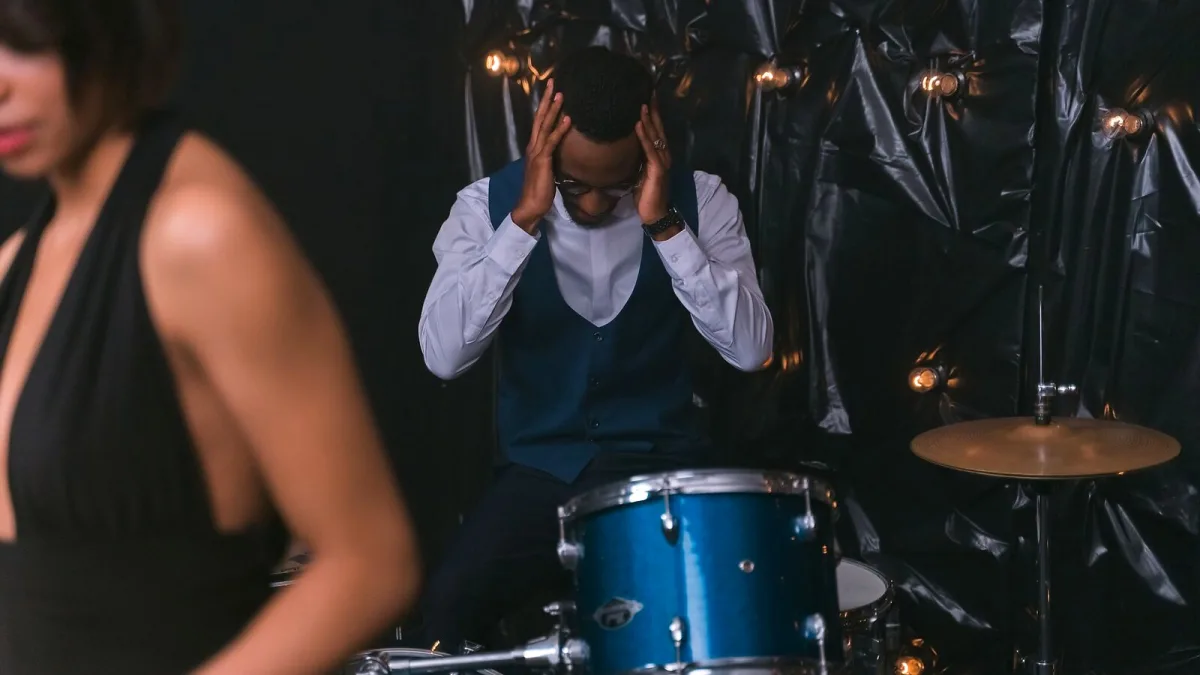
Funk music doesn't ask you to think — it asks you to move. It's the sound of a rhythm section locked so tightly together that the groove feels like a single organism, built by Black American musicians in the 1960s and carried through the 1970s by names like James Brown, Sly and the Family Stone and Parliament-Funkadelic. If you've ever wondered why a bassline can feel more exciting than a guitar solo, this guide is where to start.
What Is Funk Music, Exactly?
At its simplest, funk music is dance music built on rhythm rather than melody or chord changes. Where a pop song might move you with a chorus, it moves you with the interplay between the bass and the kick drum — what musicians call "the lock". Everything else, from guitar to horns, exists to reinforce that groove with short, repeated phrases rather than long melodic lines.
It grew directly out of soul, gospel, rhythm and blues, jazz and blues, taking the emotional directness of soul and stripping the arrangement back until the rhythm itself became the star. It emerged as its own recognisable style in the mid-to-late 1960s and became a dominant force in Black American music through the 1970s.
The Sound: Groove, Syncopation and "The One"
The single most useful idea for a newcomer is "the One" — the strong, unified accent that the whole band lands on together, usually beat one of the bar. James Brown built entire arrangements around it, and once you can hear it, the whole genre starts to make a lot more sense.
Beyond that, listen for syncopation — accents placed just off the expected beat rather than squarely on it. A funk groove rarely changes chords often; instead, it generates energy through:
- A syncopated bassline that answers or anticipates the kick drum
- Interlocking drum parts, including quiet "ghost notes" on the snare
- Short, repeated guitar or keyboard "stabs" rather than sustained chords
- Punchy horn phrases used as rhythmic accents
- Deliberate space — the genre often gets its power from what isn't played
The Instruments Behind the Groove
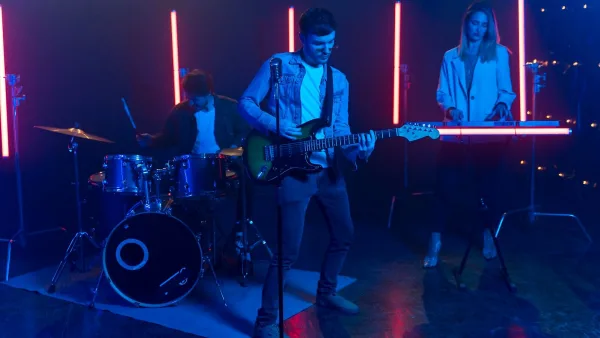
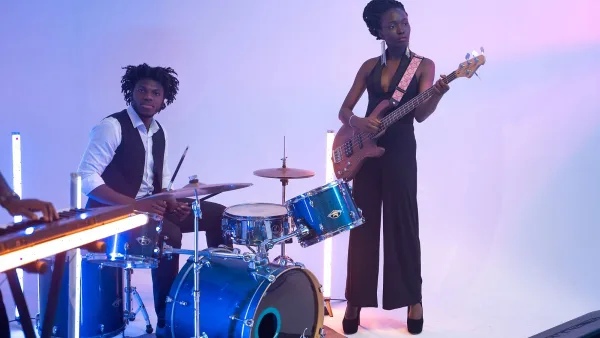
Funk is a band sport. No single instrument carries it; the whole rhythm section has to lock together.
| Instrument | Typical role |
|---|---|
| Electric bass | The backbone — often the most memorable part of the arrangement |
| Drum kit | Snare on 2 and 4, plus subtle kick variations that lock with the bass |
| Guitar | Muted, percussive "chicken scratch" chords rather than sustained riffs |
| Clavinet / keyboards | Sharp, funky stabs — think Stevie Wonder's clavinet sound |
| Horns | Short, unison punches that reinforce the rhythm |
The clavinet, a small electric keyboard with a distinctively percussive twang, became one of the genre's signature sounds — you can hear it all over 1970s recordings.
Where It All Started
New Orleans is often credited as an important geographical root, thanks to its long-standing mix of rhythm and blues, jazz and Afro-Cuban influence — a heritage carried forward by bands like the Meters. But it was James Brown's mid-1960s recordings, particularly "Papa's Got a Brand New Bag" (1965) and "Cold Sweat" (1967), that most historians point to as the moment the rhythm section, not the melody, became the whole point.
By the turn of the decade, it had a genuine movement behind it: Sly and the Family Stone's 1969 album Stand! brought funk into the pop charts, while George Clinton's Parliament-Funkadelic pushed it somewhere stranger and more theatrical across the 1970s. If you want the full story in order, our full history piece traces it chronologically.
Essential Names to Know First
You don't need an encyclopedic knowledge of the genre to enjoy it, but a handful of names will orient you fast:
- James Brown — the architect of the modern funk groove
- Sly and the Family Stone — funk with pop songwriting and a message
- The Meters — New Orleans funk at its most economical and tight
- Parliament-Funkadelic — funk pushed into psychedelic, theatrical territory
- Stevie Wonder — funk folded into sophisticated, melodic songwriting
For a proper rundown of who matters and why, our guide to the best funk artists to know goes much deeper.
Funk's Family Tree
Funk music didn't stay in one lane. It splintered and blended into a whole family of related styles — P-Funk's theatrical concept albums, jazz-funk's instrumental virtuosity, funk-rock's heavier guitars, and later boogie's electronic sheen. Its DNA is also all over disco, hip-hop sampling and neo-soul. Our breakdown of funk subgenres untangles which is which.
That last connection is worth dwelling on. When early hip-hop producers went looking for raw material, they turned straight to funk breaks — those isolated stretches of drums and bass where a groove is at its most exposed. James Brown's rhythm sections were sampled so often that his drummers became, indirectly, some of the most heard musicians in popular music. So even if you think you've never listened to it, there's a decent chance a funk drum break has already made its way into a song you know well.
The Bottom Line
Funk music rewards a different kind of listening. Instead of following the tune, follow the bass, then the drums, then the little guitar or horn accents stacking on top. Do that with a handful of the tracks above and the whole genre opens up. If you'd rather have a step-by-step listening plan than a general primer, our companion piece on where to start lays out exactly that.


Comments