


Yamaha Dm3 roundup
The Best Yamaha Dm3s for the Money
The Yamaha DM3 series has two models at two price points. Here's which one is best value depending on how you actually plan to use it.
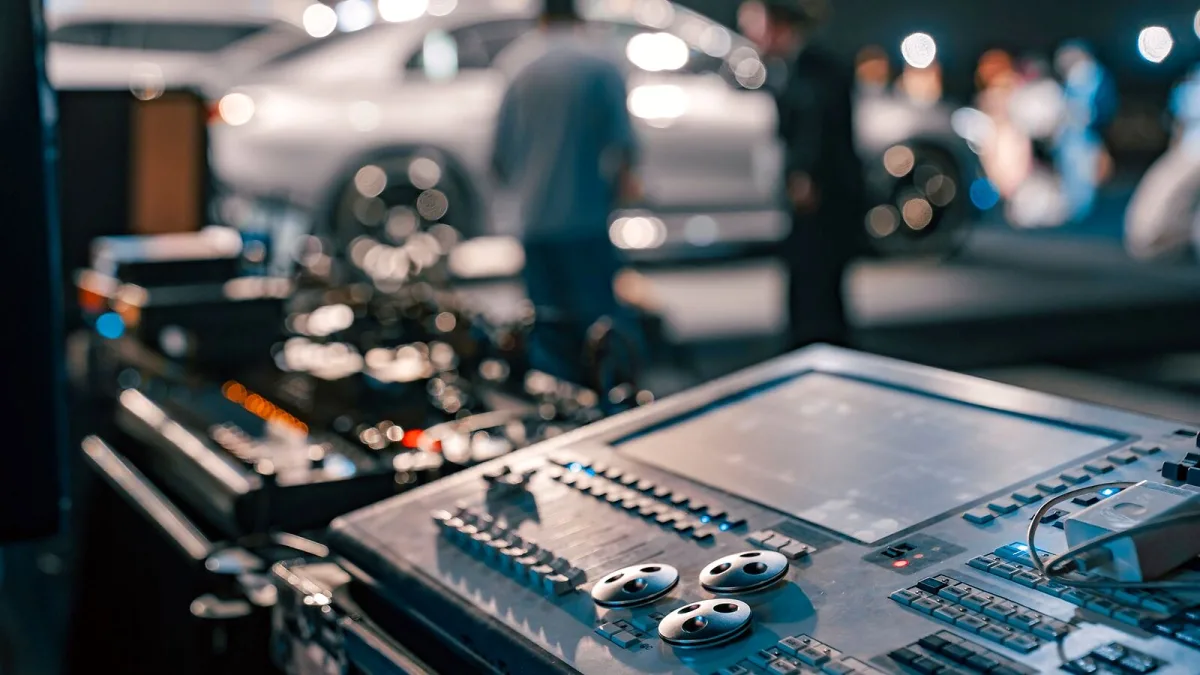
The Yamaha DM3 comes in two versions, not a dozen, which makes “best for the money” a more focused conversation than usual. This isn’t a market with endless SKUs and colour variants — it’s a straight choice between two well-specified models that differ in one specific way. Here’s how to read the value proposition for each.
Understanding the DM3 Range
The series launched in April 2023, offering a compact digital console at two price tiers:
- DM3 Standard: Local analogue I/O, 18-channel USB audio, full mixing engine, no Dante networking.
- DM3 (Dante model): Everything in the Standard, plus 16×16 Dante audio networking.
Both have the same 16 analogue inputs, eight XLR outputs, 9-inch touchscreen, eight motorised channel faders, six Mix buses, two matrix buses, onboard effects and 48/96 kHz operation. The architecture is identical; the difference is network capability.
Best for Straightforward Live Work: DM3 Standard
For engineers running small-to-medium shows without networked audio infrastructure, the Standard model offers the best value. You get the full mixing capability of the DM3 family — recallable scenes, six discrete monitor mixes, multitrack USB recording, onboard dynamics and effects — without paying for Dante networking you won’t use.
The Standard suits:
- Small venues where all sources connect directly to the rear panel.
- Rehearsal studios that need recallable mix states for multiple bands.
- Corporate AV setups where simplicity and quick setup are priorities.
- Engineers who primarily use the USB interface for recording and virtual soundcheck.
If the Dante premium stretches your budget to an uncomfortable point, the Standard is the honest answer. You lose no mixing capability at all.
Best for Networked Rigs: DM3 (Dante Model)
If your system involves or will involve Dante, the full Yamaha DM3 earns its premium. Dante is an audio-over-IP protocol that routes multiple audio channels over a standard Ethernet cable, which reduces cable runs and makes large systems significantly easier to manage. Its 16 Dante inputs and 16 Dante outputs connect naturally to Dante-enabled stageboxes — the Yamaha Tio1608-D is the most common partner — amplifiers, personal monitor systems and recording interfaces.
The Dante model is the stronger choice for:
- Touring engineers who use Dante stageboxes to reduce analogue cable runs.
- Houses of worship building integrated Dante ecosystems with networked amplifiers or speakers.
- Installations where the console needs to sit at distance from the stage with only a network cable connecting them.
- Any system likely to expand beyond the console’s 16 local analogue inputs.
Value by Application
| Application | Best value model | Key reason |
|---|---|---|
| Small venue FOH, local I/O only | DM3 Standard | Full mixing engine, lower cost, no unused Dante |
| Monitor engineer with Dante IEM system | DM3 (Dante) | Dante enables networked monitor feeds |
| Rehearsal studio, multitrack recording | DM3 Standard | USB recording is identical; Dante adds nothing here |
| House of worship with Dante infrastructure | DM3 (Dante) | Integrates with existing Dante ecosystem |
| Corporate AV, simple setup | DM3 Standard | Lower cost, sufficient capability for most corporate work |
| Touring with Dante stagebox | DM3 (Dante) | One network cable replaces a full analogue snake |
What You Get on Either Model
Here is what both versions of the Yamaha DM3 share, because it’s substantial. Every channel has a gate, compressor and four-band parametric EQ. The console has 18 onboard effects and a graphic EQ on each Mix bus (1–6) and the stereo output. Motorised faders recall automatically with scene changes. The 9-inch display gives access to routing, dynamics, EQ and effects without diving into menus. USB records 18 channels simultaneously at up to 96 kHz. Remote control via iOS or Mac/Windows is available over Wi-Fi.
For the price, this is a well-equipped console in either form. The question is only whether Dante is worth the additional outlay in your specific situation.
Longevity and Firmware Support
The console has been updated actively since launch. Firmware V3.10, released in September 2026, extended the Dante model’s compatible device list with three new Dante interfaces. That’s a positive sign for long-term support. Engineers investing in a digital console expect firmware to keep pace with the wider Dante and audio networking ecosystem; Yamaha appears to be delivering on that.
On the Dante model, remember that two firmware components require updating: the main DM3 firmware and the Dante module firmware. Both need attention when Yamaha issues a new release.
Bottom Line
For the money, the Yamaha DM3 Standard is the best value compact digital console in this series for the majority of engineers — it provides every mixing feature at a lower price. The full DM3 is the best value choice the moment Dante enters your workflow, because building that capability in later is not possible on the Standard.
For a full explanation of what each model does, read our Yamaha DM3 features and types explainer. For in-depth buying advice across specs and use cases, see our complete buyer’s guide. And if you’re new to the console, the beginners’ guide is a good starting point.



Comments