


Portable CD Player roundup
Portable Cd Player: A Complete Buyer's Guide
Everything worth checking before buying a portable CD player, from disc compatibility and Bluetooth to charging, outputs and second-hand pitfalls.
Right, so you've decided you want a portable CD player — maybe you've still got a shelf of old albums, maybe you just fancy something that doesn't need charging every five minutes and doesn't try to sell you a subscription. Good instinct. Here's everything actually worth thinking about before you buy one, without the affiliate-list waffle.
Work Out What You're Actually Using It For
This is genuinely the first question, and it changes everything else. Are you after something for walking and commuting, a unit that'll live on a desk or kitchen counter, or a proper critical-listening companion for a decent pair of headphones? A buyer's guide from one manufacturer put it well: decide your main use first, then let that steer every other decision, rather than getting seduced by a spec sheet full of features you'll never touch.
Discs: What Will It Actually Play?
- Every unit plays standard audio CDs — that's the baseline.
- Most also handle CD-R and CD-RW, useful if you've burned your own discs over the years.
- Some support MP3-CDs too — regular CDs loaded with compressed MP3 files rather than standard audio tracks, which massively increases how much music fits on one disc.
If you've got a stack of home-burned discs from the 2000s, check MP3-CD support specifically before you buy — it's not universal, and not every model reads every file system.
Wired, Bluetooth, or Both?
A standard 3.5mm headphone jack is the simplest, most reliable connection going, and it'll also feed straight into the analogue input of a proper stereo system if you want. Bluetooth versions add wireless convenience but bring codec-dependent compression and a touch of latency into the mix — fine for casual listening, less ideal if you're chasing the cleanest possible sound. Here's the bit that catches people out: some Bluetooth players only transmit, sending CD audio out to your wireless headphones, while others can also receive audio in from your phone. Don't assume a "Bluetooth" player does both — check the actual spec.
Charging and Battery
USB-C is the sensible modern choice if you want the same cable doing double duty with your phone, but it's genuinely not everywhere yet — plenty of models still use micro-USB, an older proprietary charger, or run on plain AA batteries. AA-powered units have one underrated advantage: you can keep listening anywhere with a shop nearby, no charging cable required. Whatever the spec sheet claims for battery life, treat it as a best-case number rather than gospel.
Output Options, From Basic to Serious
| Output | What it's for |
|---|---|
| 3.5mm headphone jack | Standard wired listening, or feeding a stereo's line input |
| Line output | A fixed-level signal for an amp or powered speaker |
| Optical/coaxial digital output | Sends digital audio to an external DAC or receiver |
| Balanced output (4.4mm) | More headroom and less interference on specialist-audio models |
Don't assume a balanced output automatically sounds better on its own — it's about headroom and interference resistance, not a magic upgrade.
Brands You'll Actually Come Across
Sony and Panasonic are the historic names, with decades of Discman and CD Walkman-era pedigree between them. On the specialist-audio side, names like FiiO, Shanling and Moondrop turn up on the more feature-rich, audiophile-leaning models, sometimes adding balanced outputs, USB DAC modes or CD ripping. At the affordable end, brands like KLIM, Desobry and GPX cover the simpler, speaker-equipped or budget Bluetooth market. A recognisable name buys you a bit of confidence, not a guarantee.
Broad Price Tiers to Expect
Without pinning an exact figure on it, since prices move around by retailer, it helps to think in rough bands. Budget models get you basic playback with a simple headphone jack and not much else. A mid-range portable CD player usually adds Bluetooth, a rechargeable battery and better build quality. Specialist audiophile models, from brands like FiiO, Shanling or Moondrop, sit at the top, adding balanced outputs, USB DAC modes and sometimes CD ripping — features aimed squarely at people already invested in a proper headphone setup.
Buying a Second-Hand or Vintage Portable CD Player
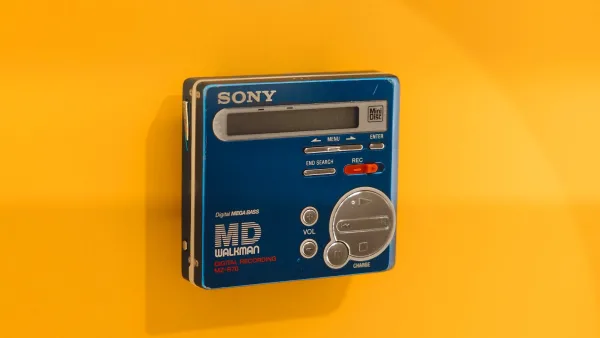
Old Discmans and CD Walkmans turn up everywhere second-hand, and plenty are still genuinely good buys, but check a few things before you pay. Ask the seller to demonstrate a disc actually playing, ideally more than one, since a worn laser lens can struggle with certain discs while reading others fine. Look at the battery compartment for corrosion if it takes AA batteries, and check the disc door hinge and latch for looseness. A bit of yellowing on the plastic is cosmetic and harmless; a lid that won't stay shut properly isn't.
Before You Check Out
Run through this before you commit:
- Confirmed disc compatibility (CD, CD-R, CD-RW, MP3-CD as needed)
- Checked whether Bluetooth is transmit-only, receive-only, or both
- Confirmed charging type and whether replacement cables are easy to find
- Checked control layout and display readability for how you'll actually use it
- Confirmed warranty length and battery-replacement policy
Still narrowing things down by use case? Our round-up by type of listener breaks things down further, and if you're brand new to the format, our features explainer is worth reading alongside this.



Comments