


Bass with Amplifier roundup
Bass with Amplifier: A Complete Buyer's Guide
Most bass amp buying mistakes happen before you even plug in. Here's a grounded look at the specs that genuinely matter when buying a bass amplifier.
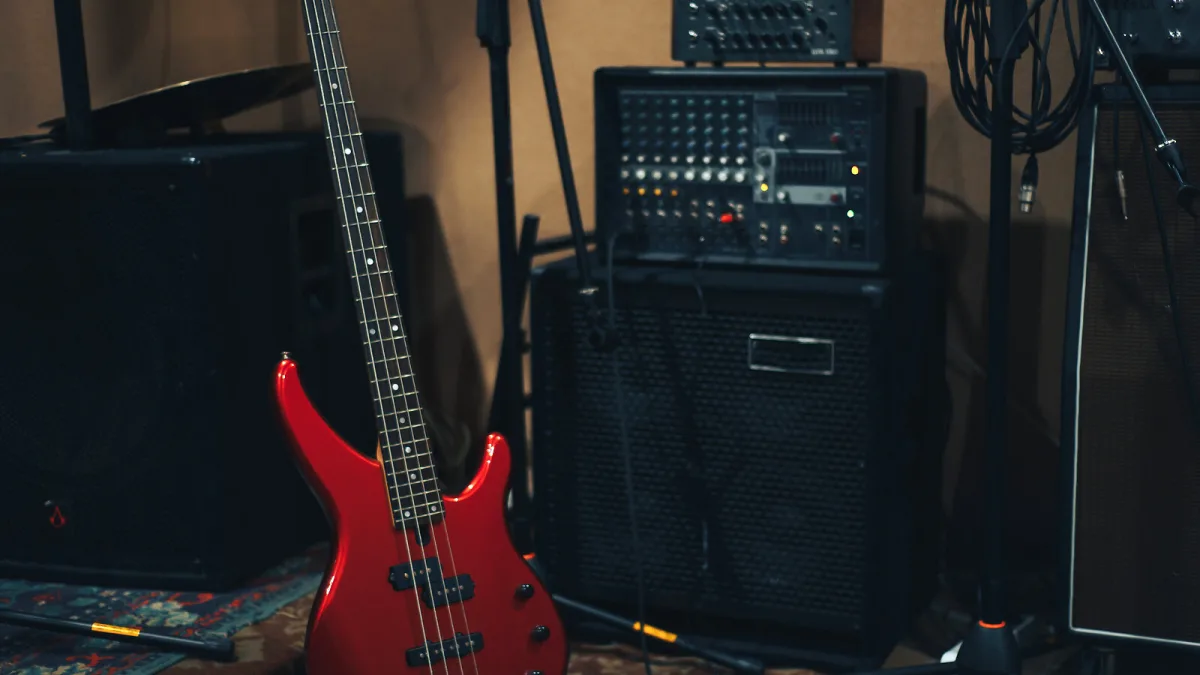
I've rewired enough gear in my spare room to know that most bass amp buying mistakes happen before you ever plug in — they happen when you tick a spec sheet box without understanding what it actually changes. This guide walks through the decisions that matter when buying a bass amplifier: what to check, what to ignore, and where your money is genuinely well spent.
Start with how you'll actually use it
Before any spec comparison, be honest about the job. A bedroom practice amp, a rehearsal-room workhorse and a gigging rig for a loud band are three different purchases, even if they're all technically "bass amps". Working this out first saves you paying for headroom you'll never use, or worse, buying something that runs out of steam the first time your drummer really leans in.
- Home practice: a small combo with a headphone output, roughly 10–50 watts.
- Rehearsal: enough clean power to sit comfortably under a full band, plus a DI output if you ever record.
- Live gigging: a head-and-cabinet setup or a higher-power combo, matched to your typical venue size.
Wattage: useful, but not the whole story
It's tempting to shop by watts alone because it's the one number every listing shouts about. Don't. Wattage measures electrical power, not perceived loudness — and doubling it doesn't double how loud something sounds. What extra wattage really buys you is headroom: the ability to reproduce loud transient peaks cleanly, without the amp clipping.
| Setting | Sensible starting range |
|---|---|
| Bedroom practice | 10–50 W |
| Small rehearsal or open mic | 100–300 W |
| Club gigs, louder bands | 300–500 W+ |
| Large venues | 500 W+, backed by the venue PA |
A well-designed, efficient 200-watt rig can genuinely out-punch a cheaply built 500-watt one. Efficiency and cabinet design matter as much as the number printed on the back panel.
Impedance: the spec that actually matters for safety
Here's the one you can't afford to get wrong. Impedance is measured in ohms (Ω) and describes the electrical load your speaker cabinet presents to the amplifier. Buying a bass amp head without checking this against your cabinet — or vice versa — risks damaging the amp.
- Check the amplifier's stated minimum load before buying any cabinet to pair with it.
- Many bass heads reach their maximum rated output at 4 ohms; a lot of standalone cabinets are rated at 8 ohms.
- Two identical 8-ohm cabinets wired in parallel typically present a 4-ohm total load — don't assume adding a second cabinet is automatically safe.
- Always connect head to cabinet with a genuine speaker cable, never a guitar lead.
Speaker configuration
Cabinet size is one of those specs that gets talked about with far more certainty than the physics actually supports. As a general tendency, larger speakers (12-inch, 15-inch) lean toward a fuller, rounder low end, while smaller or multi-speaker setups (2×10, 4×10) respond faster and push more upper-mid definition — useful for cutting through a busy mix. But cabinet design, porting and speaker quality can outweigh sheer diameter, so don't buy on size alone.
Common configurations you'll encounter when buying a bass amplifier:
- 1×10 or 1×12: portable, balanced, fine for small-to-medium gigs.
- 2×10: fast attack and good projection, a popular gigging choice.
- 4×10: a rock and live-performance standard — plenty of punch without being unmanageable.
- 8×10: serious output for large stages, and a heavy lift to match.
Tone controls and connectivity worth paying for
Once wattage and impedance are sorted, the features that separate a good bass amplifier purchase from a mediocre one are mostly about control and flexibility:
- EQ: a proper multi-band equaliser, not just bass/treble, lets you tame boom and carve midrange presence.
- Gain and master volume, separated: gives you control over preamp drive independently of overall loudness.
- Built-in compression: genuinely useful for evening out fingerstyle or slap dynamics.
- DI output: a balanced output feeding a mixing desk directly — check whether it's pre- or post-EQ, and whether it captures any onboard overdrive.
- Headphone output with cabinet simulation: makes late-night practice genuinely usable.
Our overview of how bass amplifiers work is worth reading alongside this if any of those terms are new to you.
Tube, solid-state or Class D?
This is a genuine trade-off, not a hierarchy. Tube amps offer warm compression and harmonic colour that a lot of players find musically satisfying, but they're heavier, run hotter and need occasional servicing. Solid-state designs are lighter and more reliable. Class D amplifiers — the modern default for touring rigs — pack serious power into a genuinely light chassis, which is why compact heads and neodymium-speaker cabinets have become so common. If you're buying your first amp and portability matters, Class D or solid-state is the pragmatic choice; if vintage rock tone is the priority, don't rule out tube.
Common buying pitfalls
A few mistakes crop up again and again when people buy a bass amplifier:
- Choosing purely on wattage without checking cabinet efficiency or your actual venue needs.
- Pairing a head with a cabinet load below its rated minimum impedance.
- Assuming a 15-inch speaker is automatically "better" than a 10-inch one.
- Ignoring the input stage — active basses often need a pad switch or a dedicated active input to avoid clipping.
For a fuller list once you've narrowed your choices, our piece on common bass amplifier mistakes to avoid covers the setup and gig-day errors too.
Bottom line
Buying the right bass amplifier is really a process of matching honest requirements to a short list of specs that actually matter: wattage as headroom, impedance as a hard safety limit, speaker configuration as a tendency rather than a rule, and connectivity as the thing you'll actually use week to week. Get those right and the rest — tube versus solid-state, brand, cosmetics — comes down to taste and budget. If you'd like specific recommendations by price tier, see the best bass amplifiers for the money, and if you're buying your very first rig, our beginner's guide to bass amplifiers keeps things simpler still.




Comments