


Guitar Effects Pedals Wah article
The Ultimate Guide to Guitar Effects Pedals Wah
That vocal, crying sweep has a name: the wah pedal. Here's what it actually does, where it came from, and how to use one properly.
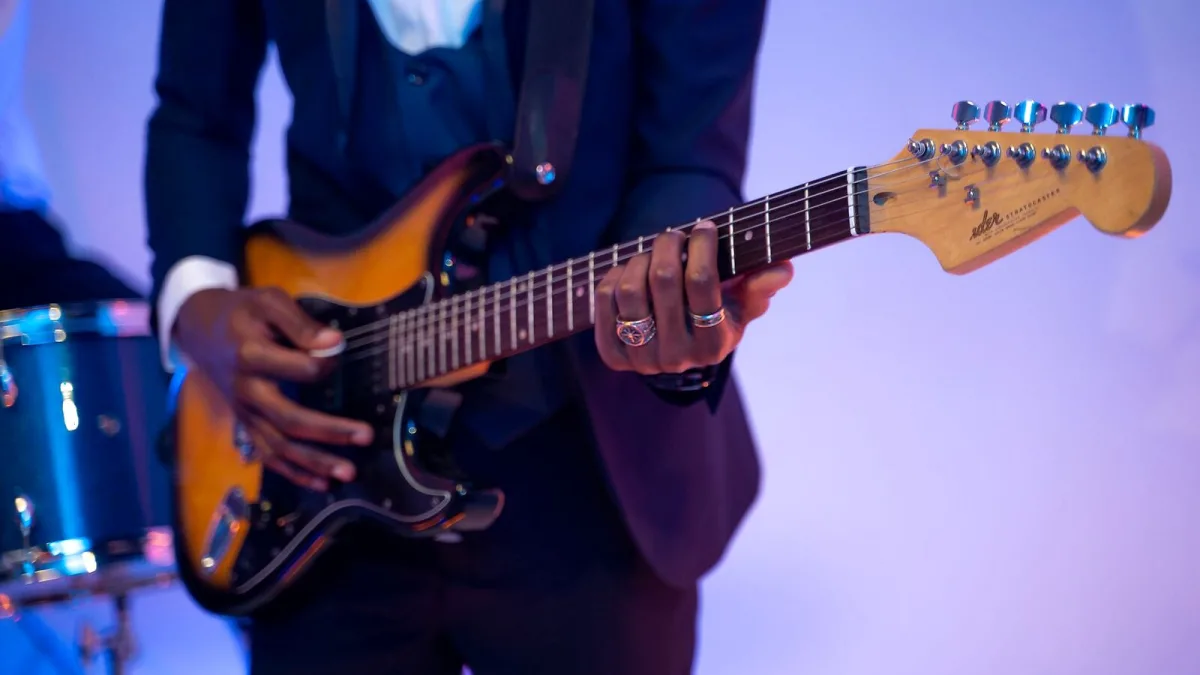
Every guitarist knows the sound before they know the name for it — that vocal, crying sweep that turns a single held note into something that almost seems to talk back. That's a wah pedal, and it's been one of the electric guitar's most expressive tools for close to sixty years. Here's what it actually does, where it came from, and how to use one properly.
What a Wah Pedal Actually Does
Strip away the mystique and a wah pedal is a resonant filter you sweep with your foot. Rocking the treadle moves a concentrated band of frequencies up and down the midrange: heel down generally emphasises the lower mids, toe down pushes into the higher mids, and everywhere in between gives you a moving point somewhere on that spectrum. The result mimics a human vowel sound or a muted trumpet — which, as it turns out, is exactly what it was first pitched as.
Where It Came From: Vox, a Trumpet Player and a Happy Accident
Engineer Brad Plunkett, working with Warwick Electronics and the Thomas Organ Company, is widely credited with developing the first commercial wah circuit in 1966, while experimenting with a variable midrange control for Vox amplifiers. Adapted into a foot-operated enclosure borrowed from volume pedal design, the effect was initially marketed at wind players — hence the early "Clyde McCoy" model, named for a trumpeter. Guitarists got there fast anyway, and Dunlop Manufacturing later acquired the rights to the "Cry Baby" name, turning it into the pedal's benchmark model and practically a synonym for the effect itself.
The Sound That Defined a Generation
Jimi Hendrix made the wah pedal a dramatic lead-guitar weapon, and Eric Clapton's work with Cream, particularly "Tales of Brave Ulysses," showed how naturally it sat inside blues-rock phrasing. From there it spread everywhere: funk and disco players used it for rhythmic "chop" effects, David Gilmour leaned on it for expressive lead phrasing, and decades later Kirk Hammett carried it straight into mainstream heavy metal, most famously on Metallica's "Enter Sandman." Few effects have crossed that many genres this cleanly.
How to Actually Use One
- Slow sweep across a sustained note for that classic vocal effect.
- Rhythmic pumping, rocking the pedal in time with a funk riff or groove.
- Parked wah — stopping at one position and leaving it there as a fixed, resonant EQ boost.
- Accent technique — pushing toward the toe position at the start of a note, then easing back.
The most common beginner habit is sweeping constantly without relating the motion to the music. It earns its keep when the foot movement has a purpose, not when it's just rocking back and forth for its own sake.
Where It Sits in Your Signal Chain
There's no single correct order, but a sensible starting point is guitar → wah → fuzz or overdrive → modulation → delay → reverb → amp. Placing it before distortion usually gives a more familiar, vocal response; placing it after can sound sharper and more extreme. Vintage-style fuzz pedals in particular can interact strongly with whatever comes before them, so it's worth experimenting rather than assuming one order is "right." Our buyer's guide goes further into how different designs behave in a real chain.
Vox or Cry Baby: What Actually Differs
Both units trace back to the same 1960s Thomas Organ lineage, but they're voiced differently — Vox-style circuits tend toward a slightly smoother, rounder vocal tone, while the Dunlop Cry Baby's GCB95 has become the reference point most players compare everything else against. Neither is objectively "better"; they're simply different accents on the same basic idea. If you're weighing up which one actually suits you, our roundup of the best options by budget and style breaks it down properly.
The Bottom Line
A good wah pedal turns equalisation into a live performance gesture — something no amp knob or tone control can quite replicate. Whether you're chasing Hendrix, Clapton or Hammett, the fundamentals are the same: a filter, a foot, and a bit of musical intent. If you're picking up your first one, our beginner's guide keeps things simple, and our common mistakes guide is worth a read before you settle into a habit that's hard to unlearn.




Comments