


Electro Harmonix roundup
The Best Electro Harmonix for the Money
No invented reviews, just an honest, category-by-category breakdown of where Electro-Harmonix actually earns its money, from fuzz to phase to boost.
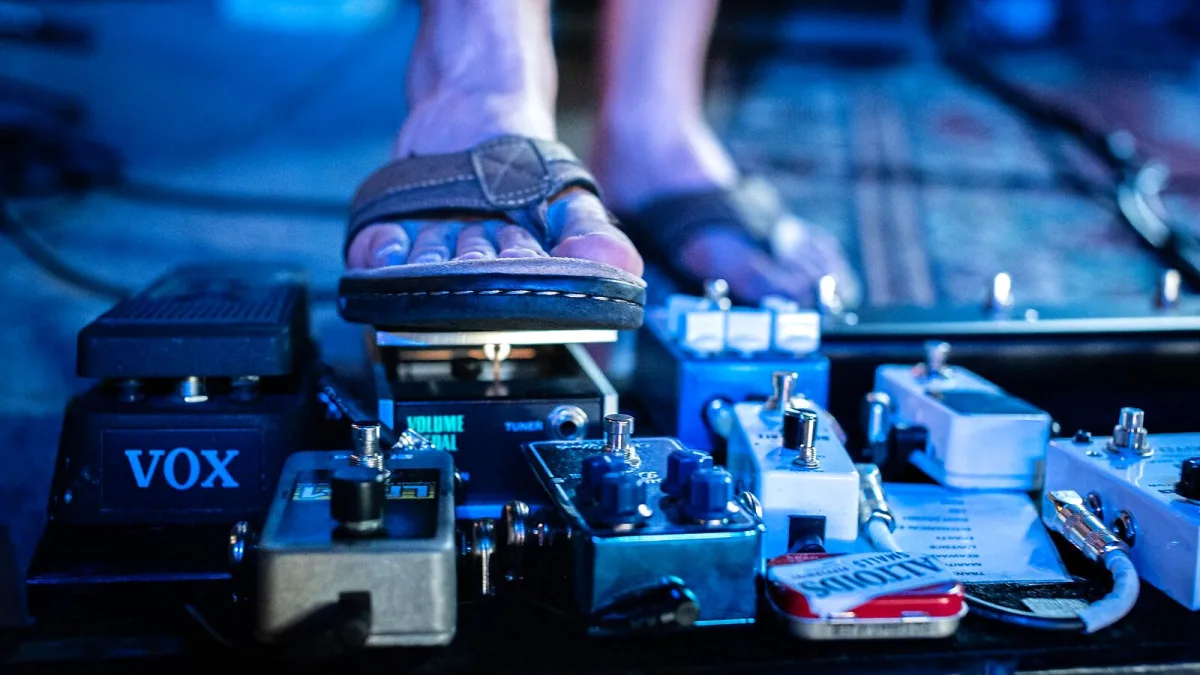
Right then. You want the best Electro-Harmonix pedals for your money, not a shopping list dressed up as journalism. Fair enough. EHX — Electro-Harmonix's own shorthand for itself — makes fuzz, phase, flange, delay, boost and now looping and polyphonic gear too, so “best” depends entirely on what job you need doing. Here’s the honest breakdown, by category, with no invented reviews and no pretending every pedal suits every player.
Best for Fuzz and Sustain: The Big Muff Family
Start here if you want wall-of-sound sustain. The Big Muff Pi is EHX’s signature circuit, and decades of versions mean there’s a variant for most tastes — heavier, smoother, more compressed, less compressed. The trade-off is a scooped midrange that can vanish in a busy mix, so factor an EQ or overdrive into your plan if you play with a loud band.
Best for Modulation: Small Stone and Electric Mistress
Want movement, not distortion? The Small Stone phaser gives you a smooth, sweeping wobble. The Electric Mistress flanger goes further — more metallic, more jet-plane, more obvious in a mix. Neither is subtle. That’s the point.
Best for Delay: The Memory Man Line
Memory Man pedals aren’t clinical, click-track-precise delays. They wobble. They warm up. Repeats pick up a bit of pitch drift and modulation depending on the model, which is exactly why ambient, psychedelic and post-punk players still reach for one over a cleaner digital unit.
Best for Tight Pedalboards: Nano Format
If your board is already rammed, the compact Nano-format EHX pedals pack the same core circuits into a fraction of the space. You lose a bit of knob real estate. You gain room for three more pedals. Most gigging players call that a fair trade.
| You want… | Go for | Format tip |
|---|---|---|
| Maximum sustain and grit | Big Muff Pi family | Full-size for easy tweaking, Nano for space |
| Swirling, watery movement | Small Stone | Simple two- or three-knob control |
| A more aggressive sweep | Electric Mistress | Great for post-punk and shoegaze textures |
| Warm, imperfect echoes | Memory Man | Analogue-voiced, not a clean digital delay |
| A boost into a valve amp | LPB-1-style boosters | Transparent level lift, minimal tone change |
Best for Bass Players
Bass-specific Electro-Harmonix pedals exist precisely because low frequencies don’t survive most guitar-voiced fuzz and modulation circuits unscathed — the low end gets filtered out, farts out, or disappears into mush. If you play bass, don’t just grab the guitar version and hope. Look specifically for the bass-oriented model in whichever family you want, since the filtering and headroom are usually tuned differently under the hood.
Best for Experimenting: Loopers and Digital Effects
Not every great EHX pedal is a vintage-style analogue box. The company’s loopers, digital delays and polyphonic pitch effects open up looping, layering and textures the classic circuits were never built for. Compare loop time, overdub behaviour, memory and footswitch layout before picking a looper specifically, since those details matter more day-to-day than raw sound quality alone. Worth a serious look if you write or perform solo.
Best Value for Simplicity: Boost Pedals
Sometimes the best money you’ll spend on Electro-Harmonix gear isn’t on fuzz or modulation at all — it’s on a straightforward booster. LPB-1-style boosters raise your signal level cleanly, pushing a valve amp harder without reshaping your tone first. For pure value, a one- or two-knob boost pedal is hard to beat if all you need is more volume for a solo, or a harder push into an amp that’s already close to breaking up.
Don’t Overspend on Vintage Just for the Name
Here’s an unpopular opinion: a decent modern reissue often gives better value than a vintage original in rough condition. Vintage EHX carries real collector appeal, sure. But if you’re buying to actually play, not to collect, a current-production pedal usually gets you most of the sound for a fraction of the hassle and the servicing risk.
Best for Reliability on a Loud Stage
Nobody wants a pedal dying mid-set. EHX’s simpler, single-function pedals — a straightforward boost, a classic fuzz — tend to have fewer things that can go wrong than a multi-mode digital unit crammed with menus. If reliability under stage lights matters more to you than flexibility, lean toward the simpler end of the range, and keep a spare power supply in your gig bag regardless of what you buy.
So Which One Actually Gives You the Most for Your Money?
Here’s the punchy truth: the “best” Electro-Harmonix pedal is whichever one you’ll actually use every gig. A brilliant fuzz sat in a drawer is a waste of money at any price. Match the category to the sound in your head first, then worry about full-size versus Nano. If you’re still deciding what you actually need, our full guide to EHX covers how each family works, and the buyer’s guide gets into the specs and pitfalls. New to the brand entirely? Start with our beginner’s guide, and read the common mistakes to avoid before you buy anything second-hand.
The Bottom Line
Electro-Harmonix doesn’t need one crowning “best” pedal, because it was never built to be judged that way. Pick by category, buy the format that fits your board, and you’ll walk away with genuinely good value in guitar effects — whichever pedal that turns out to be for you.




Comments