


Electro Harmonix roundup
Electro Harmonix: A Complete Buyer's Guide
One brand name covers fuzz, phase, delay and more. Here's what to actually check before buying an Electro-Harmonix pedal, from power specs to vintage pitfalls.
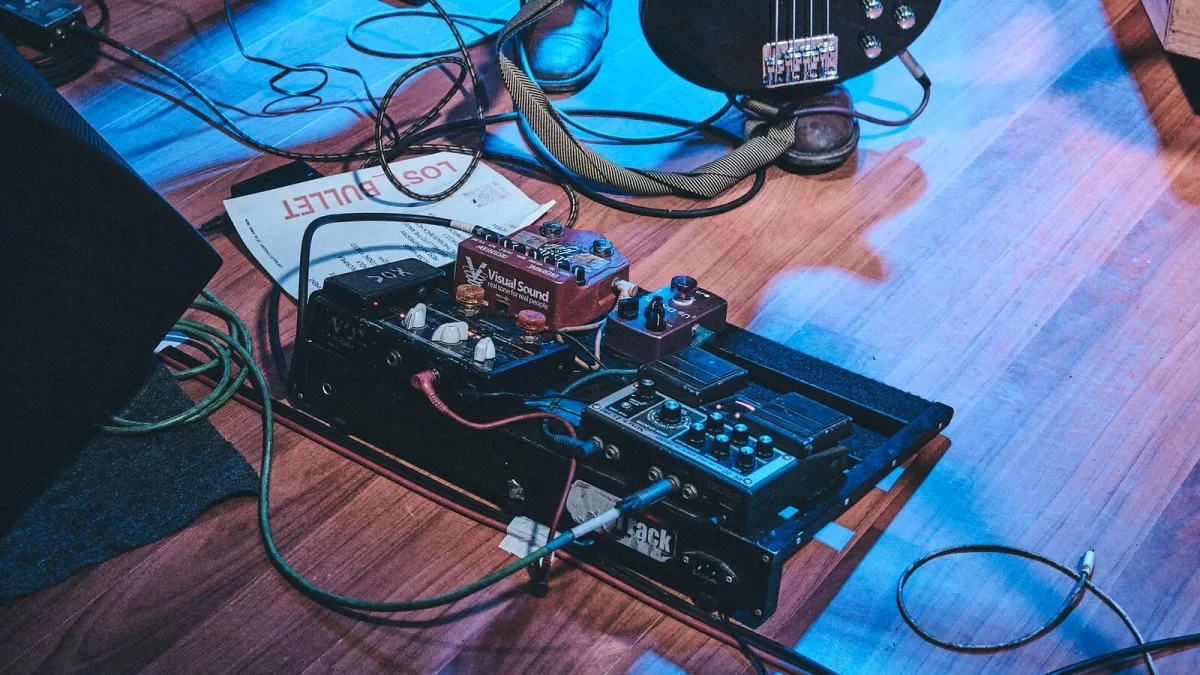
Buying an Electro-Harmonix pedal should be the fun part of gear shopping, not the confusing part. The trouble is that one brand name covers fuzz, phase, flange, delay, boost and now digital and polyphonic effects too, spread across vintage units, faithful reissues and compact modern formats. This guide walks through what actually matters when you’re choosing one — the specs worth checking, the format decisions, and the pitfalls that catch out buyers who skip the small print.
Start With the Sound, Not the Name
“Electro-Harmonix” — EHX, for short — isn’t a single sound; it’s a catalogue built from very different circuits. Before you look at a single pedal, work out which job you actually need doing: heavy fuzz and sustain, a swirling phase or flange, a warm analogue echo, a clean boost into your valve amp, or something built for bass or vocals. Shopping by category rather than by brand name alone narrows the field fast and stops you buying the wrong tool for a job you hadn’t quite defined.
New, Reissue or Vintage?
EHX has a genuinely complicated manufacturing history: an original run from the late 1960s, a mid-1980s closure, and a 1990s revival that leaned on Russian production before the company rebuilt its New York base. That matters at the till, because two pedals with the same name can differ in circuit revision, components, switching and even sound depending on which era they came from.
- New: the safest option if you want consistency, a warranty and modern power requirements.
- Reissue: built to echo a classic circuit, usually with more reliable components and better noise performance than the original.
- Vintage: genuinely characterful, but variable — condition, prior repairs and exact production era all affect both tone and price.
Check the Power Requirements Before You Buy
Don’t assume every EHX pedal shares one power standard. Voltage, current draw, centre polarity and battery compatibility can all vary between models and across production eras, so check the specific pedal’s manual rather than guessing from a similar-looking unit. Get this wrong and you risk anything from unreliable operation to damaging the pedal outright.
Format: Nano, XO or Full-Size?
From the 2000s onwards, Electro-Harmonix introduced compact Nano and XO-format pedals alongside its classic full-size enclosures. The circuit inside may be closely related, but the format changes your buying decision in practical ways:
| Format | Pedalboard footprint | Best suited to |
|---|---|---|
| Full-size classic | Large | Players who want easy-to-grab knobs and don’t mind the space it takes. |
| XO | Medium | A middle ground — smaller than the classic housing, still comfortably usable live. |
| Nano | Small | Tight pedalboards, or players stacking several EHX effects together. |
Know the Big Muff’s Reputation Before You Commit
If fuzz is what’s drawn you to Electro-Harmonix, understand that “Big Muff Pi” describes a family of related circuits, not one fixed pedal. Versions vary in gain, sustain and midrange content, and that scooped midrange — brilliant alone, less so in a dense band mix — is a genuine consideration, not a design flaw to be scared of. If you play in a full band, factor in whether you’ll need an EQ pedal or a touch of overdrive afterwards to help the fuzz cut through.
Don’t Forget Bass and Vocal Versions
Not every effect in the catalogue is built with guitar in mind. EHX also makes bass-specific voicings that better preserve low frequencies, and vocal-oriented effects built for a very different input signal. If you play bass or sing, check you’re looking at the version designed for that job, rather than assuming a guitar-voiced pedal will translate cleanly.
Common Buying Pitfalls
- Assuming any two Big Muffs, from different eras, will sound the same.
- Buying vintage without asking about servicing history, pots, jacks and switches.
- Ignoring power supply compatibility, especially on older or Russian-era units.
- Choosing a pedal because of an artist association rather than the actual sound you need.
- Overlooking format — a full-size unit that doesn’t actually fit your board helps nobody.
Buying Second-Hand: Questions Worth Asking
A lot of EHX gear changes hands used, and that’s not a problem in itself — it’s often the cheapest way into a well-regarded circuit. Before you pay, ask the seller a few direct questions.
- Does it come with the correct power supply, or will you need to source one separately?
- Has it been serviced, modified or repaired, and if so, by whom?
- Does every control and switch work as expected, with no scratchy pots or intermittent jacks?
- Can they confirm roughly which production era it’s from, if that matters to you?
A seller who can answer all four confidently is generally a safer bet than one who can’t.
Buying on a Budget, Sensibly
You don’t need the most expensive EHX pedal in a category to get a genuinely useful sound. A compact Nano-format unit will often get a beginner or a tight budget most of the way there, while reissues of the classic circuits suit players who want the well-known sound with modern reliability. Vintage units are best reserved for players who specifically want that era’s exact character and are prepared to budget for servicing.
Where to Go From Here
For the full background on the brand and its pedal families, read our guide to EHX. If you’d like a shortlist of standout picks by category, see the best Electro-Harmonix pedals for the money, or if you’re buying your very first unit, our beginner’s guide is the gentler starting point. Whatever you choose, it’s worth reading the common mistakes buyers make before you hand over any money.
The Bottom Line
Buying an Electro-Harmonix pedal comes down to matching a genuine need to the right family, checking format and power requirements properly, and going in with realistic expectations about how much vintage units vary. Get those basics right and almost any EHX pedal will earn its place on your board.




Comments