


Electro Harmonix article
Electro Harmonix for Beginners: A Complete Guide
Feeling lost in all the fuzz, phase and flange? Here's the gentle, encouraging way into Electro-Harmonix, one pedal and one small win at a time.
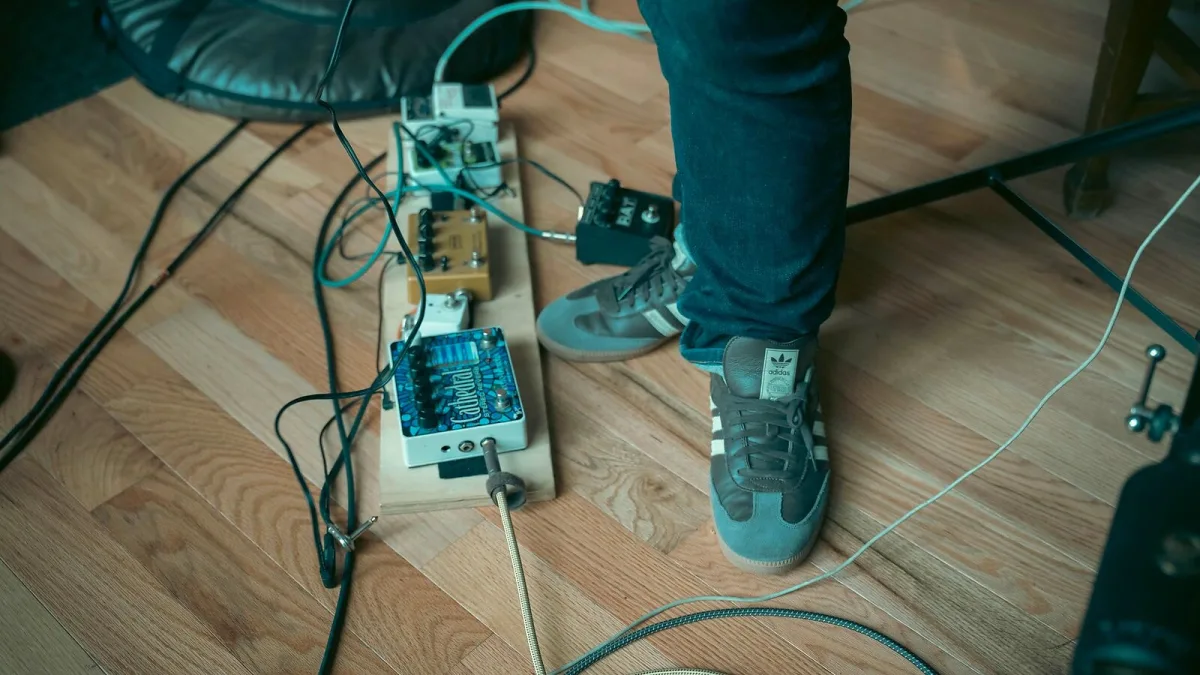
New to Electro-Harmonix and feeling a bit lost in all the fuzz, phase and flange? You’re not alone, and it’s genuinely simpler than it looks once you know where to start. This guide skips the deep history and the spec sheets and focuses on exactly what a nervous first-timer needs: what to buy first, how to plug it in properly, and how to build confidence before you worry about anything else.
Pick One Pedal, Not a Whole Rig
The biggest beginner mistake isn’t a wrong pedal — it’s trying to buy five at once. EHX (Electro-Harmonix, shortened the way most players actually say it) makes fuzz, phase, flange, delay, boost and more, and every single one of them will teach you something different about your own playing. Choose the effect that matches the sound already in your head, buy that one EHX pedal, and actually spend time with it before adding another.
Common Nerves, and Why They’re Normal
It’s completely normal to feel a bit intimidated the first time you plug in a new pedal. You are not expected to nail your favourite record’s tone on day one, and you shouldn’t judge yourself against a mix, a mastering engineer and years of studio experience you simply can’t see. Your job right now is simpler: learn what the knobs actually do, and find a sound you personally enjoy playing through.
The Big Muff Pi: A Gentle Way In
If heavy, sustained fuzz is what drew you to Electro-Harmonix, the Big Muff Pi family is the obvious starting point. Don’t overthink the controls — most versions boil down to volume, tone and sustain (or gain). Turn sustain up for that huge, compressed roar; turn it down and you’re closer to a thick, warm overdrive. Give yourself ten minutes just turning knobs before you decide you don’t like it.
Plugging In Properly (the Boring Bit That Actually Matters)
Power trips up more beginners than tone ever does. EHX pedals don’t all share the same voltage, current draw or polarity, so use the power supply the pedal actually needs, or a multi-output supply confirmed compatible with it — never assume one adaptor fits every pedal on your board. Signal order matters too: as a starting point, put fuzz early in your chain, before modulation and delay, and adjust from there once your ears tell you what you prefer. Most EHX pedals are also true bypass, meaning your guitar signal passes through completely unchanged whenever the effect is switched off — useful to know so you’re not hunting for a fault that isn’t actually there.
A Simple Starter Checklist
- One pedal, chosen for one specific sound you actually want.
- The correct, confirmed-compatible power supply for that exact model.
- A couple of short patch cables, to keep noise and clutter down.
- A basic tuner, since fuzz and heavy gain make it harder to hear if you’re out of tune.
You Don’t Need to Understand “Vintage” Yet
Electro-Harmonix has a long, slightly messy history — a 1960s launch, a mid-80s wobble, a 1990s comeback — and collectors care deeply about which exact era made which exact pedal. As a beginner, you genuinely don’t need any of that yet. A new or reissue EHX pedal will teach you everything you need to know about the sound before vintage variations become relevant at all.
Trust Your Ears Over Forums
Plenty of well-meaning advice about EHX gear online will tell you exactly which era, which sustain setting, or which format is “correct.” Ignore most of it at the beginner stage. If a setting sounds good to you, through your own amp, at your own volume, that’s the right setting — full stop. You can get more particular about nuance later, once you already know what you like.
What If You Don’t Love It Straight Away?
Not every first pedal clicks immediately, and that’s fine. Give it a proper week of regular playing before deciding it isn’t for you — your ears often need time to learn what a new effect is actually doing, especially with something as dense as fuzz. If it genuinely isn’t right after that, most decent shops and sellers are used to first-timers changing their minds, so don’t be embarrassed to ask.
Little Wins Before Big Purchases
- Learn one pedal properly before buying a second.
- Play it through your actual amp, at the volume you actually gig or practise at.
- Note down settings you like — you will forget them otherwise.
- Don’t chase an artist’s exact sound; chase what sounds good in your own hands.
When You’re Ready to Go Further
Once one EHX pedal feels properly familiar, you’ll have a much better sense of what to add next. Our full guide to EHX explains how the whole family fits together, and the buyer’s guide is worth reading properly before your second purchase. If you want a shortlist by category rather than a deep dive, the best Electro-Harmonix pedals for the money breaks it down, and it’s worth skimming the common mistakes to avoid so you don’t make them on pedal number two.
The Bottom Line
Nobody understands every Electro-Harmonix pedal on day one, and you don’t need to. Pick one that matches the sound you actually want, get the power and signal order right, and spend real time with it. That’s a genuinely solid start, and everything else can wait.




Comments