


Concert Lighting roundup
Concert Lighting: A Complete Buyer's Guide
Before you buy any lighting gear, work out what your venues actually need — this guide walks through fixtures, control and the details that matter most.
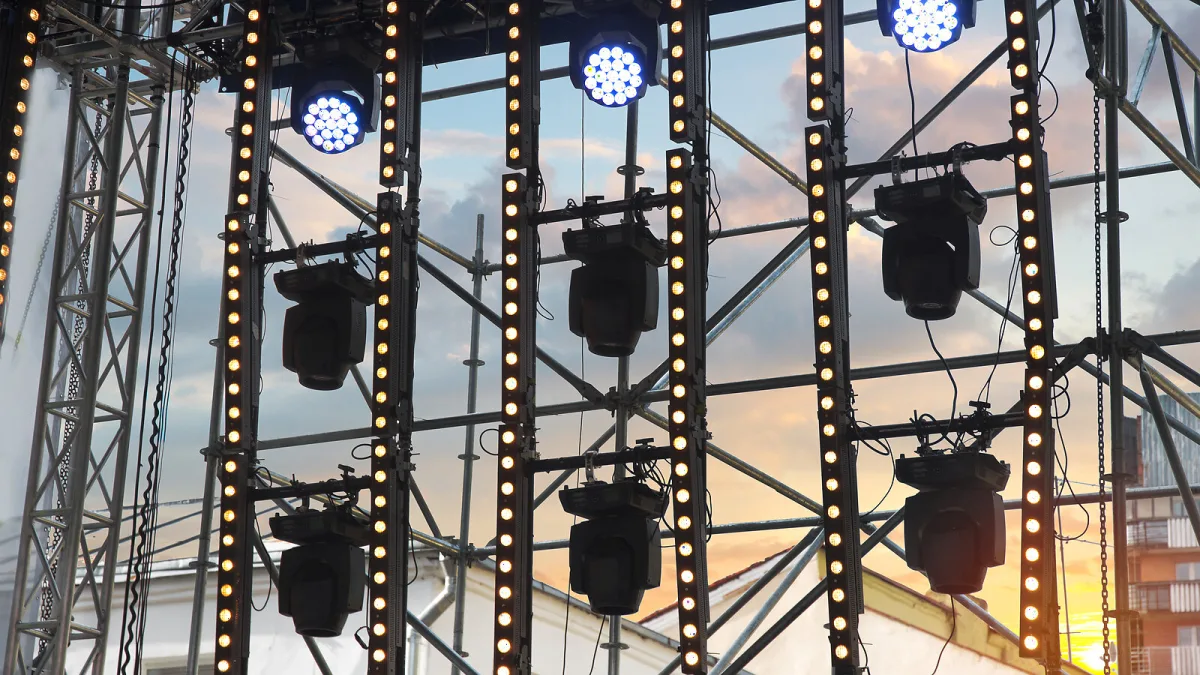
There's a particular kind of overwhelm that hits the first time you look into buying concert lighting equipment — a wall of fixture names, protocols and jargon that all sound faintly technical and faintly expensive. Take your time. This guide walks through what genuinely matters before you spend anything, so you buy for the shows you'll actually play, not the ones in your imagination.
Start With the Room You're Actually Lighting
The single biggest mistake in buying concert lighting gear is shopping for a bigger venue than the one you have. A small club or function room needs compact, easy-to-rig fixtures with modest power draw. A touring rig built for arenas is a different world entirely — bigger trussing, more power, more crew. Be honest about where your gigs actually happen, and buy for that.
The Core Concert Lighting Fixture Types
| Fixture | Good For | Worth Considering When |
|---|---|---|
| Wash lights | Broad colour coverage, bathing the stage | You want an even, colourful backdrop with minimal fuss |
| Moving heads | Multiple roles in one fixture — pan, tilt, colour, gobo | You need flexibility without buying dozens of separate lights |
| Spot / profile fixtures | Controlled beams, textures, isolating a performer | You need precision rather than broad coverage |
| Followspots | Tracking a performer's movement | Your performers move unpredictably around the stage |
LED or Conventional?
Most buyers today lean towards LED fixtures, and for good reason — they run cooler, draw less power, mix colour electronically, and last a long time without lamp changes. Conventional fixtures still have their place, particularly for a specific warm quality of light some designers prefer, but for most first-time buyers, LED is the sensible, lower-maintenance starting point.
Don't Forget the Control Side
A lovely fixture is only as good as your ability to control it. Nearly everything in this world speaks DMX512, the standard protocol for sending brightness, colour and movement instructions from a console to your fixtures. Before buying, check:
- How many DMX channels your fixtures actually need, and whether your console can handle them.
- Whether you need traditional DMX cabling or an Ethernet-based system for a larger rig.
- Whether the console software has a learning curve you're genuinely prepared to climb.
Haze: A Small Purchase With a Big Effect
If you want your beams to actually look like something rather than just hit the stage floor, you'll want a haze machine. It's often the cheapest item on the list and the one that makes the biggest visual difference, since light is only properly visible in the air once haze gives it something to scatter off.
Think About Transport and Setup Time
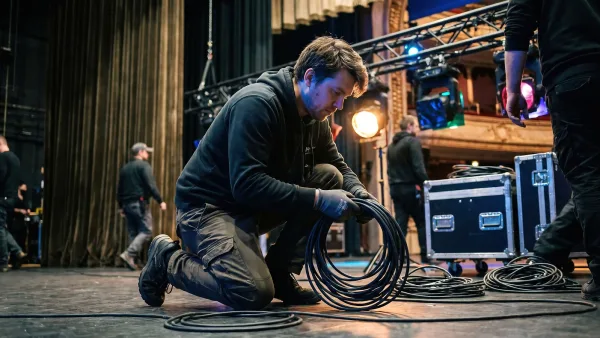
Ask yourself honestly how much time you'll have to rig and strike the show at each venue, and how it's all going to travel. Flight cases, cable length, truss compatibility and simple weight all matter more once you're loading a van at midnight than they ever do in a shop. A fixture that's brilliant on paper but takes forty minutes to focus properly isn't much use on a tight changeover.
Safety Isn't Optional
Whatever concert lighting kit you buy, make sure your rigging points, cabling and electrical protection are properly rated and correctly installed — overhead loads and mains electricity are not the place to cut corners. If you're working in an unfamiliar venue, coordinate with their crew and follow local regulations rather than assuming your usual setup will simply transfer over.
Getting the Basics Right First
If you're still finding your feet with the fundamentals — fixture types, colour and basic control — our beginner's guide to concert lighting is a gentler place to start than a shopping list. And our full guide to concert lighting covers the wider craft in more depth.
If You Want a Straight Recommendation
Once you know roughly what category of gear suits your gigs, our round-up of the best options for the money breaks down which tier of kit actually suits which kind of show.
The Bottom Line
Buy for the venues you actually play, not the arena tour you're dreaming about. Get the fixture types right, don't skimp on control or haze, and take transport and safety as seriously as the visual side. Do that, and you'll end up with a rig you use constantly rather than one that gathers dust in a flight case.




Comments