


Concert Lighting article
A Guide to Concert Lighting
The quiet craft behind every gig: what concert lighting actually is, who builds it, and how fixtures, colour and control come together.
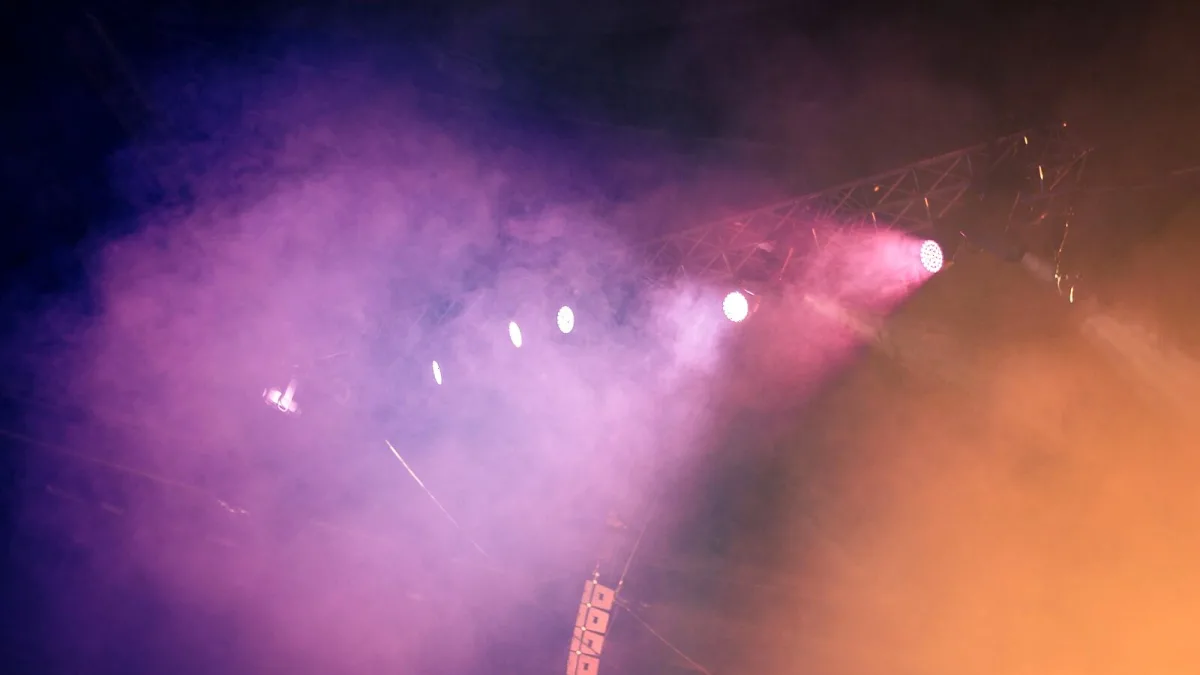
Watch any decent gig and half of what moves you isn't coming from the stage at all — it's coming from above it. Concert lighting is the quiet, careful craft of using light, colour and movement to support a performance, and when it's done well, you barely notice it's there. You just feel the song more. Here's what actually goes into it.
What Is Concert Lighting?
At its heart, concert lighting is the planned use of light — its brightness, colour, movement and timing — to support a live musical performance. It does three jobs at once. Artistically, it reinforces the mood of a song and the identity of the artist. Practically, it makes performers visible and helps an audience read the stage. And operationally, it has to be safe, repeatable and adaptable, because the same show might land in a small club on Tuesday and a festival field on Saturday.
Modern lighting design blends traditional fixtures with LEDs, automated moving lights, pixel-mapped elements, video and networked control — which makes today's lighting designer as much a technical operator as a visual artist.
The People Behind the Show
A touring lighting department is usually built from several distinct roles, each with its own job:
- Lighting designer — creates the artistic concept and specifies the rig.
- Lighting director — runs the show night after night, protecting the designer's original vision on the road.
- Lighting programmer — builds the cues, palettes and effects on the console.
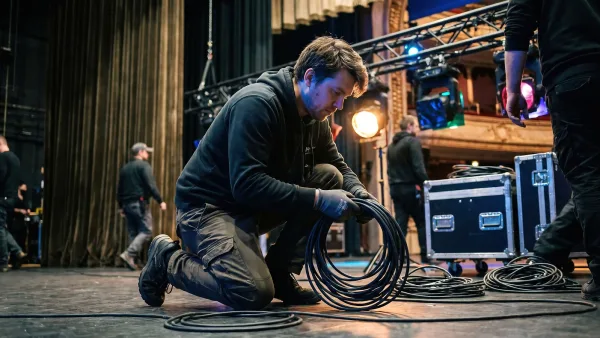
- Crew chief and technicians — rig, cable, focus and maintain the equipment at every venue.
Lighting director Ignacio Rosenberg has described the role neatly: the lighting director is the designer's "eyes on the road." It's a lovely way of putting it — someone has to make sure the vision survives fifty different rooms in fifty different towns.
The Building Blocks of a Lighting Rig
Every rig, however large, is built from a handful of fixture types, each doing a slightly different job:
| Fixture Type | What It's For |
|---|---|
| Wash lights | Broad, soft coverage — bathing the stage in colour, lighting performers generally |
| Spot / profile | Controlled, shaped beams — isolating a performer, projecting texture through a gobo |
| Beam fixtures | Narrow, striking shafts of light, especially dramatic when haze is in the air |
| Strobes | Rapid flashes for high-impact moments, used carefully for audience safety |
| Followspots | Track a performer's movement directly, especially when it isn't predictable |
Moving lights can now combine several of these roles in a single fixture — panning, tilting, changing colour and focus all in one — which is part of why a touring rig can look so much bigger than the truck it arrived in.
How It's All Controlled
Behind every colour change and blackout sits a control protocol called DMX512, which sends channel values from a lighting console out to each fixture — one channel for brightness, others for colour, pan, tilt and more. Traditional DMX runs along daisy-chained cable, though many modern rigs now distribute the same information over Ethernet-based networks, trading some simplicity for far greater capacity.
Programming a show typically follows a fairly consistent path: build the plot, patch the fixtures, create palettes and groups, then build cues song by song and rehearse until the timing feels instinctive rather than mechanical.
Colour, Timing and Storytelling
Good concert lighting rarely uses every colour available. Instead, designers often build a deliberate palette — perhaps one colour family for verses, another for choruses, a shift in tone for a particular song. Backlight and sidelight matter more than people expect, since they create shape and separation on stage, while front light, though necessary for seeing faces, can flatten the whole picture if it's overused.
As show director Sooner Routhier has put it, the job is "applying the brand of an artist to their live show" — the lighting should feel like it belongs to that artist specifically, not like a generic light show bolted on afterwards.
Haze, Beams and Atmosphere
A beam of light is only visible in the air when tiny particles scatter some of it back towards the audience — which is exactly what haze does. It creates a soft, consistent atmosphere that turns an invisible beam into a dramatic shaft of colour. Fog does something similar but tends to sit in denser, more localised clouds, so the choice between the two shapes the whole visual character of a show.
A Brief History
The craft grew up alongside amplified rock music and the touring industry itself. Early shows leaned on manually operated fixtures, coloured gel and a lot of skilled guesswork. Figures like Chip Monck — who lit the Monterey Pop Festival and later toured with the Rolling Stones — helped turn lighting from simple stage illumination into part of the performance's identity. As festivals and arenas grew, so did the demand for brighter, faster, more repeatable systems, which is really the story that leads straight to today's automated, pixel-mapped rigs.
Where It's Heading
LED fixtures have become central to touring because they run cooler, use less power and mix colour electronically rather than through physical gels. Pixel mapping has blurred the line between lighting and video entirely, letting designers treat strips and grids of LEDs almost like a low-resolution screen. And large-scale productions — like the 360-degree staging built for Luke Combs' 2026 tour — are pushing designers to light audiences from every angle at once, not just from the front.
If you're weighing up putting a rig together yourself, our concert lighting buyer's guide is the natural next stop, and if you're just starting out, our beginner's guide to concert lighting covers the first steps gently.
The Bottom Line
Concert lighting works best when you don't consciously notice it — when it simply feels like part of the song. Behind that simplicity sits a genuinely detailed craft: fixtures, protocols, colour theory, safety and a team of people whose whole job is making sure the vision survives the road. Understanding even the basics changes how you watch a gig for good.




Comments