


Concert Lighting article
Common Concert Lighting Mistakes to Avoid
From every-colour-at-once palettes to forgotten haze, the mistakes that crop up again and again in village halls and touring rigs, and the steadier way round each.
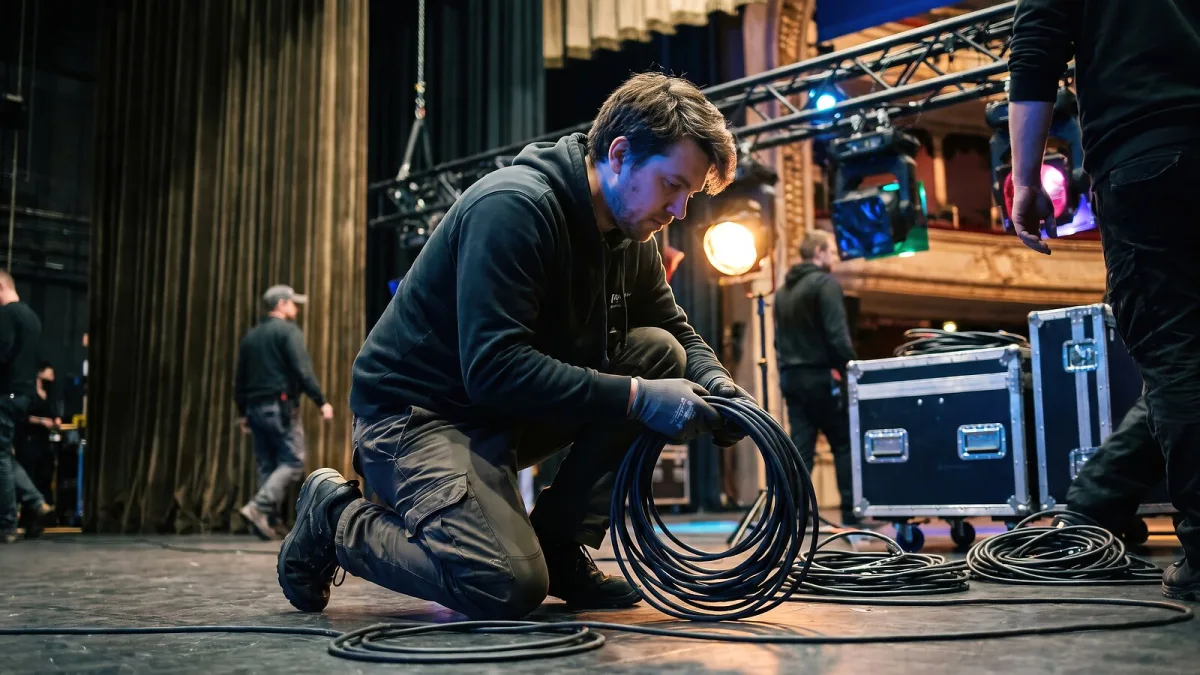
I've stood at the back of enough halls to have watched most of these concert lighting mistakes happen in real time — some of them my own doing, in years gone by. The craft forgives a lot, but a handful of errors crop up again and again, in village halls and touring rigs alike. Here they are, and the quieter, steadier way round each one.
Mistake 1: Using Every Colour at Once
It's a tempting habit for a newcomer — if the desk can produce forty colours, why not use them all? But a stage awash in every hue at once reads as noise rather than mood. The designers who do this well tend to build a deliberate, restrained palette: one colour family for a verse, another for the chorus, a single striking shift for the moment that deserves it. Restraint, more often than not, is what makes a lighting design actually land.
Mistake 2: Forgetting the Audience's Eyes
Strobes and sudden blackouts can be genuinely thrilling, used sparingly and with warning. Used carelessly, they're simply uncomfortable, and for a small number of people they can trigger a real physical reaction. Any responsible concert lighting design treats flashing effects with proper care, checks venue policy, and never uses them purely because the console makes it easy to do so.
Mistake 3: All Front Light, No Shape
It's an understandable instinct to light the stage from the front so every face is clearly visible, but lean on it too heavily and the whole picture flattens out. Backlight and sidelight are what give a performer shape and separation from the backdrop behind them. A stage lit only from the front tends to look strangely two-dimensional, however bright it is.
Mistake 4: Forgetting Haze Entirely
A beam of light is invisible in clean air — it only becomes a visible shaft once haze gives it particles to scatter off. Skipping haze to save a little time or expense means an audience never actually sees half of what a beam fixture is doing. It's a small, unglamorous piece of kit that does an enormous amount of quiet work.
Mistake 5: Underestimating Rigging and Cabling
Overhead loads and mains electricity are not the place to improvise. Every fixture needs to be properly secured, every cable properly routed and out of the path of performers and crew. It's the least exciting part of the job, and precisely because of that, it's the part that gets rushed when time is short — which is exactly when it shouldn't be.
Mistake 6: Ignoring the Camera
A show lit beautifully for the people in the room can look quite different through a livestream or broadcast camera. Cameras are fussier about contrast, flicker and overexposed LED sources than the human eye is. If any part of your show is being filmed, it's worth a conversation with whoever's behind the camera before you finalise your looks, not after.
Mistake 7: Buying Before Understanding the Room
I've seen more than one enthusiastic buyer bring home a rig built for a space three times the size of the one they actually play. It's an easy trap — the gear looks impressive in a shop or online listing, and rather less impressive crammed into a low-ceilinged function room. Our concert lighting buyer's guide is worth reading properly before any of that money leaves your pocket.
A Quick Concert Lighting Reference
| Mistake | Steadier Approach |
|---|---|
| Every colour at once | Build a deliberate, restrained palette |
| Careless strobes | Use sparingly, with warning, following venue policy |
| Front light only | Add backlight and sidelight for shape |
| No haze | Add it — beams need something to scatter off |
| Rushed rigging | Never shortcut safety, however tight the schedule |
| Camera afterthought | Talk to the camera operator before finalising looks |
Learning the Craft Properly
None of this is meant to put anyone off — every experienced designer has made most of these mistakes at some point. If you're still building the fundamentals, our beginner's guide to concert lighting is a gentle place to start, and our full guide covers the wider craft in proper depth.
The Bottom Line
Most concert lighting mistakes come from the same root: reaching for more, brighter or busier before understanding what the room and the song actually need. Slow down, build restraint into your palette, and treat safety as non-negotiable, and you'll sidestep the vast majority of what trips newcomers up.





Comments