


Vibraphone article
Vibraphone for Beginners: A Complete Guide
A gentle, step-by-step start on the vibraphone: your first bars, mallet grip, pedal control and simple early exercises.
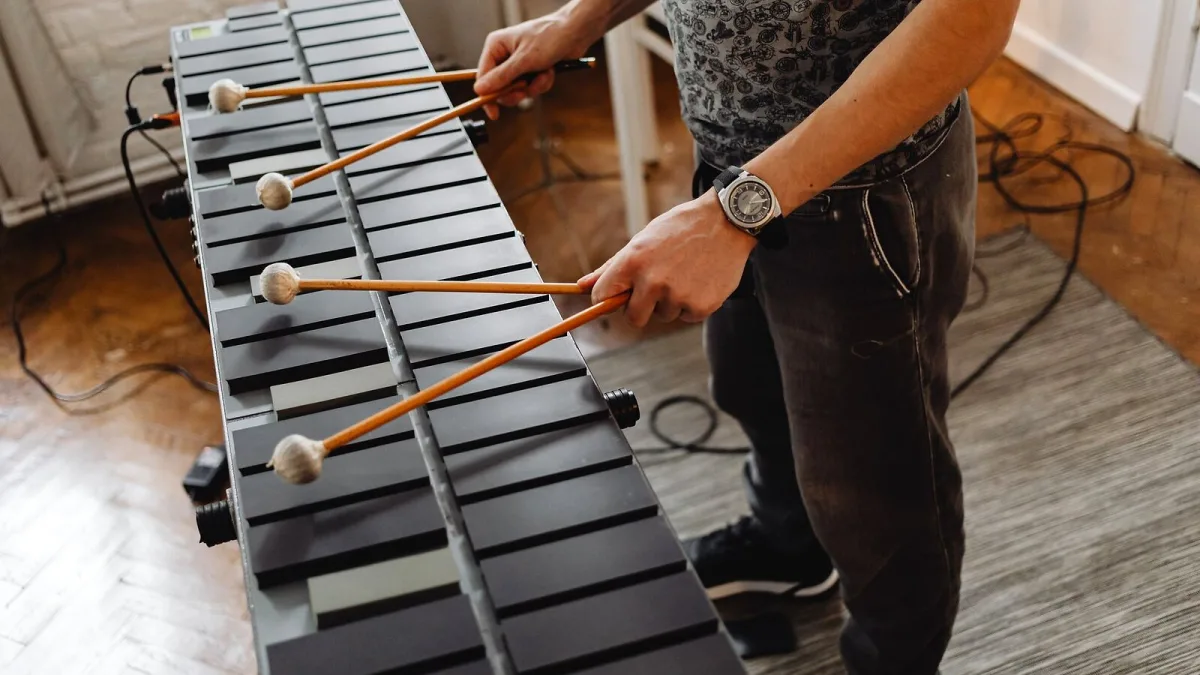
Standing in front of a vibraphone for the first time can feel a little intimidating — all those metal bars, a pedal underfoot, and a faint hum from the motor. I promise the vibraphone is far friendlier than it looks. If you already have even a little keyboard sense, from piano or anything similar, you're closer to playing this instrument than you think. Let's take it gently, one piece at a time.
Getting to Know the Instrument
The bars are laid out exactly like a piano keyboard: the longer bars along the front row sit where the white keys would be, and the raised bars behind them sit where the black keys would be. If you've ever picked out a tune on a piano, that layout will already feel familiar under your hands.
Underneath the bars, tubes called resonators make each note sound fuller, and a small motor spins discs inside those tubes to create the vibraphone's gentle, pulsing shimmer. You can usually turn that motor off while you're learning, which gives you a steadier, simpler sound to practise with.
Your First Few Minutes at the Bars
There's no need to rush into technique. Try this first:
- Sit or stand comfortably, with the centre of the keyboard roughly in front of you.
- Hold one mallet loosely in each hand, letting it rest near the base of your fingers rather than gripped tightly.
- Play a single bar and let it ring, listening to how long the note sustains.
- Press the foot pedal down and play the same bar again, noticing how the sustain changes.
- Play a simple five-note scale, one bar at a time, slowly enough to hear each note clearly.
That's genuinely enough for a first sitting on the vibraphone. Everything else builds on this.
Holding Your Mallets
Most beginners start with two mallets, one in each hand, and that's absolutely the right place to begin. Hold each mallet between your thumb and first two fingers, with a relaxed wrist rather than a tight fist — a stiff grip makes every note sound harder and more clattery than it needs to. Softer mallets are usually kinder to a beginner's ear on a vibraphone, producing a warmer, more forgiving tone while you're still finding your accuracy.
The Pedal: Your New Best Friend
If you've played piano, the vibraphone's pedal will feel wonderfully familiar — every vibraphone has one, right below where you stand. Press it down, and notes ring and blend together. Lift it, and a damper rail stops them dead, giving you short, clean notes. Try playing a short phrase with the pedal down the whole time, then again lifting it between each note, and just listen to how different the same notes can sound. That simple exercise teaches you more about the instrument than any amount of reading.
Simple First Exercises
- Play a major scale slowly, one note per beat, keeping the pedal down throughout.
- Repeat the same scale, lifting the pedal briefly after each note for a cleaner, more detached sound.
- Try a familiar, simple tune you already know from singing or another instrument — it's far more motivating than an unfamiliar exercise.
- Practise striking each bar in the exact centre; a little off-centre and the tone loses its clarity.
Common Beginner Worries
"What if I hit the wrong bar?" You will, often, at first — every vibraphone player does. The layout becomes second nature within a few weeks of regular, short practice sessions.
"Do I need to learn four-mallet technique straight away?" Not at all. Two-mallet playing is a complete, satisfying way to play for as long as you like, and it's exactly where most players begin before ever picking up a third or fourth mallet.
"Is the motor supposed to make noise?" A little hum is normal, but it shouldn't be loud or uneven. If it sounds rough or won't switch off cleanly, that's worth mentioning to whoever you borrowed or bought the instrument from.
Where to Go From Here
Once the basics feel comfortable, our fuller explainer goes into how the vibrato mechanism works and where the instrument sits alongside the marimba and xylophone, which is useful once you're curious rather than just starting out. If you're thinking about buying your own instrument, our buyer's guide will help you choose sensibly rather than guessing.
The Bottom Line
Learning the vibraphone is far less daunting than its motor and pedal suggest. Start with a single bar, add the pedal, then a simple scale, and let your hands learn the keyboard layout at their own pace. Every confident player once stood exactly where you are now, mallets in hand, working it out one note at a time.



Comments