


Bass Drum article
Bass Drum Explained: Features, Types and Tips
One name, several genuinely different instruments: what a bass drum actually is, its main types, and what's going on inside the shell.
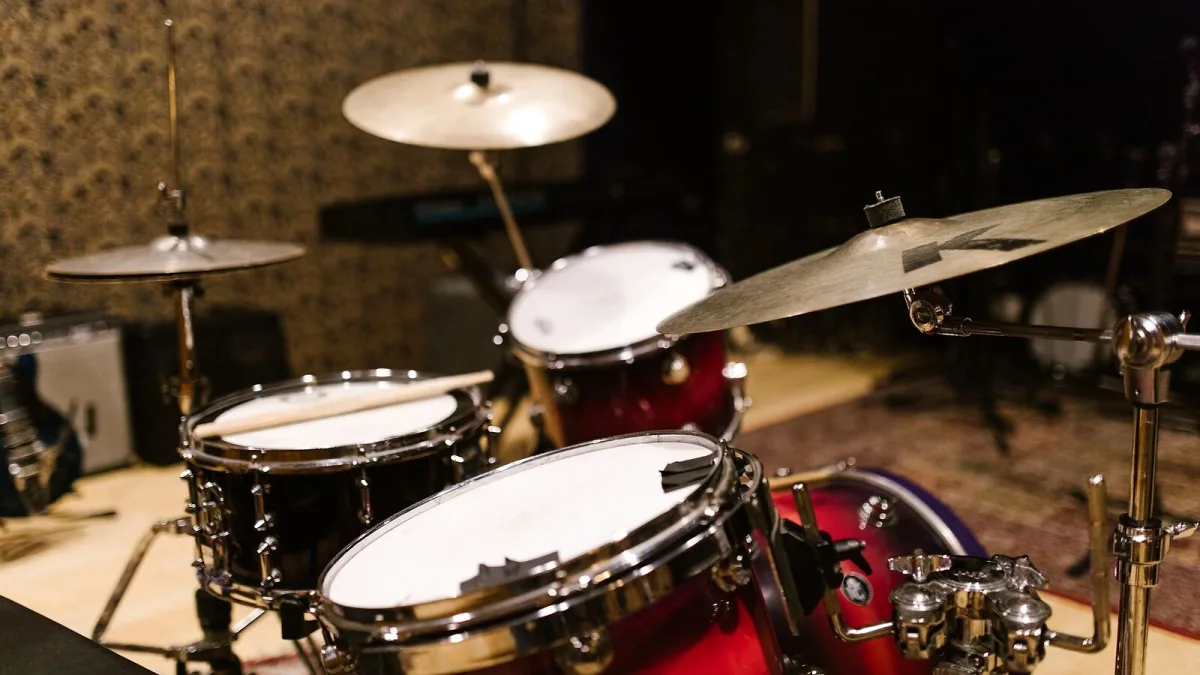
Ask three different musicians what a bass drum actually is and you might get three different answers — and honestly, they'd all be right. It's one of those instruments that changes shape depending on where you find it: on the floor under a drummer's foot, standing tall at the back of an orchestra, or strapped to a marcher's chest in a parade. Let's sort out what it actually is, the types you'll come across, and what's going on inside the shell.
Kick Drum or Bass Drum? Same Thing, Mostly
In everyday drum-kit talk, the two terms get used interchangeably, and nobody's wrong for doing it — it's the big drum lying on its side that you hit with a foot pedal. Step into orchestral or marching-band territory, though, and the same name can mean something considerably bigger: a large, often vertically mounted drum struck with a soft mallet, with no pedal in sight at all. Same name, genuinely different instrument depending on the room you're standing in.
The Three Types You'll Actually Encounter
- Drum-kit version — lies horizontally, played with a foot-operated pedal and beater, and supplies the low-end pulse of a standard drum set.
- Concert bass drum — large, mounted on a stand, struck with a soft mallet for a deep, sustained orchestral effect. Generally treated as having an indefinite pitch, though its resonance can still be tuned to suit the music.
- Marching bass drum — carried vertically, usually part of a graduated set where each drum is tuned to a specific pitch, giving a marching or drum corps line its own melodic character.
You'll also come across electronic pads and triggers standing in for the real thing, swapping the shell and head for a sensor and a sample — useful for silent practice, hybrid kits and studio production.
What's Actually Inside the Shell
Strip one down and you'll find a cylindrical shell, a batter head (the one you actually hit) and a resonant head on the other side, held in place by hoops and tension rods. The bearing edges — where the shell meets the head — have a real effect on tone and tuning response, and on the drum-kit version, spurs stop the whole thing creeping forward while you're playing it. The pedal converts your foot movement into a beater strike, and that beater's material genuinely changes the sound: felt is warmer and rounder, plastic gives more attack, wood is bright and properly aggressive.
Does Size Actually Matter?
| Diameter | Typical character |
|---|---|
| 18 inch | Compact, quick response, common in jazz and smaller setups |
| 20 inch | Balanced response and easy portability |
| 22 inch | Broadly versatile; the common general-purpose choice |
| 24 inch and up | More low-end spread and volume, often favoured for rock or bigger stages |
These are tendencies, not laws. Head choice, shell depth, tuning and muffling can all shift the result more than the diameter alone.
Tuning and Muffling, Briefly
There's no single "correct" tuning. A looser head gives more weight but can turn loose and indistinct; a tighter head sharpens the pitch and beater response but trades away some of that depth. Muffling — a small pillow inside the shell, a strip of felt, a purpose-built damper — controls how much ring and low-end buildup you're left with, and it's worth adding gradually rather than all at once. Overdo it and the drum goes short, quiet and flat.
Where You'll Hear It Doing Different Jobs
In jazz it's often a soft, articulate pulse working with the walking bass line; in rock it commonly locks onto beats one and three; funk and R&B lean on syncopation against the bass guitar; metal drummers use rapid double patterns with tightly controlled attack. In the concert hall, it's there for weight, drama and climactic moments rather than a steady beat, and in a marching band, a tuned set of them can carry a genuine melodic line.
The Bottom Line
One name, several genuinely different instruments, all built around the same basic idea: a big shell, two heads, and a low, powerful sound at the centre of it. If you're shopping for a drum-kit bass drum, our buyer's guide covers the specs that actually matter, and our round-up by price tier is worth a look once you know what you need. New to drums entirely? Our beginner's guide starts from scratch, and our list of common mistakes is worth ten minutes before you tune, mic or buy one.



Comments